
What are Fukushima’s heirloom vegetables? Features, season, and ways to eat the 14 items explained

The heirloom vegetables of Fukushima Prefecture are native varieties passed down according to the climate and food culture of each of its three regional divisions: Nakadori, Aizu, and Hamadori. The Japan Traditional Vegetable Promotion Association The certification lists 14 items, classified into four brands: “Heirloom Vegetables of Fukushima,” “Aizu Heirloom Vegetables,” “Iwaki Heirloom Vegetables,” and “Iwashiro Heirloom Vegetables.”
This article organizes the 14 items in a list and explains 7 representative items in detail. From varieties deeply tied to culinary culture, such as Aizu maru-nasu and Akutsu magari-negi, to varieties that revived after once dying out, such as Yomaki cucumber, we introduce the rich and varied native varieties unique to Fukushima.
TOC
The definition of "heirloom vegetable" and the scope of this article
There is no nationwide unified definition of “heirloom vegetables,” and criteria differ by certifying body. To help you accurately understand this article's content, we first lay out the criteria of the main certifying bodies.
| Certifying body | Main criteria |
|---|---|
| Kyoto Prefecture "Kyoto Heirloom Vegetables" | Cultivated in Kyoto from before the Meiji era and unique to Kyoto |
| Osaka Prefecture "Naniwa Heirloom Vegetables" | Cultivated within Osaka Prefecture from roughly 100 or more years ago |
| Nara Prefecture "Yamato Heirloom Vegetables" | Items whose production in this prefecture is confirmed from before the war |
| Akita Prefecture "Akita Heirloom Vegetables" | Cultivated within the prefecture from before the Showa 30s |
| Yamagata Prefecture "Yamagata Heirloom Vegetables" | Cultivated within the prefecture from before Showa 20 |
| The Japan Traditional Vegetable Promotion Association | Independent certification criteria (broader) |
In this article, we introduce 14 items with the Japan Heirloom Vegetable Promotion Association's certification as the main source. However, items difficult to include strictly in the “vegetable” category, such as Oku junen (egoma), are organized separately in the “Other local specialty varieties” section at the end of the article.
What are Fukushima's heirloom vegetables? Native varieties protected under four brands
Fukushima Prefecture is broad from east to west and north to south, and its climate varies greatly due to the Abukuma Highlands and the Ou Mountains. Because the climate differs greatly even within the prefecture—Aizu's heavy snow, Nakadori's inland-basin climate, and Hamadori's warm Pacific coast—different native varieties have been nurtured in each region.
The four brand classifications and their geographic correspondence
| Brand | Number of items | Main areas | Climate and food-culture features |
|---|---|---|---|
| Heirloom Vegetables of Fukushima | 2 items | Northern Nakadori (Fukushima City, Koriyama) | Centered on winter vegetables that make use of the inland basin's temperature swings |
| Aizu Heirloom Vegetables | 5 items | The Aizu region (Aizuwakamatsu, Kitakata, and others) | Winter snowfall and large summer temperature differences; a developed culture of pickles and preserved foods |
| Iwaki Heirloom Vegetables | 4 items | Southern Hamadori (Iwaki) | Warm Pacific-coast climate; abundant tubers and legumes |
| Iwashiro Heirloom Vegetables | 3 items | Central Nakadori (Iwashiro district, Nihonmatsu) | Legumes and squash protected at the mountain settlement level |
Unlike the systems in other prefectures where the prefecture manages certification centrally, Fukushima's distinctive feature is that it is run independently as four regional “brands.” The 14 items in total are Akita's 39 items and Yamagata's 87 items a small number compared with, but each item has a strong individuality, and they make up a lineup of vegetables that symbolize Fukushima's food culture.
The differences in food culture among Nakadori, Aizu, and Hamadori
- Nakadori (Koriyama, Fukushima City, Nihonmatsu) — many varieties, such as green onion, winter greens, squash, and legumes, whose sweetness increases with the inland temperature swings
- Aizu (Aizuwakamatsu, Kitakata) — a rich range of native varieties tied to winter pickling culture, including eggplant, squash, onion, and burdock
- Hamadori (Iwaki) — a relatively warm climate, centered on soil crops such as tubers, legumes, and egoma
The significance of the four-brand system
- Clarifying local ties — because it uses regional brands rather than centralized prefectural certification, the link between growing region and item is strong
- Independence of preservation groups — item-specific preservation organizations have developed, such as the Aizu Heirloom Vegetable Study Group and the Akutsu Magari-negi Preservation Society
- Diversified sales channels — cross-regional platforms such as the Fukushima Direct-from-Farm Club support the distribution of each brand
FOR BUSINESS
乾燥野菜を業務用でお探しですか
国産の野菜・果物を乾燥し、必要に応じて粉砕してお出ししています。扱っている品目は100種前後で、規格は 乾燥品の一覧・パウダーの一覧 に掲載しています。
少量でのご購入は、姉妹ブランドの通販サイト OYAOYA で承っています。
A full list of Fukushima's 14 heirloom vegetables and a seasonal calendar
Based on the certification of the Japan Heirloom Vegetable Promotion Association, we have organized the 14 items of the four brands in a list. Since harvest times differ by region, please use it as a guide for timing trips or mail orders.
Quick-reference table of 14 items
| # | Item | Category | Main growing region | Season | Brand |
|---|---|---|---|---|---|
| 1 | Akutsu magari-negi | Negi | Akutsu district, Koriyama | November to February | Fukushima |
| 2 | Shinobu fuyuna | Pickling greens | Watari district, Fukushima City | Mid-December to March | Fukushima |
| 3 | Aizu maru-nasu | Eggplant | Aizuwakamatsu | Early July to mid-September | Aizu |
| 4 | Aizu kogiku kabocha | Squash | Iidera district, Aizuwakamatsu | Mid-August to early September | Aizu |
| 5 | Yomaki cucumber | Cucumber | Aizuwakamatsu | Mid-July to mid-September | Aizu |
| 6 | Keitoku onion | Onion | Keitoku district, Kitakata | Mid-July to mid-September | Aizu |
| 7 | Tachikawa burdock | Burdock | Tachikawa district, Aizubange Town | Early October to mid-December | Aizu |
| 8 | Iwaki tokkuri-imo | Yam | Iwaki | November onward | Iwaki |
| 9 | Oku-imo | Potato | Yamatama district, Iwaki | Late July onward | Iwaki |
| 10 | Oku junen | Egoma | Oku district, Iwaki | November | Iwaki |
| 11 | Kojiroi cucumber | Cucumber | Kojiroi district, Iwaki | July–August | Iwaki |
| 12 | Iwashiro ji-kabocha | Squash | Iwashiro district, Nihonmatsu | October onward | Iwashiro |
| 13 | Iwashiro goyo kuromame | Legume | Iwashiro district, Nihonmatsu | November | Iwashiro |
| 14 | Iwashiro beni-mame | Legume | Iwashiro district, Nihonmatsu | November | Iwashiro |
Among the four brands, Aizu has the most with 5 items, and Iwashiro the fewest with 3. The types of items are varied as well—eggplant, squash, cucumber, onion, burdock, and yam—and there is a seasonal complementarity between summer-vegetable-centered Aizu and winter-vegetable-centered Fukushima (northern Nakadori).
Seasonal calendar (by month)
| Month | Items coming into season |
|---|---|
| July–August | Aizu maru-nasu, Yomaki cucumber, Keitoku onion, Oku-imo, Kojiroi cucumber |
| August to September | Aizu maru-nasu, Aizu kogiku kabocha, Yomaki cucumber, Keitoku onion |
| October–November | Tachikawa burdock, Iwaki tokkuri-imo, Oku junen, Iwashiro ji-kabocha, Iwashiro goyo kuromame, Iwashiro beni-mame |
| December to the following February | Akutsu magari-negi, Shinobu fuyuna |
| The following March | Shinobu fuyuna |
A balance of summer and winter vegetables is a feature of Fukushima. The vegetables of Aizu and Iwaki come into season in summer and autumn, and those of Nakadori (the Fukushima brand) in winter, giving a structure in which there are chances to eat local heirloom vegetables throughout the year.
A product catalog that shows around 100 items we handle
Agriture, flexibly handling everything from small lots to large lots
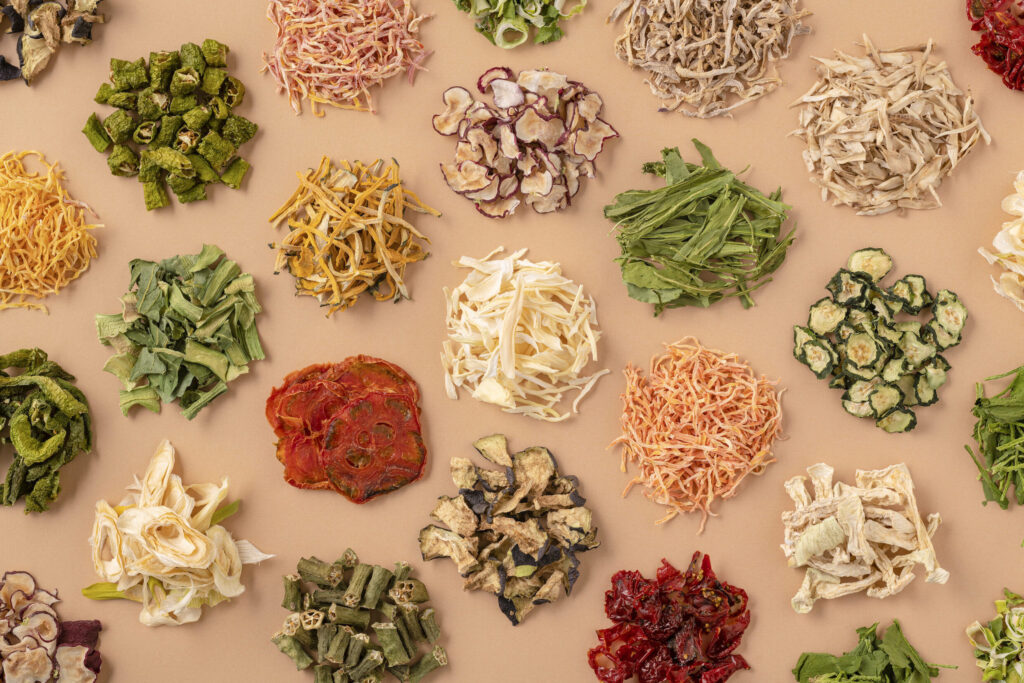
- Available for purchase in small lots from 1 kg
- We handle heirloom vegetables from across Japan
- Dried fruit and herbs also supported
Characteristics and preparation of 7 representative Fukushima heirloom vegetables
From the 14 items, we selected 7 representative ones based on name recognition, distribution volume, and influence on food culture. We introduce the characteristics of each item and preparations easy to try at home.
Akutsu magari-negi — the Koriyama green onion continuing since 1897
| Season | November to the following February |
| Growing region | Akutsu district, Koriyama |
| Well-suited dishes | Hot pot, grilled green onion, sukiyaki, negima |
A bent green onion whose cultivation began around 1897 in the Akutsu district of Koriyama. Sendai magari-negi of Miyagi and Yokosawa magari-negi of Akita Like them, it uses a farming method that creates the bend by replanting, concentrating sweetness in the white stem.
Both the leaf sheath and the leaf blade are tender, and a defining feature is a melt-in-the-mouth texture when heated. An essential ingredient on Koriyama's winter table, when added to hot pots the pungency characteristic of green onion turns to sweetness and functions like a dashi.
Aizu maru-nasu — a drawstring-shaped eggplant made for pickling
| Season | Early July to mid-September |
| Growing region | Across the Aizu region |
| Well-suited dishes | Asazuke, mustard pickles, overnight pickles, simmered dishes |
Aizu maru-nasu is a native eggplant with a distinctive drawstring (kinchaku) shape. Its flesh is firm and resists falling apart when cooked, making it indispensable as the star of asazuke, mustard pickles, and simmered dishes on Aizu's summer table.
Because its skin is thick and it has few seeds, cutting it in half and pickling it leaves the cut surface a vivid purple, so you can enjoy its beauty as well. Since it is harvested intensively over the short summer, the reliable way to obtain it is to visit Aizu in season or to mail-order fresh eggplant from local online shops.
Aizu kogiku kabocha — a long-keeping squash continuing since the Edo period
| Season | Mid-August to early September (usable within the year through storage) |
| Growing region | Around the Iidera district of Aizuwakamatsu |
| Well-suited dishes | Simmered dishes, miso soup, confections, potage |
Aizu kogiku kabocha is a squash that has been cultivated in the Iidera district of Aizuwakamatsu since the Edo period, its greatest feature being very hard skin that allows long storage. Harvested in summer, it was an item that, if properly stored, could be used until around New Year's, making it indispensable for securing winter food.
Its flesh has a moist texture and absorbs dashi well when simmered. Rather than being fluffy like Western squash, its appeal is the refined sweetness characteristic of a Japanese native variety.
Yomaki cucumber — the phantom cucumber revived in 2008
| Season | Mid-July to mid-September |
| Growing region | Aizuwakamatsu |
| Well-suited dishes | Salads, asazuke, chilled soup, eaten whole with miso |
Yomaki cucumber was cultivated in Aizu from the Edo period through the 1945–1954 period but once disappeared with the spread of F1 varieties. In 2008, a local preservation society began revival cultivation using surviving seeds—a variety with a revival story.
It is characterized by little astringency and a strong natural cucumber aroma, with a distinctive quirk of sweetness around the seeds. It has a rustic yet refined flavor reminiscent of the origin of “morokyu” (cucumber eaten skin and all with miso).
Keitoku onion — the Kitakata onion rich in allyl sulfide
| Season | Mid-July to mid-September |
| Growing region | Keitoku district, Kitakata |
| Well-suited dishes | Soup, onion rings, marinade, stir-fries |
Keitoku onion is a native onion cultivated in the Keitoku district of Kitakata, with a history of repeated improvement in Aizu's environment based on an Awaji Island variety. It contains much allyl sulfide compound, and the trait of turning strongly sweet when heated stands out.
Added to soup, it yields a richer dashi than ordinary onions, and some shops use it as a secret ingredient in Kitakata ramen. At home, made into a marinade of onion slices or sauteed, you can savor the sweetness unique to Keitoku onion.
Iwaki tokkuri-imo — a stickiness between nagaimo and jinenjo
| Season | November to the following January |
| Growing region | Akanuma district of Taira-Shimokabeya, Iwaki, and others |
| Well-suited dishes | Tororo soup, mugitoro, isobe-age, teppanyaki |
Iwaki tokkuri-imo is a native yam whose cultivation began in the 1955–1964 period in the Akanuma district of Taira-Shimokabeya, Iwaki. As its name suggests, it has a unique shape like a “tokkuri” (sake flask), swelling at the bottom.
Its stickiness is between that of nagaimo and jinenjo, characterized by a pleasant viscosity. Grated into tororo soup, its texture is smooth and slips down easily, making it an excellent match for “mugitoro” served over rice.
Shinobu fuyuna — a sweet winter green without bitterness
| Season | Mid-December to the following March |
| Growing region | Watari district, Fukushima City |
| Well-suited dishes | Ohitashi, miso soup, stir-fries, pickles |
Shinobu fuyuna is a native member of the kabuna family cultivated in the Watari district of Fukushima City, with a distinctive appearance of spatula-shaped leaves and fine serrations along the leaf edges. In the early Showa period, the county agricultural association named it “Shinobu fuyuna,” and it took hold as a regional winter vegetable.
It lacks the bitterness and stringy texture characteristic of pickling greens, and its appeal is a sweet, mellow flavor. Winter greens dug from snow-covered fields gain sweetness, and you can savor it in ohitashi or miso soup.
Regional character—Fukushima, Aizu, Iwaki, and Iwashiro
Fukushima's heirloom vegetables divide into four brands, each protecting its items against a different climate and food-culture background. Here we organize the 13 items, excluding Oku junen (egoma), into four areas.
Heirloom Vegetables of Fukushima (2 items)
- Akutsu magari-negi (Koriyama) — a thick green onion continuing since 1897. A staple of hot pot and sukiyaki
- Shinobu fuyuna (Fukushima City) — a sweet member of the kabuna family without bitterness. Adds color to the winter table
Aizu Heirloom Vegetables (5 items)
- Aizu maru-nasu — a drawstring-shaped eggplant made for pickling. The star of the summer table
- Aizu kogiku kabocha (Iidera district) — a long-keeping squash continuing since the Edo period
- Yomaki cucumber — the phantom cucumber revived in 2008
- Keitoku onion (Kitakata) — a native onion rich in allyl sulfide, sweet when heated
- Tachikawa burdock (Aizubange Town) — a highly aromatic native burdock with little pithiness
Iwaki Heirloom Vegetables (3 items)
- Iwaki tokkuri-imo — a yam with a stickiness between nagaimo and jinenjo
- Oku-imo (Yamatama district) — a native potato high in starch that does not fall apart when cooked
- Kojiroi cucumber (Kojiroi district) — a cylindrical cucumber, pale green at the top and white at the bottom
* Iwaki Heirloom Vegetables also include Oku junen (egoma), but this article introduces it in the “Other local specialty varieties” section at the end.
Iwashiro Heirloom Vegetables (3 items)
- Iwashiro ji-kabocha (Iwashiro district, Nihonmatsu) — a native squash protected in the mountains
- Iwashiro goyo kuromame (Iwashiro district, Nihonmatsu) — a native black soybean characterized by five leaflets
- Iwashiro beni-mame (Iwashiro district, Nihonmatsu) — a red native bean
The Iwashiro district Heirloom vegetables of Iwate unlike the “Iwate” in, derives from the place name of the narrow mountain area of the Iwashiro district in Nihonmatsu. It centers on legumes and squash protected at the settlement level and is a brand symbolizing the “local rootedness” of Fukushima's heirloom vegetables.
How to buy Fukushima's heirloom vegetables and tips for storage
Many of Fukushima's heirloom vegetables are rare items with limited production, and their distribution in ordinary supermarkets is limited. A realistic way to obtain them is to combine growing-region farm stands, online mail order, and hometown tax donations.
Prefectural farm stands and direct-from-farm markets
| Item | Main sources | Timing |
|---|---|---|
| Akutsu magari-negi | JA farm stands within Koriyama, Michi-no-Eki Adachi | November to February |
| Aizu maru-nasu | Farm stands within Aizuwakamatsu, Michi-no-Eki Aizu | July–September |
| Yomaki cucumber | Limited farm stands in Aizuwakamatsu (limited quantity) | July–September |
| Keitoku onion | Farm stands within Kitakata | July–September |
| Shinobu fuyuna | Farm stands in the Watari district of Fukushima City | December to March |
| Iwaki tokkuri-imo | Farm stands within Iwaki, Michi-no-Eki Yotsukura-ko | November to January |
| Iwashiro ji-kabocha and legumes | Farm stands in the Iwashiro district of Nihonmatsu | October–November |
The Michi-no-Eki and JA farm stands in the Aizu region have a rich selection during the summer-vegetable season of July to September, when Aizu maru-nasu, Keitoku onion, and Yomaki cucumber appear together. If you visit Aizu on a trip, this period is the best time to enjoy the heirloom vegetables all at once.
Mail order / hometown tax to outside the prefecture
- Fukushima Direct-from-Farm Club — an online sales platform for prefectural produce including heirloom vegetables
- Hometown tax donation — included among municipal gifts such as Koriyama (Akutsu magari-negi), Aizuwakamatsu (Aizu maru-nasu, Yomaki cucumber), and Nihonmatsu (Iwashiro legumes)
- Direct-from-farm e-commerce (Tabechoku, Pocket Marche) — individual farmers list products. By reservation, delivered during the harvest season
- Processed products — processed products that can be bought year-round are also distributed, such as Keitoku onion dressing and Aizu maru-nasu mustard pickles
Storage methods by item
| Item | Short-term storage | Long-term storage |
|---|---|---|
| Akutsu magari-negi | Wrapped in newspaper, one week in the vegetable compartment | Chop and freeze (1 month) |
| Aizu maru-nasu | Wrapped in plastic, three days in the vegetable compartment | Asazuke or mustard pickles (1 to 2 weeks) |
| Aizu kogiku kabocha | Whole, one to two months in a cool, dark place | Storable until New Year's thanks to the hard skin |
| Yomaki cucumber | Wrapped in plastic, three to five days in the vegetable compartment | Asazuke or miso pickles (one week onward) |
| Keitoku onion | One month in a well-ventilated, cool, dark place | Sliced and frozen (two months) |
| Shinobu fuyuna | In damp newspaper, three days in the vegetable compartment | Salt pickles or kasuzuke (1 to 2 months) |
| Iwaki tokkuri-imo | Two weeks in a cool, dark place with the soil still on | Grated and frozen (one month) |
A product catalog that shows around 100 items we handle
Agriture, flexibly handling everything from small lots to large lots
- Available for purchase in small lots from 1 kg
- We handle heirloom vegetables from across Japan
- Dried fruit and herbs also supported
Efforts to protect Fukushima's heirloom vegetables
Activities to protect the 14 native varieties and pass them on to the next generation are being carried out by the prefecture, research institutions, and producer groups. We introduce representative efforts.
The Yomaki cucumber revival project
| Year | Event |
|---|---|
| Edo period to the 1945–1954 period | Widely cultivated in the Aizu region |
| From the 1955–1964 period | The spread of F1 varieties sharply reduced the number of growing farms, and it once disappeared |
| Early 2000s | A local preservation society discovered surviving seeds |
| 2008 | Revival cultivation began |
| Present | Shipped at limited farm stands in Aizuwakamatsu. Adoption on restaurant menus is also progressing |
The key was that the three conditions for revival—surviving seeds, the voices of consumers and cooks, and a farmer willing to take on cultivation—came together. The appeal of its flavor mentioned in the representative-7-items section—“little astringency and sweetness around the seeds”—has helped drive restaurant adoption after the revival.
Post-earthquake agricultural recovery and the value of native varieties
- Fukushima Agricultural Technology Centre — continues seed preservation and characteristic surveys of native varieties. A gene-bank function that prevents their dispersal
- Producer groups — item-specific organizations are active, such as the Akutsu Magari-negi Preservation Society and the Keitoku Onion Producers' Association
- Out-of-prefecture promotion — since the 2011 earthquake, the branding of heirloom vegetables has progressed as a way to add value to Fukushima agriculture
- Cooperation with restaurants — local restaurants in Aizu and Koriyama have adopted heirloom vegetables on their menus, contributing to greater recognition
The 2011 Great East Japan Earthquake and nuclear accident had a major impact on Fukushima's agriculture, but there is also an aspect in which this led to attention on “heirloom vegetables that can clearly project regional identity.” Native varieties that can be differentiated from generally distributed produce play a part in Fukushima's regional branding strategy.
FOR BUSINESS
乾燥野菜を業務用でお探しですか
国産の野菜・果物を乾燥し、必要に応じて粉砕してお出ししています。扱っている品目は100種前後で、規格は 乾燥品の一覧・パウダーの一覧 に掲載しています。
少量でのご購入は、姉妹ブランドの通販サイト OYAOYA で承っています。
FAQ
Other regional specialty varieties
Of Fukushima's 14 heirloom vegetables, an item difficult to include strictly in the “vegetable” category is introduced here separately as a “local specialty variety.” It is an important regional specialty certified as one of the Iwaki Heirloom Vegetables.
| Item | Category | Growing region | Characteristics and standing |
|---|---|---|---|
| Oku junen | Egoma (oil crop) | Oku district, Iwaki | A regional nickname for egoma. The black-seed type has 20 to 30 percent higher oil content than the white-seed type and is rich in alpha-linolenic acid. Because it is processed and used as an oil crop, its standing differs from a strict “vegetable” |
Summary
Fukushima's 14 heirloom vegetables are a locally rooted group of native varieties protected within four brands: “Fukushima,” “Aizu,” “Iwaki,” and “Iwashiro.” The sweetness of Akutsu magari-negi, the pickling culture of Aizu maru-nasu, the revival story of Yomaki cucumber, the heat-brought sweetness of Keitoku onion—each item has a story specific to its land.
Compared with the other Tohoku prefectures, the number of items is on the smaller side, but each item has a correspondingly strong individuality, giving a lineup through which you can deeply taste Fukushima's food culture. If you visit Aizu, go in summer; if you visit Nakadori, go in winter—planning around the season lets you encounter seasonal items at local farm stands and Michi-no-Eki.
References / information sources
- Japan Heirloom Vegetable Promotion Association, “Heirloom Vegetables of Fukushima Prefecture” — Certified list of 14 items and their characteristics
- Fukushima Direct-from-Farm Club, “Heirloom Vegetables of Fukushima” — Producer information and purchase routes
- HYPONeX, “Local and Heirloom Vegetables of Fukushima” — Explanations of the main items
Related articles
- Japan's Heirloom Vegetables: Precious Varieties Handed Down in Each Region
- Kyoto heirloom vegetables: Kyoto specialties with a long history
- Heirloom vegetables of Hokkaido
- Heirloom vegetables of Aomori
- Heirloom vegetables of Iwate
- Heirloom vegetables of Miyagi
- Heirloom vegetables of Akita
- Heirloom vegetables of Yamagata
- Heirloom vegetables of Naniwa
Download the product catalog
We will send the materials to your email address based on the information you provide.
- What are Yamagata’s heirloom vegetables? Features, season, and ways to eat the 87 items explained
- What are Ibaraki’s heirloom vegetables? Features, season, and ways to eat the 5 items explained
Author of this article
Related articles
-
 Okinawa island vegetables: individualistic vegetables nurtured by a subtropical climate
 -
 Kaga vegetables: Kanazawa brand vegetables where tradition lives on
 -
 The appeal of Kansai heirloom vegetables | Specialties of Naniwa, Kyoto, and Yamato thoroughly explained
 -
 Kyoto heirloom vegetables: Kyoto specialties with a long history
 -
 A list of heirloom vegetables of the 8 prefectures of Kyushu and Okinawa|A thorough introduction to characteristics, growing regions, and seasons
 -
 Know the heirloom vegetables of Edo Tokyo | The city’s vanishing food culture
 -
 They'll make you smile! The fun names of heirloom vegetables and their origins
 -
 5 cases and strategies that succeeded in branding heirloom vegetables