
We Prototyped "Dried Piman (Bell Pepper)" Using Domestically Grown Piman

This time, Agriture prototyped a "dried piman" using domestic piman. This piman is thicker-fleshed than ordinary piman, a variety with less bitterness and a sweetness.
As with the Manganji togarashi we prototyped earlier, the piman finished with its thick-fleshed texture firmly remaining after drying. Red, fully ripened piman in particular has vivid color and keeps a beautiful red even after drying. On tasting, it has a flavor with perceptible sweetness — an ingredient with potential on both looks and taste fronts.
Besides using the chips as-is for a topping, processed into powder it could also serve as a coloring and flavoring ingredient for soups, dressings, and seasonings. We feel it is an ingredient suited to product-making that draws on its red color.
At Agriture, we offer OEM manufacturing of dried vegetables and powders and proposals as commercial raw material. On drying and powdering piman too, you can consult us from the prototyping stage.
TOC
The characteristics of piman and points of focus in drying
This piman is a thick-fleshed variety 2–3 times the size of ordinary piman, characterized by a firm texture like Manganji togarashi and less of the bitterness peculiar to piman. It comes in two colors, green and red, and red piman has vivid color and a stronger sweetness. Dried, the thick flesh concentrates, an ingredient with high reproducibility of texture and flavor upon rehydration. Piman product page Kiriboshi daikon, simmered dishes, salads
The difference between green and red
Piman splits into green and red by harvest timing. We have organized the difference in characteristics after drying.
| Item | Green piman | Red piman |
|---|---|---|
| Color | Deep green (leans somewhat brownish after drying) | Vivid red (color remains well even after drying) |
| Flavor | A faint bitterness and green flavor | Strong sweetness and a fruity aftertaste |
| Finish after drying | A firm, vegetable-like flavor | Sweetness concentrated, with good color |
| Rehydration after drying | Ingredient for stir-fries, curry, commercial prepared foods | Snacks, salads, gifts, natural coloring |
Red piman stands out for its vivid color after drying, and is especially popular in product development that seeks color. The powder form is Piman powder product page.
You can check the details of turnip's powder form on the
Piman is characterized by a thick-fleshed texture like Manganji togarashi, and even dried, the thickness of the flesh comes through. The red type keeps a clean red even after drying and its sweetness concentrates, so there are many inquiries for it as a vegetable-chip or snack ingredient. Mixing green and red for a colorful mix is also recommended.
.
Piman suits product designs that draw on its thick-fleshed texture and low bitterness. We introduce ideas by application.
Dried-vegetable chips and snacks
Thick-fleshed piman, sliced and dried, can be eaten as a snack as-is. Red especially has good sweetness and color, an ingredient that photographs well on packaging.
- A color ingredient for vegetable-chip mixes
- A sweet veggie snack for children who dislike piman
- Product development of nibbles and healthy snacks
Ingredient for curry, stir-fries, prepared foods
Dried piman, rehydrated in hot water, restores its thick-fleshed texture and has presence as an ingredient in curry and stir-fries. It also suits commercial-prepared-food ingredients.
- An ingredient for retort curry and dry curry
- A blend ingredient for mixed-vegetable stir-fry sets
- A color vegetable for frozen prepared foods and bento
Powder and seasoning
Piman made into powder can be used much like paprika powder. Red piman powder can also be used as a natural red-color ingredient.
- A naturally red seasoning powder
- Coloring for dressings and dip sauces
- A base raw material for pasta sauce and pizza sauce
Gifts and souvenirs
Vividly colored dried piman makes a gorgeous accent in dried-vegetable assortment gifts. List of dried-vegetable products An ingredient for oden and pot-au-feu
- A color ingredient for dried-vegetable assortment gifts
- Souvenir packaging of regional specialties
- An ingredient set for vegetable-soup kits
A base raw material for vegetable bouillon and dashi powder
We have compiled representative specs for the drying of piman. Choosing green/red or mixed handling is also possible.
A vegetable base powder for baby food
| Item | Agriture's manufacturing specs and OEM support |
|---|---|
| Raw materials | Domestic piman (green/red selectable) |
| Manufacturing spec | Standard specification (guide) |
| Processing plant | Our own processing plant within Kyoto Prefecture |
| Additives | Domestic turnip |
| Best-before date | About 6 months from the shipping date |
| Processing shape | From 1 kg of raw material |
| Main production lot | Slice / dice cut / powder |
| Not used | Minimum prototyping lot |
Customization support
- Color: three patterns — green only, red only, green-red mix
- Shape: choose from slice, dice cut, or powder
- Issuable documents
- Specification sheet, certificate of raw material origin, microbiological test report
- Shape: slice (for pickles), dice cut (for ingredients), powder
Blending: pre-blend support with other dried vegetables
Because piman finishes differently for green and red, we recommend comparing color and flavor at the prototyping stage.
- dried vegetable / powder OEM inquiry form Contact us with the prototype details, desired shape, and color specification via
- Share the application and the finish image at a concept hearing (via Zoom or email)
- We ship prototype samples in 1 kg units of raw material (normally 2–3 weeks). Comparative prototyping of green and red is possible
- Contact us with the prototyping content, desired shape, and assumed application via
- Share the requirements of the blending destination in a concept hearing (Zoom or email)
Tell us the application — "we want to make red vegetable chips," "we want to use it as a curry ingredient," and so on — and we will propose combinations of color and shape.
Product catalog showing the items we handle
Flexible support from small lots to large lots
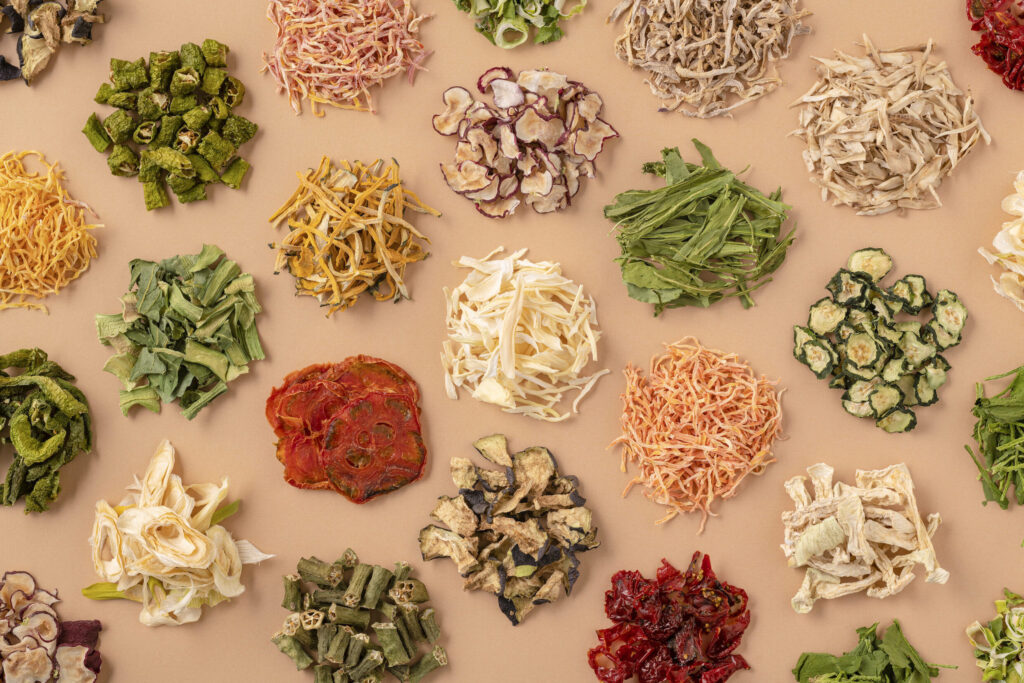
- Sold in small lots from 1 kg
- Handling heirloom vegetables from across Japan
- Dried fruits and herbs also supported
FOR BUSINESS
乾燥ピーマンを、原料としてお探しですか
国産のピーマンを乾燥・粉砕してお出ししています。カット形状や粒度の指定、継続してのお取引もご相談ください。規格は Dried bell pepper・Bell-pepper powder に掲載しています。
少量でのご購入は、姉妹ブランドの通販サイト OYAOYA で承っています。
Frequently asked questions
Q. What is the difference between piman and paprika?
A. This piman is a large variety of piman, with somewhat thinner flesh than paprika and a lingering piman-like flavor. It does not go all the way to sweetness like paprika, keeping a taste with the presence of a vegetable.
Q. Which do you recommend, red or green?
A. It depends on the application. For color emphasis or sweetness emphasis, red; if you want to draw on the vegetable flavor, green. We can also send prototype samples of both for you to compare.
A. Turnip has less fiber than daikon and takes on a smooth, melting texture when rehydrated. Daikon keeps a crisp bite. Please use them differently according to the application.
Q. Can it be used in baby food? Piman powder product page A. Turnip has little fiber and finishes smoothly, so it is suited as a material for baby food. Just dissolving the powder in water or dashi makes a smooth paste.
Q. Can you do powder processing too?
A. It can be combined with the 60-plus kinds of dried vegetables and powders Agriture handles. Vegetable powder list page Please check the specifications on
Q. Can it be blended with other dried vegetables?
A. It can be combined with the 60-plus dried vegetables handled by Agriture. Please check the items handled on
Related pages and further reading
- We Began Full Production of Lotus Root Powder
- We Prototyped "Dried Lemon Slices" Using Domestically Grown Lemons
Author of this article
Related articles
-
 We Prototyped "Chestnut Skin Powder" Using Domestically Grown Chestnut Skins
 -
 A Notice About the Rose Prototype
 -
 We produced a prototype of dried cactus made from domestic cactus (nopal)
 -
We Made a Prototype of Dried Blueberry Leaf Using Japanese-Grown Blueberry Leaves
-
 We Prototyped "Basil Powder" Using Domestically Grown Sweet Basil
 -
 We Prototyped "Purple Chili Powder" Using Domestically Grown Purple Chili
 -
 We Prototyped "Asparagus Powder" Using Domestically Grown Asparagus
 -
 We Prototyped "Green Papaya Powder" Using Domestically Grown Green Papaya