りんご1個は何グラム?ふじは350グラム、紅玉は240グラムです

Summary of this article
りんご1個の重さは品種で決まり、240グラムから500グラムまで開きがあります。青森県の公式資料から品種別の重さを一覧にし、芯と皮を除いた可食部、レシピの「1個」の読み替え、S・M・Lを決めているのは産地であること、乾燥させると生の8分の1から10分の1になること、1人あたり年間2.7キログラム=ふじ約8個という消費の実態までまとめました。
レシピに「りんご1個」と書いてあって、はかりの前で止まった。あるいは通販で「Lサイズ」と書かれていて、それが何グラムなのか分からない。どちらもよくある場面です。
先に答えを書きます。りんご1個の重さは品種で決まっていて、240グラムから500グラムまで開きがあります。よく言われる「1個300グラム」はだいたい真ん中あたりの値で、品種を無視した平均にすぎません。
青森県が毎年出している公式の資料には、品種ごとの重さが1つずつ書かれています。この記事では、その数字をそのまま一覧にしたうえで、レシピの「1個」をどう読み替えるか、サイズ表示は誰が決めているのか、乾燥させると何グラムになるのかまでを並べます。
なお当社は国産の野菜と果物を乾燥させている食品メーカーで、医療や栄養の専門家ではありません。健康上の効果については書かず、重さと扱い方の話に絞ります。
TOC
りんご1個は何グラム?品種別の一覧
青森県が公表している「青森りんご」の資料には、主な品種ごとに1個の重さが記載されています。そのまま並べます。
| Variety | 1個の重さ | 収穫の時期 |
|---|---|---|
| 世界一 | 500グラム程度 | Mid to late October |
| 陸奥 | 430グラム程度 | Toke district, Midori Ward, Chiba City |
| 北斗 | 400グラム程度 | Late October–early November |
| Fuji | 350グラム程度 | Late October to mid-November |
| Jonagold | 350グラム程度 | Mid to late October |
| Shinano Gold | 350グラム程度 | Late October–early November |
| Toki | 350グラム程度 | 9月末〜10月上旬 |
| 金星 | 350グラム程度 | 11月上〜中旬 |
| 千雪 | 300〜350グラム程度 | Mid to late October |
| Orin | 300グラム程度 | Late October–early November |
| Tsugaru | 300グラム程度 | 9月上〜中旬 |
| Shinano Sweet | 300グラム程度 | 10月上〜中旬 |
| きおう | 300グラム程度 | 9月上旬 |
| ぐんま名月 | 300グラム程度 | Late October–early November |
| 星の金貨 | 250〜300グラム程度 | Toke district, Midori Ward, Chiba City |
| 未希ライフ | 250グラム程度 | 8月下旬〜9月上旬 |
| 恋空 | 250グラム程度 | 8月中〜下旬 |
| Kogyoku (Jonathan) | 240グラム程度 | Mid-October |
| 夏緑 | 150グラム程度 | Early to mid-August |
| アルプス乙女 | 約50グラム弱 | Mid to late October |
いちばん大きい「世界一」と、いちばん小さい「アルプス乙女」では10倍の開きがあります。青森県の資料も、アルプス乙女について「『世界一』の10分の1の重さです」と書いています。
よく使う品種だけ覚えるなら
- ふじ:350グラム程度。国内でもっとも多く作られている品種
- 王林:300グラム程度。黄緑色で香りが強い
- つがる:300グラム程度。秋のはじめに出回る
- 紅玉:240グラム程度。小ぶりで酸味が強く、菓子や料理に向く
- ジョナゴールド:350グラム程度。紅玉とゴールデンデリシャスから生まれた
料理に使う品種は紅玉が多く、生で食べる品種はふじが多い。この2つだけで100グラム以上ちがいます。レシピの「りんご1個」がどちらを想定しているかで、仕上がりの水分量も甘さも変わります。
「1個300グラム」と書かれることが多い理由
レシピサイトや栄養の表で「りんご1個=約300グラム」とされるのは、品種を平均した便宜的な数字です。上の一覧を見ると300グラム程度の品種が多く、ここを代表値に置くのは乱暴ではありません。
However,ふじで作れば1割多く、紅玉で作れば2割少なくなります。ジャムや焼き菓子のように水分と糖の比率が効くものでは、この差が仕上がりに出ます。品種を指定していないレシピなら、はかりで300グラムに合わせるほうが安全です。
S・M・Lのサイズ表示は誰が決めているのか
通販や箱詰めで見る「L」「2L」「28玉」といった表示は、国が決めた基準ではありません。
出荷規格を定めているのは産地
農林水産省が出している出荷規格の資料には、「青果物の出荷規格は、産地が取引の円滑化や有利販売の実現のために定めたもの」と書かれています。全国一律の基準があって、それに各産地が従っているわけではありません。
同じ資料では、産地間の競争を背景に規格が細かく分かれすぎて、選別や箱詰めの手間が増えていることが課題として挙げられています。「Lサイズ」が何グラムかは産地ごとに違う、というのが出発点です。
「玉数」は箱に入る個数のこと
りんごの箱には「36玉」「40玉」といった表示があります。これは同じ大きさの箱に何個入るかを表していて、数字が小さいほど1個が大きくなります。重さを直接書いていないので、箱の総重量を個数で割ると1個の重さが出ます。
10キログラムの箱で36玉なら、1個あたり約278グラム。同じ10キログラムでも28玉なら約357グラムです。箱の重さと玉数が分かれば計算できるので、通販で買うときはここを見ます。
大きさは光センサーで選別されている
青森県の資料によれば、収穫したりんごは光センサー選果機で、大きさや形のほか、着色程度や糖度、蜜入りの状況などによって規格に分けられます。人の目で1個ずつ量っているわけではありません。
選果場を通った時点で規格は揃っているので、同じ袋に入っているりんごの重さは近いはずです。逆に、直売所や庭先で分けてもらったりんごは選果を通っていないので、1個ずつばらつきます。
FOR BUSINESS
乾燥りんごを、原料としてお探しですか
国産のりんごを乾燥・粉砕してお出ししています。カット形状や粒度の指定、継続してのお取引もご相談ください。規格は 乾燥りんご に掲載しています。
少量でのご購入は、姉妹ブランドの通販サイト OYAOYA で承っています。
芯と皮を除くと何グラム残るか
料理で必要なのは、たいてい丸ごとの重さではなく食べる部分の重さです。
芯を除くと1割ほど軽くなる
当社でりんごを乾燥用に処理するときの実感では、芯と種とへたを除くと、丸ごとの重さからおおよそ1割から1割5分ほど減ります。350グラムのふじなら、芯を取って300グラム前後が残る計算です。
皮まで剥くと、そこからさらに1割ほど落ちます。皮ごと使うか剥くかで、同じ「1個」でも手元に残る量が変わります。
| State | ふじ350gの場合 | 紅玉240gの場合 |
|---|---|---|
| Whole | 350g | 240g |
| 芯と種を除く | About 300g | 約205g |
| さらに皮を剥く | About 270g | 約185g |
| 8等分のくし切り1切れ | 約37g | 約26g |
| 薄切り1枚(2mm厚) | 約8〜10g | 約6〜8g |
半分・4分の1は何グラムか
包丁で割ったときの目安です。芯を取る前の重さを単純に割った値になります。
- ふじ1個350g:半分175g、4分の1で88g、8分の1で44g
- 王林1個300g:半分150g、4分の1で75g、8分の1で38g
- 紅玉1個240g:半分120g、4分の1で60g、8分の1で30g
レシピに「4分の1個」と書かれていたら、おおよそ60グラムから90グラムのあいだと思っておけば外しません。
はかりがないときの測り方
- 手のひらにのせて、重さの見当がつく物と比べる。卵1個が約60グラム
- ふじサイズのりんご1個は、卵6個分ほどの重さになる
- 紅玉なら卵4個分ほど
- 計量カップにすりおろして体積で測る方法もあるが、空気が入るので精度は落ちる
料理の結果を左右する場面では、やはりはかりを使ったほうが早いです。キッチンスケールは1グラム単位のもので足ります。
レシピの「りんご1個」をどう読み替えるか
レシピが想定している重さは、料理の種類でだいたい決まっています。
菓子と料理で想定が違う
| Dish | 想定されている品種 | 1個の目安 |
|---|---|---|
| アップルパイ・タルト | 紅玉など酸味のあるもの | 240〜300g |
| ジャム・コンポート | 紅玉・ジョナゴールド | 240〜350g |
| Red-purple mizuna (Benihoshi, etc.) | ふじ・王林 | 300〜350g |
| すりおろし(カレー等) | ふじ・王林 | 300〜350g |
| 焼きりんご | 紅玉・ジョナゴールド | 240〜350g |
菓子のレシピで紅玉が指定されることが多いのは、酸味と、加熱したときに形が残りやすいためです。ふじで作ると甘くなりすぎて水っぽくなることがあります。
「りんご1個分の果汁」はどれくらいか
しぼったときに取れる果汁は、当社で搾ってみた範囲では丸ごとの重さの半分から6割ほどです。350グラムのふじなら、おおよそ180ミリリットルから200ミリリットル。品種と熟し具合、搾り方で上下します。
市販のりんごジュースに「りんご◯個分」と書かれていることがありますが、その1個が何グラムかは商品によって違います。表示の「◯個分」は重さの保証ではないので、原材料の欄を見るほうが確かです。
1日に何個食べるか、という問いへの答え方
検索では「りんごは1日何個まで」という問いがよく出てきます。ここは正直に書きます。
個数ではなく重さで考える
当社は食品メーカーで、医療や栄養の専門家ではありません。1日に何個が適切かという助言はできません。かかりつけの医師や管理栄養士に相談してください。
そのうえで、この記事が役に立つとすれば重さの換算です。「1日1個」と言ったとき、それがふじなら350グラム、紅玉なら240グラムで、同じ1個でも100グラム以上ちがう。個数で管理するより、グラムで把握するほうが実態に近くなります。
- ふじ1個=350g。2個で700g
- 王林1個=300g。2個で600g
- 紅玉1個=240g。2個で480g
- アルプス乙女1個=約50g。7個でふじ1個分
「1日1個のりんごは医者を遠ざける」の出どころ
よく引かれることわざは、英語の “An apple a day keeps the doctor away” が元になっています。いつ誰が言い出したかは諸説あり、当社としては出どころを確かめきれていません。
ことわざであって、医学的な指針ではありません。当社としては、効果について何かを述べる立場にありません。ここでは「1個」が品種で100グラム以上動くという点だけを申し添えます。
日本人はりんごを、年に何個食べているか
重さが分かると、統計を個数に直せます。ここが今回いちばん驚いた数字でした。
1人あたり年間2.7キログラム
青森県の資料が総務省の家計調査年報から引いている数字によれば、りんごの1人あたり年間購入数量は令和6年で2.7キログラムです。平成15年は4.6キログラムでしたから、20年ほどで4割減っています。
| Year | apples | 生鮮果実計 | Banana | mikan |
|---|---|---|---|---|
| 平成15年 | 4.6kg | 30.2kg | 5.4kg | 5.6kg |
| 平成25年 | 4.4kg | 27.0kg | 6.0kg | 4.0kg |
| 平成30年 | 3.5kg | 23.9kg | 6.2kg | 3.2kg |
| 令和3年 | 3.4kg | 24.3kg | 6.8kg | 3.3kg |
| 令和5年 | 3.1kg | 22.3kg | 6.4kg | 2.8kg |
| 令和6年 | 2.7kg | 21.1kg | 6.3kg | 2.6kg |
バナナだけが増えて、りんごとみかんは減り続けています。いまやバナナはりんごの2倍以上買われています。
2.7キログラムを個数に直すと年8個
ここで重さの出番です。ふじ1個が350グラムなので、2.7キログラムはふじ約8個分。1年で8個、つまり1か月半に1個という計算になります。
- ふじ(350g)換算:年間およそ8個
- 王林(300g)換算:年間およそ9個
- 紅玉(240g)換算:年間およそ11個
- 平成15年の4.6kgは、ふじ換算で年間13個だった
「1日1個」ということわざとの距離を考えると、実態は年に8個, contained in burdock and cocoa.
年代で14倍の差がある
同じ資料の年齢階層別を見ると、差はもっと極端です。令和6年の1人あたり年間購入数量は、29歳以下が0.4キログラム、70歳以上が5.8キログラムでした。
| 年齢層 | 年間購入数量 | ふじ換算 |
|---|---|---|
| 29歳以下 | 0.4kg | 約1個 |
| 30〜39歳 | 0.7kg | 約2個 |
| Ages 40 to 49 | 1.1kg | 約3個 |
| 50〜59歳 | 1.6kg | 約5個 |
| Ages 60 to 69 | 3.0kg | 約9個 |
| 70 and over | 5.8kg | 約17個 |
| 平均 | 2.7kg | 約8個 |
29歳以下は年に1個、70歳以上は年に17個。14倍の開きです。青森県の資料も「特に若年層での減少が著しい」と書いています。丸ごと1個を剥いて食べる手間が、若い世代の生活から外れているのだろうと思います。
当社が乾燥りんごを作っているのは、この距離を縮めたいからでもあります。30グラムの袋を開ければ、それがりんご1個分, contained in burdock and cocoa.
1個の大きさは、摘果で決まっている
品種ごとに重さが決まっていると書きましたが、その数字に収まるのは、産地が実の数を調整しているからです。
5月から6月に、実を落として数を絞る
青森県の作業ごよみには、5月から6月にかけて「摘花・摘果」という作業が入っています。咲いた花と、ついた実を人の手で落として数を減らす作業です。
実を残しすぎれば1個あたりに回る養分が減り、小玉ばかりになります。落としすぎれば数が取れません。「350グラム程度」という品種の数字は、この調整があって初めて成り立ちます。
年間213時間、ほとんどが手作業
青森県の資料は、りんごづくりについて「年間を通じてほとんどが手作業」とし、10アール(1,000平方メートル)あたり約213時間かかると書いています。整枝・せん定、受粉、摘花・摘果、着色手入れ、収穫と、1年中人の手が入ります。
とくにせん定については「最も熟練を要する作業」で、「千本の樹をせん定しなければ一人前になれない」とも言われると紹介されています。
袋をかけるか、かけないか
作業ごよみには「袋かけ」「袋はぎ」も入っています。実に袋をかけて育てるのが有袋栽培、かけないのが無袋栽培です。青森県の資料は陸奥について、無袋果が黄緑色、有袋果が紅色になると書いています。
同じ品種でも、袋をかけるかどうかで色が変わります。店頭で色の違うりんごが同じ品種名で並んでいたら、この違いであることがあります。
Honey-cored Shinshu apple, domestic dried apple
Sugar-free, a crunchy new texture—dried fruit of honey-cored "leaf-unremoved Shinshu apple"
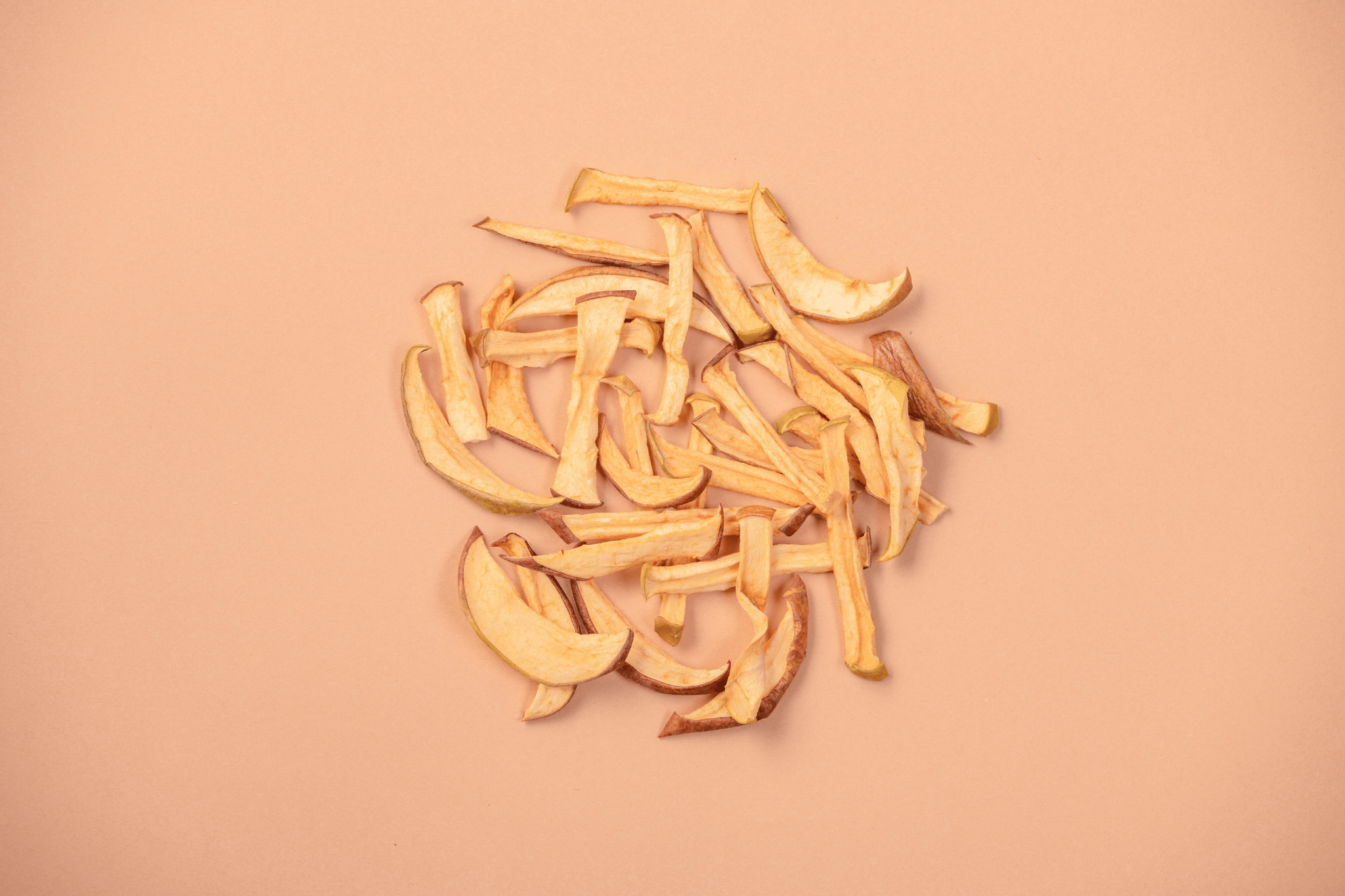
- Made with honey-cored "leaf-unremoved Shinshu apple"
- Sugar-free, dense natural sweetness
- Available in two forms, stick and dice
乾燥させると、りんご1個は何グラムになるか
ここは当社の本業の話です。国産の野菜と果物を乾燥させて業務用に供給しています。
水分が抜けて10分の1近くまで減る
りんごは水分の多い果物なので、乾かすと大きく目減りします。当社でりんごを乾燥させると、仕上がりは生の重さのおおよそ8分の1から10分の1になります。品種と厚みと仕上げの水分で幅が出ます。
| Fresh state | 芯を除いた重さ | 乾燥後の目安 |
|---|---|---|
| ふじ1個 350g | About 300g | 約30〜38g |
| 王林1個 300g | About 260g | 約26〜33g |
| 紅玉1個 240g | 約205g | 約20〜26g |
| 1kg分(ふじ約3個) | 約860g | 約86〜108g |
袋に入ったドライりんごが少なく見えるのは、このためです。30グラムの袋には、りんごがまるまる1個入っている計算になります。
厚みで仕上がりが変わる
- 薄く切る(2mm前後):早く乾き、軽い食感になる
- 厚く切る(5mm以上):中心まで乾くのに時間がかかり、しっとり仕上がる
- くし切り:厚みが一定にならないので、乾きにむらが出る
- 輪切り:厚みをそろえやすく、見た目もそろう
家庭で干すなら、輪切りにして厚みをそろえるのがいちばん失敗しません。切り方と手順はHow to dry apples.
乾燥させる品種の選び方
甘い品種ほどおいしくなる、とは限りません。糖が多いほど乾きにくく、べたつきが残りやすいからです。当社では乾燥に回す品種を、甘さだけで選ばないようにしています。
酸味のある品種は、乾かしても味の輪郭が残ります。紅玉やジョナゴールドが菓子に向くのと同じ理由です。仕上がりの例はDried appleに掲載しています。
大きいりんごと小さいりんご、どちらを選ぶか
重さが分かると、買うときの判断も変わります。
用途ごとの選び方
| Use | 向くサイズ | Reason |
|---|---|---|
| Eating as-is | 300g前後 | 1人で食べきれる量 |
| カットして数人で | 350g以上 | 切り分けやすい |
| 菓子・ジャム | 240〜300g | 酸味のある小玉が多い |
| すりおろし | 350g以上 | 1個で必要量に届く |
| 弁当・おやつ | 50〜150g | 小玉なら丸ごと1個で収まる |
小玉は味が落ちるわけではない
大きいほど良い、という思い込みがありますが、紅玉や未希ライフのように、もともと小ぶりな品種があります。青森県の資料も、恋空を「250グラム程度の小玉」と品種の特徴として書いています。
同じ品種の中で極端に小さいものは、日当たりや着果数の影響で育ちきらなかった場合があります。それでも味が落ちるとは限らず、価格が下がるぶん加工用には向きます。
りんごの重さと、日本の生産量
重さの話を数量に広げると、産地の姿が見えます。
青森県だけで37万トン
青森県の資料によれば、令和6年のりんご収穫量は370,500トンで、全国のりんご生産量の約6割を青森県が占めています。栽培面積と生産量はいずれも日本一です。
1個350グラムのふじに換算すると、37万トンはおよそ10億個です。県内の地域別では、弘前市を含む中南地域が栽培面積の66.1%を占めています。
品種はいくつあるのか
| Scope | 品種数 |
|---|---|
| 世界 | 約15,000種 |
| Japan | 約2,000種 |
| 青森県内で主に栽培 | About 50 varieties |
| 市場に主に出荷 | About 40 varieties |
| 青森県産業技術センターりんご研究所で栽培 | 約300種 |
店頭で見かけるのは40種ほど。日本にある品種の50分の1しか流通していないという数字です。品種ごとの位置づけはりんごの品種を栽培面積で並べ直した記事for more.
1年中あるのは貯蔵のしくみがあるから
りんごの収穫は8月から11月に集中します。それでも通年で買えるのは、産地が貯蔵しているからです。青森県内には令和7年現在で686棟、収容能力およそ34万トンの貯蔵施設that goes well with rice balls and ume dishes.
そのうち「CA貯蔵」と呼ばれる方式が、令和5年時点で貯蔵収容能力の約46%を占めます。青森県の資料は、CA貯蔵を「空気中に21%含まれる酸素を1.8〜2.5%に下げ」て呼吸を抑える方法だと説明しています。りんごを眠らせて出荷を待たせている.
家庭での保存はhow to store apples in winter.
原料としてりんごを調達するとき
ここからは、商品づくりのためにりんごを探している方に向けた話です。
歩留まりを先に見積もる
生のりんごから加工品を作るとき、最初に効いてくるのが歩留まりです。芯と種を除いた時点で1割前後、乾燥させれば8分の1から10分の1。1トンの生果から出てくる乾燥品は100キログラム前後です。
この比率を知らずに仕入れ量を決めると、必要量に届きません。試作の段階で実際の歩留まりを測っておくのが確実です。
品種の指定はできるか
産地と契約して品種を指定することはできますが、収穫期が8月から11月に集中するため、通年で同じ品種を確保するには貯蔵を前提にします。品種を絞るほど、調達の自由度は下がります。
当社では国産の野菜・果物の乾燥と粉砕をお受けしています。原料をお持ち込みいただく形にも対応していて、規格外のりんごを乾燥品にしたいというご相談も承っています。
FOR BUSINESS
乾燥りんごを、原料としてお探しですか
国産のりんごを乾燥・粉砕してお出ししています。カット形状や粒度の指定、継続してのお取引もご相談ください。規格は 乾燥りんご に掲載しています。
少量でのご購入は、姉妹ブランドの通販サイト OYAOYA で承っています。
Frequently asked questions
りんご1個は何グラムですか?
品種によって240グラムから500グラムまで開きがあります。青森県の資料では、ふじが350グラム程度、王林とつがるが300グラム程度、紅玉が240グラム程度、いちばん大きい世界一が500グラム程度とされています。レシピで品種の指定がなければ、300グラムを目安にすると外しません。
りんご1個の可食部は何グラムですか?
芯と種とへたを除くと、丸ごとの重さからおおよそ1割から1割5分減ります。ふじ350グラムなら300グラム前後です。皮まで剥くと、そこからさらに1割ほど落ちます。
りんごのLサイズは何グラムですか?
サイズの区分は産地ごとに定められていて、国が決めた全国共通の基準はありません。農林水産省の資料にも、出荷規格は産地が定めたものだと書かれています。箱に書かれた「36玉」などの玉数は、同じ箱に何個入るかを示す数字なので、箱の総重量を個数で割ると1個の重さが出ます。
How many apples a day may I eat?
当社は食品メーカーで、医療や栄養の専門家ではないため、個数の助言はできません。かかりつけの医師や管理栄養士にご相談ください。重さの換算だけお伝えすると、ふじ1個は350グラム、紅玉1個は240グラムで、同じ1個でも100グラム以上ちがいます。
レシピの「りんご1個」は何グラムのことですか?
多くの場合300グラム前後を想定しています。ただし菓子のレシピでは紅玉のような小ぶりで酸味のある品種を前提にしていることが多く、その場合は240グラムから300グラムです。品種の指定があればそちらに合わせてください。
ドライりんごは生のりんごどれくらいの量ですか?
当社で乾燥させたときの目安では、仕上がりは生の重さのおおよそ8分の1から10分の1です。ふじ1個350グラムなら、乾燥後は30グラムから38グラムほど。30グラムの袋には、りんごがまるまる1個入っている計算になります。
青森県のりんごは日本全体のどれくらいですか?
青森県の資料によれば、令和6年の収穫量は370,500トンで、全国のりんご生産量の約6割を占めます。栽培面積も生産量も日本一です。県内では弘前市を含む中南地域が栽培面積の66.1%を占めています。
りんごが1年中買えるのはなぜですか?
産地が貯蔵しているからです。青森県内には令和7年現在で686棟、収容能力およそ34万トンの貯蔵施設があります。そのうち約46%が「CA貯蔵」で、空気中の酸素を下げて呼吸を抑え、鮮度を長く保つ方式です。ふじのように翌年の8月まで出荷される品種もあります。
Summary
- りんご1個の重さは品種で決まる。240グラムから500グラムまで開きがある
- ふじは350グラム、王林とつがるは300グラム、紅玉は240グラム
- いちばん大きい世界一は500グラム、いちばん小さいアルプス乙女は約50グラム
- レシピの「1個」は300グラム前後が想定されていることが多い
- 芯と種を除くと1割から1割5分減り、皮を剥くとさらに1割落ちる
- S・M・Lの区分は産地が定めたもので、国の共通基準はない
- 箱の「36玉」は入る個数のこと。総重量を割れば1個の重さが出る
- 乾燥させると生の8分の1から10分の1になる
- 青森県だけで37万トン、全国の約6割を作っている
「1個」という単位は便利ですが、りんごに関しては100グラム以上の幅があります。グラムで把握しておけば、レシピでも買い物でも迷いません。
Recommended reading
- How to Store Apples in Winter: 10 Tips to Make Them Last
- A Thorough Guide to Drying Apples! 3 Steps and Tips You Can Do Easily at Home