How to Store Apples in Winter: 10 Tips to Make Them Last

Summary of this article
We explain how to store apples by room temperature, refrigeration, and freezing. Refrigeration (vegetable compartment) keeps them 1–2 months, late-ripening cultivars 2–3 months, and freezing up to 3 months. We have compiled tips for keeping them long—ethylene-gas countermeasures with newspaper and plastic bags, shelf life by cultivar, bulk storage, storage after cutting, and using up leftover apples by drying and jam.
When you buy apples, the first thing you wonder is "room temperature or refrigeration—which should I store them in?" To get straight to the point, storing apples in the refrigerator's vegetable compartment (0–5°C) keeps them longest. In the cool of autumn and winter, room temperature keeps them about 1 month; refrigeration (vegetable compartment) 1–2 months; and freezing up to 3 months as a guide. Refrigeration keeps them longer than room temperature, and late-ripening cultivars such as Sun Fuji keep even longer.
But the fresh apples you went to the trouble of getting turn wrinkled before you know it—have you ever had that experience? Apples keep surprisingly long depending on the storage method. First, let's check the differences by storage method with a quick-reference table.
| Storage method | Guide to shelf life | Ideal temperature | Suited situations |
|---|---|---|---|
| Room temperature | About 1 month | A cool place | Cool autumn/winter, or eating up soon |
| Refrigeration (vegetable compartment) | 1–2 months (late-ripening cultivars 2–3 months) | 0〜5℃ | The most reliable method year-round |
| Frozen | Up to 3 months | -18°C or below | Long-term storage of bulk or cut apples |
This article introduces in detail the points for keeping apples long—from using the three storage methods differently, to 10 concrete tips using newspaper and plastic bags, shelf life by cultivar, and how to store apples when you get a large quantity.
Recommended reading
TOC
Let's learn apples' storage period
Apples are a fruit strongly affected by temperature.
The storage period changes greatly depending on the storage-place environment. Managed appropriately, they can be stored long-term—about 1 month even at room temperature, 1–2 months in the refrigerator (vegetable compartment), and up to 3 months frozen. In cool seasons like autumn and winter, room-temperature storage is fine, but in spring and summer, temperatures are high, so refrigerated storage is recommended. Because apples are a fruit that prefers cool places, choosing the storage method to match the season is the basis for keeping them fresh.
For room-temperature storage
In the cool of autumn and winter, apples can be stored at room temperature for about 1 month. However, even in winter, temperatures rise in a heated room and apples spoil more easily, so caution is needed. For the storage place, choose a cool spot that is not heated. A place with little temperature change—an entryway, hallway, or a north-facing room—is ideal.
For refrigerated storage
Stored in the refrigerator, they stay fresh for about 1–2 months. Late-ripening cultivars such as Sun Fuji and Shinano Gold can last 2–3 months if wrapped appropriately and placed in the vegetable compartment. Because the temperature suitable for storing apples is around 0–5°C, the refrigerator's vegetable compartment is the ideal storage place. In seasons when temperatures rise, such as spring and summer, storing in the refrigerator rather than at room temperature is recommended. The vegetable compartment is set to a slightly higher temperature than the main refrigerator, providing a comfortable environment for apples.
For frozen storage
If you want to store them longer, freezing is effective. With frozen storage, apples' deliciousness can be kept for up to 3 months regardless of season. Freezing halved or cut apples is convenient, letting you use them right away for smoothies and confectionery. When freezing, soaking them in salt water or lemon water first to prevent discoloration allows for even more delicious storage.
10 tips for keeping apples long
To keep apples fresh, it is important to cover a few points.
Here we introduce 10 practical tips in detail. By combining these techniques, you can keep apples' freshness to the maximum.
1. Store in a cool place
Apples prefer a cool environment. When storing them, choose as cool a place as possible. The ideal storage temperature is around 0–5°C. Maintaining this temperature range suppresses apples' respiration and slows the decline in freshness. Even in winter, avoid heated rooms and choose a place with little temperature change.
2. Wrap in newspaper or paper towels
Apples are a fruit weak to drying. Stored as is, moisture evaporates and the texture easily turns mealy, so wrap them in newspaper or paper towels before storing. This bit of effort prevents moisture from evaporating from apples. Newspaper and paper towels also serve to ease sudden temperature changes, and by regulating temperature they have the effect of keeping apples' deliciousness longer.
3. Seal in a plastic bag
Apples wrapped in newspaper should be further placed in a plastic bag or storage bag, with the mouth of the bag closed firmly. This method suppresses the influence of the ethylene gas apples emit. Ethylene gas is a type of hormone essential to plant growth, but when it acts on harvested vegetables and fruit it promotes growth and has the effect of hastening spoilage. Sealing minimizes the influence of this gas.
4. Make use of the refrigerator's vegetable compartment
Apples placed in a plastic bag should be stored in the refrigerator's vegetable compartment. The vegetable compartment is set to a slightly higher temperature than the main refrigerator and retains humidity, making it the optimal environment for storing apples. Practicing this method prevents apples' moisture from evaporating and keeps them fresh for a long time.
5. Be thorough with ethylene-gas countermeasures
Apples are one of the fruits that emit a large amount of ethylene gas. When storing in a sealed space like a refrigerator, you need to consider the effect on other vegetables and fruit. If you want to store apples long-term, wrap them in plastic wrap or a plastic bag before storing to minimize the influence of ethylene gas. Conversely, if you want to ripen a rock-hard Western pear quickly, placing it in a bag together with an apple makes ripening progress more easily.
6. Wrap and store individually
By wrapping apples one by one individually, you can prevent a spoiled apple from affecting the others. Because apples spoil easily from the contacting parts, individual wrapping is very effective. Wrap them carefully one at a time in newspaper or paper towels, place them in a plastic bag, and store. With this method, even if some apples spoil, you can minimize the effect on the others.
7. Prevent discoloration of cut apples
Cut apples and halved apples discolor to a brownish tone easily when exposed to air. This phenomenon is caused by polyphenols contained in apples. If you want to store them while preventing discoloration, soak them for about 5 minutes in one of the following: salt water (400cc water, a pinch of salt), honey water (400cc water, 2 tbsp honey), sugar water (400cc water, 2 tbsp sugar), or lemon water (400cc water, 2 tsp lemon juice). Do not rinse the soaked apples under running water; press plastic wrap tightly against the cut surface and store them in the refrigerator's vegetable compartment, and they will keep about 2–3 days with discoloration suppressed.
8. Understand the storage characteristics by cultivar
Storability differs by apple cultivar. Fuji and Sun Fuji have high storability and, stored appropriately, can keep their deliciousness for a long time. On the other hand, it is recommended to eat Tsugaru relatively soon. By understanding each cultivar's characteristics and adjusting the storage method and consumption order, you can enjoy apples more efficiently. The next section summarizes the shelf-life guidelines by cultivar.
9. Make use of frozen storage
If you want long-term storage, freezing is very effective. If you freeze cut apples so they do not touch air, you can store them for up to 3 months. Frozen apples are convenient for smoothies and confectionery, and their appeal is that they can be used as is without thawing. Doing anti-discoloration treatment before freezing lets you eat them deliciously even after thawing.
10. Check regularly
Check stored apples regularly. When you find a spoiled apple, removing it immediately prevents the effect on the others. Also, check whether the temperature and humidity of the storage environment are appropriate and adjust as needed to keep apples fresh longer. A check about once a week is ideal.
Shelf-life guidelines by cultivar
"How long they keep" changes greatly by cultivar. If you choose cultivars suited to long-term storage, you can enjoy them for months even at home. We organized the shelf-life guidelines for representative cultivars.
| Variety | Harvest season | Refrigerated shelf-life guideline | Suitability for storage |
|---|---|---|---|
| Sun Fuji, Fuji | Late-ripening (November–December) | 2–3 months | The most suited to long-term storage |
| Shinano Gold | Late-ripening (October–November) | 2–3 months | Firm flesh, keeps well |
| Orin | Late-ripening (November) | 1–2 months | Before the aroma fades |
| Kogyoku (Jonathan) | Mid-ripening (October) | 3–4 weeks | Suited to processing and jam |
| Tsugaru | Early-ripening (September) | 2–3 weeks | Eat up soon |
As the table shows, late-ripening Sun Fuji and Shinano Gold have high storability and keep 2–3 months if refrigerated appropriately. On the other hand, early-ripening Tsugaru has a short shelf life, so the basic rule is to eat it up soon after buying. Even the same "apple," varying the consumption pace by cultivar lets you eat them up without waste.
How to store apples in bulk
When you get a large quantity of apples by the box or as a share, wrapping them one by one before gathering them in a box or bag keeps them long.
When using a cardboard box, arrange the apples—each wrapped in newspaper—stem-side down, and place the whole box in a cool, dark, unheated place (entryway, hallway, north-facing room, under-floor storage, etc.). Inserting newspaper between the apples so they do not touch each other makes it harder for one spoiled apple to spread to the whole. In seasons with high temperatures, it is safer to place them in a plastic bag and move them to the refrigerator's vegetable compartment.
This applies, at a household scale, the long-term-storage thinking that growing regions in Aomori and Nagano Prefectures use in temperature- and humidity-managed storage facilities. For what you cannot eat up, moving it early to freezing or cut storage avoids waste.
Points worth knowing about storing apples
Beyond the storage methods, it is important to understand apples' characteristics.
Before and after storage, being conscious of the "order to eat" and "identifying spoiled individuals" lets you eat them all without waste to the end. Eating early-ripening Tsugaru first and leaving the longer-keeping Sun Fuji for later is efficient. Apples with a soft spot when pressed on the surface or brown spots are showing signs of the start of spoilage, so eat them soon or move them to processing.
Make use of ethylene gas's characteristics
The ethylene gas released from apples works to promote the ripening of other fruit. For example, if you want to ripen a rock-hard La France quickly, storing it in a bag together with an apple makes ripening progress more easily. Knowing this characteristic is convenient for adjusting the fruit you have on hand to ripeness.
Learn the growing regions' storage technology
The reason apples harvested in season line the store shelves until winter is that the growing regions' storage technology and management systems are established. In major growing regions such as Aomori and Nagano Prefectures, apples are kept in storage facilities with strictly managed temperature and humidity. Applying this principle at home too, and carrying out appropriate temperature and humidity management, lets you enjoy delicious apples for a long time.
The balance of temperature and humidity
For storing apples, not only temperature but also humidity is essential. Too much drying makes apples wrinkle, and too high humidity makes mold prone to occur. The refrigerator's vegetable compartment retains moderate humidity and is ideal, but when storing at room temperature, pay attention to humidity as well. Wrapping in newspaper lets you keep moderate humidity.
Apples you cannot store, use up by drying and jam
When apples you cannot eat up or that have started to spoil appear, we recommend using them up without waste by drying or jam. Around when they become a little soft when pressed is the guide for switching from raw eating to processing (based on our own findings).
Slice them thin and dry them and they become dried apple, keeping even longer at room temperature. For how to make it, see A thorough explanation of how to dry apples. Simmering them down into apple jam lets you use even apples that you halved and removed the spoiled parts from, making a companion for bread and yogurt. For how to eat dried apple, Arrangements for eating dried apple is also helpful for reference. For commercial and OEM dried apple, we also handle it at Product information for domestic dried apple.
Summary: keep apples delicious and long-lasting
Storing apples is by no means difficult if you know the appropriate method.
When in doubt, the refrigerator's vegetable compartment (0–5°C) is the basic choice. Storage in a cool place, drying and ethylene-gas countermeasures using newspaper and plastic bags, and understanding cultivar characteristics—practicing these tips lets you enjoy delicious apples the whole time. Using the guidelines of about 1 month at room temperature, 1–2 months refrigerated, and up to 3 months frozen, choose the optimal method to match the season and use.
Choose long-keeping cultivars like Sun Fuji and Shinano Gold, use box storage in a cool, dark place or freezing when you have a large quantity, and make use of drying and jam when you cannot eat them up, and you can enjoy apples without waste to the end. Please try these storage techniques starting today.
Honey-cored Shinshu apple, domestic dried apple
Sugar-free, a crunchy new texture—dried fruit of honey-cored "leaf-unremoved Shinshu apple"
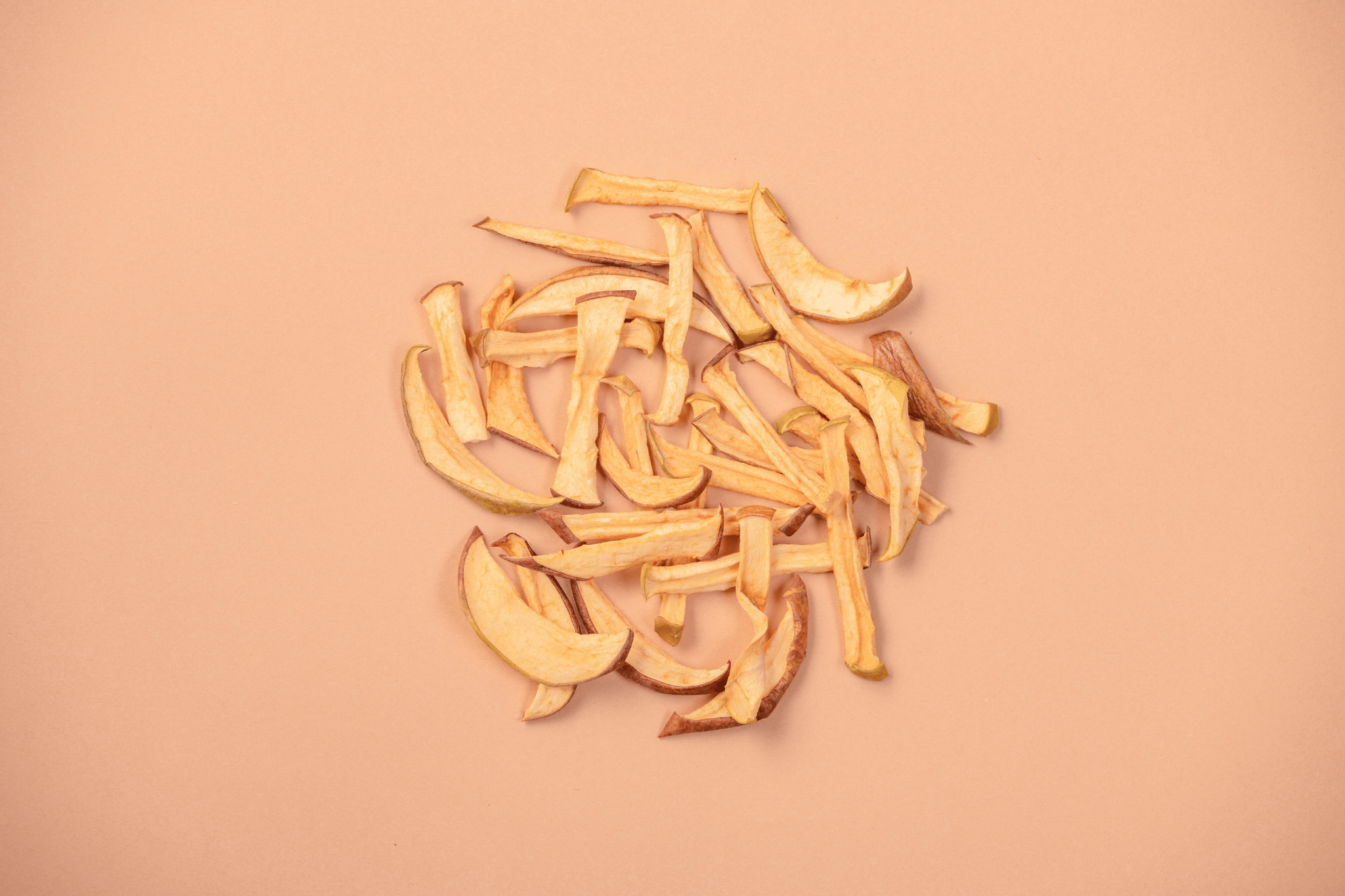
- Made with honey-cored "leaf-unremoved Shinshu apple"
- Sugar-free, dense natural sweetness
- Available in two forms, stick and dice
FOR BUSINESS
乾燥りんごを、原料としてお探しですか
国産のりんごを乾燥・粉砕してお出ししています。カット形状や粒度の指定、継続してのお取引もご相談ください。規格は 乾燥りんご に掲載しています。
少量でのご購入は、姉妹ブランドの通販サイト OYAOYA で承っています。
FAQ
- Differences among apple growing regions? Comparing Aomori, Nagano, and Yamagata
- りんご1個は何グラム?ふじは350グラム、紅玉は240グラムです