How to Make Dried Persimmon: Tips to Prevent Mold, How to Bring Out the White Bloom, and Storage

Summary of this article
We explain how to make hoshigaki, from choosing astringent persimmons to peeling, sterilizing, hanging, kneading, and mold prevention. We also introduce how to draw out the white powder and the option of easy dried persimmon.
Hoshigaki, a seasonal feature from autumn into winter. The way astringent persimmons are reborn sweet by sun and wind can be reproduced at home. That said, failures such as “mold grew” or “it didn't turn sweet well” are common, and mastering a few tips is the dividing line for success.
This article explains how to make hoshigaki step by step, from choosing astringent persimmons to peeling, removing astringency, hanging, kneading, mold prevention, and drawing out the white powder. From the perspective of Agriture, which handles the drying of persimmons, we also introduce a way to enjoy the sweetness of persimmon without the effort of hanging.
TOC
What is hoshigaki? Types and the reason for using astringent persimmons
Hoshigaki is a preserved food made by drying astringent persimmons to remove astringency and draw out sweetness. First, let's cover the types and why astringent persimmons are used.
The difference between anpo-gaki and koro-gaki
Hoshigaki changes name by degree of drying. The half-dried, juicy kind is called “anpo-gaki,” and the kind dried firmly so that white powder forms on the surface is called “koro-gaki (koro-gaki).” As a guide, if you like a soft texture, anpo-gaki; if you emphasize rich sweetness and shelf life, koro-gaki.
The reason for using astringent persimmons
For hoshigaki, astringent persimmons are used, not sweet persimmons. The astringency (tannin) of astringent persimmons changes during drying into a form that does not dissolve in water, so you no longer feel astringency in the mouth. This is “removing astringency.” When moisture is removed by drying, the sugars concentrate, becoming a rich sweetness unimaginable from a raw astringent persimmon.
FOR BUSINESS
乾燥柿を、原料としてお探しですか
国産の柿を乾燥・粉砕してお出ししています。カット形状や粒度の指定、継続してのお取引もご相談ください。規格は Dried Persimmon に掲載しています。
柿の少量販売は姉妹ブランドの OYAOYA では取り扱いがありません。ほかの品目はカタログをご覧ください。
What you need to make hoshigaki and the suitable season
For making hoshigaki, the finish changes greatly with ingredient choice and season choice. Let's check the points of preparation.
How to choose astringent persimmons
Choose astringent persimmons that are firm around the calyx and free of bruises or soft spots. Ideally, ones with the calyx branch (T-shape) remaining for hanging. Representative varieties include Ichida-gaki and Hachiya-gaki, and the more well-shaped ones finish more cleanly. Avoid overripe, soft persimmons, as they tend to fall while hanging.
When to start making it
Suitable for making hoshigaki is around November to December, when the minimum temperature falls below 10 degrees C. When it is warm, mold grows easily, and the drier, colder the air when you hang them, the more cleanly they dry. Choosing a low-rain, well-ventilated period is the first step to preventing failure. Conversely, in years when warm days continue, it is safer to wait for the temperature to drop rather than forcing it.
The steps for making hoshigaki
The basic steps are the four steps of “peel → sterilize → hang → knead.” Let's look at them in order.
1. Peel
Leaving the area around the calyx, peel the whole surface with a peeler or knife. If skin remains near the calyx, only that part dries more slowly and becomes a cause of mold, so peel as cleanly as possible. Drying begins as the peeled persimmon's surface touches the air.
2. Sterilize (shochu or boiling water)
To prevent mold, dip the peeled persimmon in boiling water for about 5 to 10 seconds to sterilize the surface. Instead of boiling water, dipping the calyx portion in shochu (white liquor of around 35 proof) is also effective. The alcohol curbs the growth of microbes and greatly reduces early-stage mold.
3. Hang on string
Tie vinyl string or kite string to the calyx branch and hang the persimmons spaced apart so they do not touch each other. A place free from rain and well-ventilated, such as under the eaves or on a balcony, is suitable. When persimmons touch, that part does not dry and molds easily, so the tip is to space them firmly.
4. Knead
About a week after you start drying, once the surface has dried, knead gently by hand. Loosening the flesh inside makes drying proceed evenly and finishes it with a soft texture. Repeating this two to three times every few days greatly improves both sweetness and texture. The point is not to knead while the surface is damp, but to do it after it has dried.
Tips to keep hoshigaki from molding
The greatest enemy in making hoshigaki is mold. Most failures happen here. We have organized the points for preventing it.
- Avoid warm periods and start after the minimum temperature falls below 10 degrees C
- Sterilize the surface with boiling water or shochu immediately after peeling
- Do not let persimmons stick together; hang them in a well-ventilated place
- Bring them indoors on bad-weather days so they are not exposed to rain or night dew
- Directing a fan at them early on dries the surface faster and makes them less prone to mold
If, instead of white powder, fuzzy blue or black mold grows on the surface, do not eat that persimmon; dispose of it. For those who want to know the drying mechanism itself, The difference between freeze-drying and dried vegetables.
How to draw out the white powder (persimmon frost)
The white powder that forms on the surface of koro-gaki is called “kashimo (persimmon frost)”; it is not mold but crystallized persimmon sugar. Drawing it out increases sweetness and gives a refined appearance.
To draw out the white powder, once the hoshigaki has dried to some degree, remove the calyx, knead lightly, wrap in newspaper or the like, and leave it for several days to two weeks in a cool place around 10 degrees C. Resting it in a cool, dark place makes the sugar rise to the surface and turn white. If drying is insufficient, the powder is hard to form, so the tip is to dry it firmly before doing this.
Judging hoshigaki as done and how to store it
When to consider it done, and how to store the finished hoshigaki, are also important. Judge according to your preferred texture.
A guide to when it is done
Two to four weeks after hanging is a guide. The state where the surface is dry and the inside is soft is anpo-gaki; the one dried further so the whole is moist and firm and has formed white powder is koro-gaki. Once it reaches your preferred softness by touch, bring it in. Over-drying makes it hard, so it is important to check on it frequently.
How to store it and shelf life
Finished hoshigaki can be wrapped one by one in plastic, placed in a storage bag, and stored in the refrigerator for about two weeks to one month. If you want to store it longer, freezing is recommended and keeps the flavor for about half a year. Since it spoils easily at room temperature, move it to refrigeration or freezing soon after it is done. The storage thinking common with other dried fruit is A complete guide to storing dried fruit.
Delicious ways to eat and use hoshigaki
It is exceptional eaten as is, but hoshigaki also shines in cooking and confections. We introduce simple ways to use it.
Sliced thin and combined with cream cheese or butter, it becomes a snack that goes with wine. Chopped and added to namasu or shira-ae, its refined sweetness enhances the dish. It is also used as a Japanese-confection ingredient and pairs excellently with yokan and monaka. Hoshigaki butter, with butter sandwiched inside, is a popular way to eat it that is easy to make.
Hoshigaki that has hardened becomes easier to eat if chopped and put into yogurt or floated in black tea. Adding a little yuzu peel brings out a Japanese aroma and suits New Year's hospitality as well. For how to use citrus, The types and differences of citrus fruits.
The option of dried persimmon, enjoyed without the effort of hanging
If “there's no place to hang them” or “I'm worried about mold,” one option is to choose commercially available dried persimmon. In fact, there are also products made a different way from hoshigaki, so knowing the difference makes them easier to choose.
The difference between hoshigaki and sliced dried persimmon
In contrast to hoshigaki (koro-gaki), finished by hanging under the eaves, there is also a sliced-dried type that removes moisture after slicing thin or dicing. Agriture's Dried Persimmon is the latter, using domestically grown sweet persimmons and finished with no added sugar, making use of the persimmon's own sweetness without relying on astringency removal or sugar-syrup soaking. Unlike sticky hoshigaki, a light bite remains within the softness, giving a shape easy to use for mixing into confections and cereal.
The background of specializing in domestically grown dried fruit is A specialist manufacturer of domestically grown dried fruit also introduced on the page.
FOR BUSINESS
乾燥柿を、原料としてお探しですか
国産の柿を乾燥・粉砕してお出ししています。カット形状や粒度の指定、継続してのお取引もご相談ください。規格は Dried Persimmon に掲載しています。
柿の少量販売は姉妹ブランドの OYAOYA では取り扱いがありません。ほかの品目はカタログをご覧ください。
If you want to use it commercially or for OEM
If you want to use persimmon as an ingredient in Japanese confections, baked confections, or granola, you can consult on the two specifications of slice and dice from a small lot of 100 g. Persimmon has good affinity with Japanese sweets and suits adding color and flavor to autumn-winter seasonal products. For consultations on raw-material supply and product development, How to proceed with dried fruit OEM.
FAQ
We have compiled questions often asked about making hoshigaki.
A product catalog that shows around 100 items we handle
Agriture, flexibly handling everything from small lots to large lots
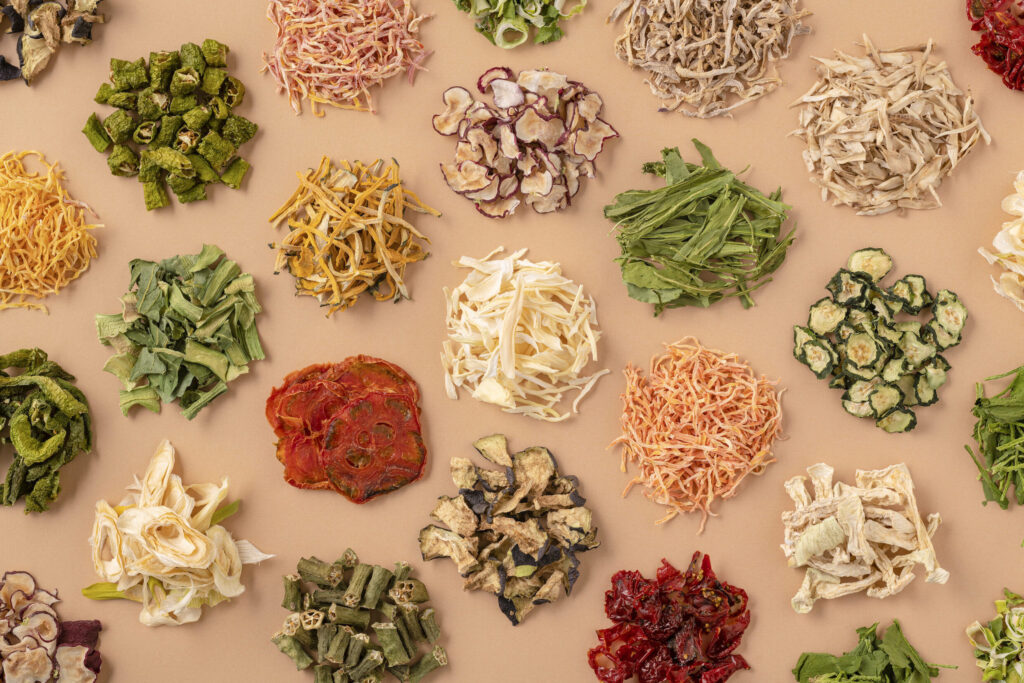
- Available for purchase in small lots from 1 kg
- We handle heirloom vegetables from across Japan
- Dried fruit and herbs also supported
Summary
Making hoshigaki can be done at home if you master this flow—peel the astringent persimmons, sterilize with boiling water or shochu, hang them in a well-ventilated place, and knead. The keys to success are choosing a period when the temperature drops, not letting persimmons stick together, and frequently drying the surface to prevent mold.
If you finish it as koro-gaki with white powder, you can enjoy a rich sweetness that rivals commercial products. When you have no environment for hanging, skillfully adopt the option of no-added-sugar sliced dried persimmon and savor the autumn flavor.
- How to Eat and Choose Dried Mango: Using It with Yogurt and Storage Tips
- How to Use Shikuwasa: Making the Most of the Juice and Peel, Plus a Honey-Marinade Recipe