
What are Okayama’s heirloom vegetables? Features, season, and ways to eat the 12 varieties (including GI Tsurajima burdock and Bizen black-skin kabocha) explained

Okayama Prefecture's heirloom vegetables are varieties handed down amid diverse terrain, such as the warm climate of the Seto Inland Sea coast, the Kibi Plateau and the Chugoku Mountains, the sandy loam of the Kurashiki and Okayama plains, and the reclaimed land of Kojima Bay. The Japan Traditional Vegetable Promotion Association organizes Okayama Prefecture's 12 regional items (as of September 2023); this article explains 10 vegetable items in the main text and covers the more fruit-leaning kuro suika and Mohei uri in the "other local specialty varieties" section at the end.
Tsurajima, registered as GI No. 24 in December 2016 burdock, the burdocks Ashimori gobo, Hisashi gobo, and Meiji gonbo, the silk-thin-skinned Koromogawa nasu, Setouchi City's Bizen kurokawa kabocha (2024 GI No. 143), Omachi seri continuing from the Edo period, Bizen City Tsurumi's Tsurumi nasu, Mimasaka's Manzen kabura, Maniwa's Doibun kona, and other native varieties of Bizen, Bicchu, and Mimasaka are introduced.
TOC
The definition of "heirloom vegetable" and the scope of this article
There is no nationwide unified definition of “heirloom vegetables,” and criteria differ by certifying body. We lay out the criteria of the main certifying bodies.
| Certifying body | Main criteria |
|---|---|
| Kyoto Prefecture "Kyoto Heirloom Vegetables" | Has a cultivation history from before Meiji and covers the whole prefecture (includes bamboo shoots, excludes mushrooms and ferns, and includes extinct items) |
| Osaka Prefecture "Naniwa Heirloom Vegetables" | Cultivated within Osaka Prefecture from roughly 100 or more years ago |
| Nara Prefecture "Yamato Heirloom Vegetables" | Production in this prefecture confirmed from before the war; distinctive cultivation method, flavor and aroma, form, and provenance characteristics |
| Nagano Prefecture "Shinshu Heirloom Vegetable Certification System" | Provenance, food culture, variety traits (provenance from before the 1955-1965 period) |
| Okayama Prefecture | No prefecture-specific heirloom vegetable certification system. JA Hare-no-Kuni Okayama and each municipality support regional branding |
This article covers 10 vegetable items in the main text out of the 12 Okayama items organized by the Japan Traditional Vegetables Promotion Association, and separately introduces kuro suika (watermelon) and Mohei uri (makuwa melon) in the "other local specialty varieties" section at the end.
What are Okayama's heirloom vegetables? The food culture of Bizen, Bicchu, and Mimasaka
| Area | Representative items | Regional characteristics |
|---|---|---|
| Bizen (Okayama City, Setouchi, Bizen) | Ashimori gobo, Omachi seri, Tsurumi nasu, Bizen kurokawa kabocha, kuro suika | The center of the Seto Inland Sea coast and the Okayama Plain |
| Bicchu (Kurashiki, Ibara, Kasaoka, Takahashi) | Tsurajima gobo, Koromogawa nasu, Meiji gonbo, Mohei uri | The Takahashi River basin and the Kurashiki and Kojima areas |
| Mimasaka (Tsuyama, Maniwa, Mimasaka City) | Hisashi gobo, Doibun kona, Manzen kabura | The southern foot of the Chugoku Mountains and the Kibi Plateau |
Led by four burdock items (Ashimori, Tsurajima, Hisashi, Meiji), it lines up eggplant, turnip, leafy vegetables, and gourds. From the Bizen coast to the Mimasaka mountains, the item composition differs by terrain.
Historical background: sandy-loam burdock-producing regions and traditional pickles
- Tsurajima gobo — Full-scale cultivation began around the late 1940s in the Tsurajima area of Kurashiki City, and it was registered as GI No. 24 of the Ministry of Agriculture, Forestry and Fisheries on December 7, 2016
- Omachi seri — Open-field water dropwort from the Takashima district of Naka Ward, Okayama City. A native item cultivated continuously since the Edo period, now rare with about two producers
- Manzen kabura — A turnip with a red-purple neck from the Manzen district of Mimasaka City. A variety suited to pickles
- Bizen kurokawa kabocha (Bizen black-skinned pumpkin) — A black-skinned pumpkin cultivated in places like Ushimado Town, Setouchi City. Registered as GI No. 143 of the Ministry of Agriculture, Forestry and Fisheries on January 29, 2024
FOR BUSINESS
乾燥野菜を業務用でお探しですか
国産の野菜・果物を乾燥し、必要に応じて粉砕してお出ししています。扱っている品目は100種前後で、規格は 乾燥品の一覧・パウダーの一覧 に掲載しています。
少量でのご購入は、姉妹ブランドの通販サイト OYAOYA で承っています。
A list of Okayama's 10 main heirloom vegetables and a seasonal calendar
Four burdock items
| Item | Features | Growing region | Season |
|---|---|---|---|
| Tsurajima gobo | Fair-skinned, soft, and sweet (GI No. 24) | Kurashiki City (Tsurajima, Mizushima, Nishiachi, Odaka areas) | Grown three times a year, shipped year-round |
| Ashimori gobo | Thick and short, white, soft flesh | Fukutani, Kita Ward, Okayama City | August to February |
| Hisashi gobo | Soft, dense flesh | Hisashi, Mimasaka City | Late September to December |
| Meiji gonbo | Thick, fine-fibered, strongly sweet | Udogawa and Meiji, Yoshii Town, Ibara City | Late August to late March |
Eggplants, turnips, pumpkin
| Item | Features | Growing region | Season |
|---|---|---|---|
| Koromogawa nasu | The thin-, soft-skinned "silk eggplant" | Kojima and Hayashi, Kurashiki City | June to October (peak in August) |
| Tsurumi nasu | Late-maturing, red-purple, few seeds | Tsurumi, Bizen City | Early July to mid-October |
| Manzen kabura | Red-purple neck, curved root, for pickles | Manzen, Mimasaka City | November–December |
| Bizen kurokawa kabocha / Bizen black-skinned pumpkin (GI No. 143) | Deep black-green skin, viscous, sticky-textured flesh | Setouchi City, Okayama Prefecture | Harvested July to August, shipped December to the following June after long-term storage |
Leafy greens
| Item | Features | Growing region | Season |
|---|---|---|---|
| Omachi seri | Open-field from the Edo period, now two producers | Takashima, Naka Ward, Okayama City | Late December to March (peak January to February) |
| Doibun kona | Ten stalks emerge from one plant, with pungency and slight bitterness | Kurogui, Maniwa City | Mid-October to March |
A product catalog that shows around 100 items we handle
Agriture, flexibly handling everything from small lots to large lots
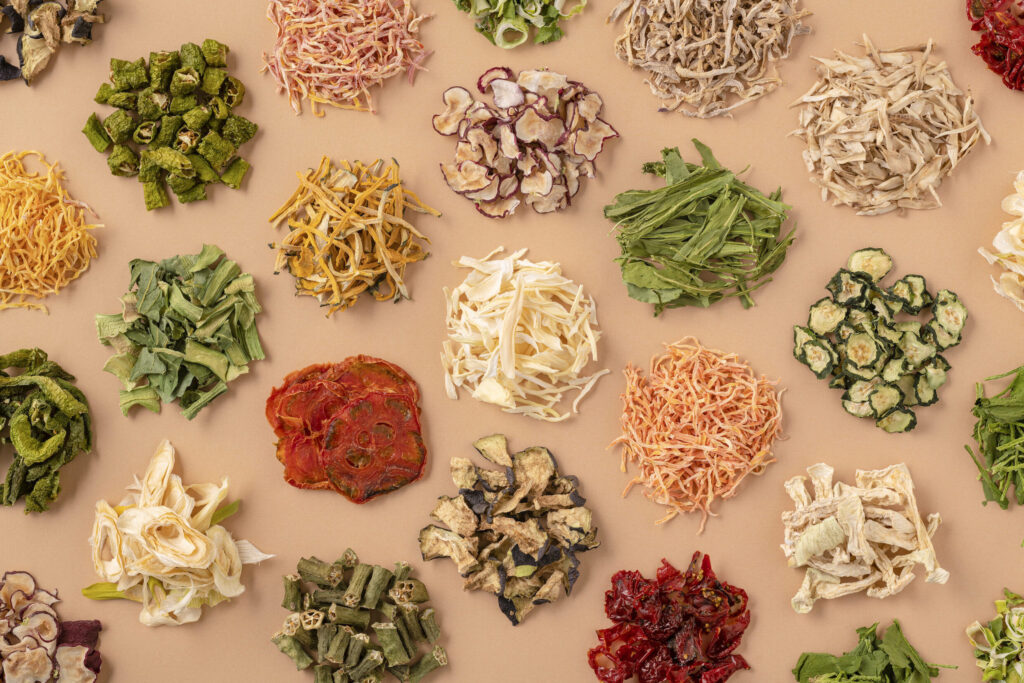
- Available for purchase in small lots from 1 kg
- We handle heirloom vegetables from across Japan
- Dried fruit and herbs also supported
The characteristics and ways to eat seven representative Okayama heirloom vegetables
Of the 10 items, considering the GI registration status and the weight of association listing, we take up seven representative items.
Tsurajima gobo — the branded burdock of GI No. 24
| Season | Grown three times a year and shipped year-round |
| Growing region | Tsurajima area, Mizushima area, Nishiachi, and Odaka of Kurashiki City |
| Well-suited dishes | Kinpira, simmered dishes, tempura, salad |
Tsurajima gobo is a native burdock whose full-scale cultivation began around the late 1940s in the Tsurajima area of Kurashiki City, and it was registered as Geographical Indication (GI) No. 24 of the Ministry of Agriculture, Forestry and Fisheries on December 7, 2016. With cultivation in well-draining sandy loam based on soil diagnosis, it achieves a white skin of even length and a flavor that is soft, sweet, and leaves no fiber in the mouth.
It grows quickly, and forcing cultivation allows three plantings a year, so year-round shipping is also a characteristic. Its flavor stands out in kinpira, simmered dishes, and tempura. Distributed nationwide with a GI mark, it forms one of western Japan's leading burdock-producing regions.
Ashimori gobo — Okayama City's thick, short, fair-skinned burdock
| Season | August to February |
| Growing region | Fukutani district, Kita Ward, Okayama City |
| Well-suited dishes | Simmered dishes, kinpira, tempura, burdock dishes |
Ashimori gobo is a native burdock cultivated in the Fukutani district of Kita Ward, Okayama City, with a stubby shape thicker and shorter than common burdock and a white, soft flesh as its signature. The Ashimori area lies on the north side of Kibi no Nakayama, and the sandy loam and foothill climate suit burdock cultivation.
Cut into rounds and simmered, its texture comes alive, and you can enjoy its softness in kinpira and tempura too. In its August-to-February season, it is shipped at JA farm stands within Okayama City.
Koromogawa nasu — the thin-skinned "silk eggplant"
| Season | June to October (peak in August) |
| Growing region | Kojima and Hayashi districts, Kurashiki City |
| Well-suited dishes | Grilled eggplant, agebitashi, light pickles, salad |
Koromogawa nasu is a native eggplant cultivated in the Kojima and Hayashi districts of Kurashiki City, also called "silk eggplant" for its thin, soft skin. Owing to the thin skin, it is a soft-textured variety also used in light pickles and salads.
Made into grilled eggplant or agebitashi, you can enjoy a melting texture that makes the most of its thin skin. In its June-to-October season, especially the August peak, it is shipped at farm stands in the Kojima district of Kurashiki City.
Bizen kurokawa kabocha — the sticky black-skinned pumpkin of Setouchi
| Shipping period | December to the following June (harvested July to August, long-storage type) |
| Growing region | Setouchi City, Okayama Prefecture (GI-registered region) |
| Well-suited dishes | Simmered dishes, soup, potage, tempura |
Bizen kurokawa kabocha (Bizen black-skinned pumpkin) is a black-skinned pumpkin cultivated in Setouchi City, Okayama Prefecture, a Japanese-pumpkin lineage characterized by deep black-green skin and viscous, sticky flesh. It is harvested in summer (July to August), but has high storability and is shipped over a long period from December to the following June while being after-ripened in a cool, dark place. On January 29, 2024, it was registered as GI No. 143 under "Bizen kurokawa kabocha / Bizen black-skinned pumpkin" (registering body: Bizen Kurokawa Kabocha Promotion Council).
Made into simmered dishes, its viscous, sticky texture stands out, and made into soup or potage, it finishes with a smooth mouthfeel. In tempura, you can enjoy the flesh's richness.
Omachi seri — Okayama's open-field water dropwort continuing from the Edo period
| Season | Late December to March (peak January to February) |
| Growing region | Takashima district, Naka Ward, Okayama City |
| Well-suited dishes | Seri hot pot, ohitashi, aemono, tempura |
Omachi seri is an open-field water dropwort cultivated continuously since the Edo period in the Takashima district of Naka Ward, Okayama City, and according to the Japan Traditional Vegetables Promotion Association (as of September 2023), producers have declined to about two households. An open-field crop eaten down to the root, it is characterized by strong aroma.
Made into seri hot pot, you can enjoy it whole from root to leaf, and its aroma stands out in ohitashi, aemono, and tempura too. In the January-to-February peak, it circulates in limited amounts at farm stands within Okayama City.
Manzen kabura — Mimasaka's red-purple-necked turnip
| Season | November–December |
| Growing region | Manzen, Mimasaka City |
| Well-suited dishes | Pickles, vinegar pickling, simmered dishes |
Manzen kabura is a native turnip cultivated in the Manzen district of Mimasaka City, characterized by a distinctive shape with a red-purple neck and a root that curves like an ox horn. Its flesh suits pickles, and its crimson coloring comes alive in vinegar and salt pickling.
In its November-to-December season, it is shipped at JA farm stands within Mimasaka City and used as a regional winter pickle ingredient.
Meiji gonbo — Ibara City's strongly sweet thick burdock
| Season | Late August to late March |
| Growing region | Udogawa and Meiji districts, Yoshii Town, Ibara City |
| Well-suited dishes | Kinpira, simmered dishes, tempura, burdock steak |
Meiji gonbo is a thick burdock cultivated in the Udogawa and Meiji districts of Yoshii Town, Ibara City, with fine fiber and strong sweetness as its signature. A native variety handed down in the mountainous part of Ibara City, per JA Hare-no-Kuni Okayama's information it is shipped from late August to late March.
Its sweetness stands out in kinpira and simmered dishes, and it also suits dishes that enjoy the ingredient's flavor, like burdock steak. It is shipped at JA farm stands within Ibara City.
How to buy Okayama's heirloom vegetables and tips for storage
| Item | Main sources | Timing |
|---|---|---|
| Tsurajima gobo | JA Hare-no-Kuni Okayama, farm stands within Kurashiki City, nationwide mail order (with GI) | Year-round |
| Ashimori gobo | JA farm stands within Okayama City | August to February |
| Hisashi gobo | JA farm stands within Mimasaka City | Late September to December |
| Meiji gonbo | JA farm stands within Ibara City | Late August to late March |
| Koromogawa nasu | Farm stands in the Kojima district of Kurashiki City | June to October |
| Bizen kurokawa kabocha | Farm stands within Setouchi City (storage type) | Shipped December to the following June |
| Omachi seri | Farm stands within Okayama City | Late December to March |
| Manzen kabura | JA farm stands in Mimasaka City | November–December |
Mail order / hometown tax to outside the prefecture
- Tsurajima gobo — Shipped year-round as a furusato nozei gift item of Kurashiki City. With a GI mark
- Ashimori gobo — Shipped in autumn and winter as a furusato nozei gift item of Okayama City
- Bizen kurokawa kabocha — Shipped in winter to spring via Setouchi City's furusato nozei
- Processed products — Kurashiki burdock crackers, processed Omachi seri products, Manzen kabura pickles, and others circulate
A product catalog that shows around 100 items we handle
Agriture, flexibly handling everything from small lots to large lots
- Available for purchase in small lots from 1 kg
- We handle heirloom vegetables from across Japan
- Dried fruit and herbs also supported
Efforts to protect Okayama's heirloom vegetables
| Efforts | Details |
|---|---|
| Tsurajima gobo GI registration | Registered as GI No. 24 on December 7, 2016 |
| Bizen kurokawa kabocha GI registration | Registered as GI No. 143 on January 29, 2024 (registering body: Bizen Kurokawa Kabocha Promotion Council) |
| The regional development of JA Hare-no-Kuni Okayama and JA Kurashiki Kasaya | Brand management and regional marketing of Tsurajima gobo |
| Support for carrying on Omachi seri | Okayama City supports carrying on the production of open-field water dropwort from the Edo period |
| Branding by each regional JA | Actively promoting Ashimori gobo, Meiji gonbo, Bizen kurokawa kabocha, and others as regional products |
FOR BUSINESS
乾燥野菜を業務用でお探しですか
国産の野菜・果物を乾燥し、必要に応じて粉砕してお出ししています。扱っている品目は100種前後で、規格は 乾燥品の一覧・パウダーの一覧 に掲載しています。
少量でのご購入は、姉妹ブランドの通販サイト OYAOYA で承っています。
FAQ
Other regional specialty varieties
They are included in the Japan Traditional Vegetables Promotion Association's list, but we separately introduce items classified as fruit-like vegetables such as watermelon and gourds.
| Item | Category | Growing region | Features |
|---|---|---|---|
| Kuro suika | Watermelon (fruit-like vegetable) | Senju, Ushimado Town, Setouchi City | A native watermelon with no stripes and deep-green to black-green skin, an oval shape, and red flesh |
| Mohei uri | Makuwa melon (fruit-like vegetable) | Mohei, Kasaoka City | A white makuwa melon with good aroma and strong sweetness. In season July to September |
Summary
Okayama's heirloom vegetables number 12 varieties, including two GI items: Tsurajima gobo (GI No. 24, 2016) and Bizen kurokawa kabocha (GI No. 143, 2024). The composition adds two fruit-leaning items, kuro suika and Mohei uri, to 10 vegetable items consisting of four burdock items and Koromogawa nasu, Tsurumi nasu, Manzen kabura, Omachi seri, Doibun kona, and Bizen kurokawa kabocha, spreading across Bizen, Bicchu, and Mimasaka. It is a group of items handed down amid terrain such as the warm Seto Inland Sea climate, the sandy loam of the Kurashiki and Okayama plains, and the mountainous part of the Kibi Plateau.
In summer, Koromogawa nasu, Tsurumi nasu, and Mohei uri; in autumn and winter, the burdocks and Manzen kabura; and from winter to spring, Omachi seri, Doibun kona, and Bizen kurokawa kabocha, with Okayama-grown native varieties circulating by season. Through furusato nozei and farm stands, you can bring the ingredients of Bizen, Bicchu, and Mimasaka to the home table.
References / information sources
- Japan Traditional Vegetables Promotion Association, "Okayama Prefecture"
- Ministry of Agriculture, Forestry and Fisheries GI No. 24 "Tsurajima gobo"
- Ministry of Agriculture, Forestry and Fisheries GI No. 143 "Bizen kurokawa kabocha / Bizen black-skinned pumpkin"
- Bizen Kurokawa Kabocha Promotion Council
- JA Hare-no-Kuni Okayama "Tsurajima gobo"
- National Agriculture and Food Research Organization Genebank "Native Variety Database"
Related articles
- Heirloom vegetables of Japan
- Kyoto Heirloom Vegetables
- Heirloom vegetables of Hyogo
- Heirloom vegetables of Tottori
- Heirloom vegetables of Shimane
- Heirloom vegetables of Naniwa
Download the product catalog
We will send the materials to your email address based on the information you provide.
- What are Shimane’s heirloom vegetables? Features, season, and ways to eat the 9 items listed by the association (including Tsuda turnip and Kuroda seri) explained
- What are Hiroshima’s heirloom vegetables? Features, season, and ways to eat the 21 regional varieties (Hiroshima-na, Kannon green onion, ao kuwai) explained
Author of this article
Related articles
-
 Okinawa island vegetables: individualistic vegetables nurtured by a subtropical climate
 -
 Kaga vegetables: Kanazawa brand vegetables where tradition lives on
 -
 The appeal of Kansai heirloom vegetables | Specialties of Naniwa, Kyoto, and Yamato thoroughly explained
 -
 Kyoto heirloom vegetables: Kyoto specialties with a long history
 -
 A list of heirloom vegetables of the 8 prefectures of Kyushu and Okinawa|A thorough introduction to characteristics, growing regions, and seasons
 -
 Know the heirloom vegetables of Edo Tokyo | The city’s vanishing food culture
 -
 They'll make you smile! The fun names of heirloom vegetables and their origins
 -
 5 cases and strategies that succeeded in branding heirloom vegetables