
What are Hokkaido’s heirloom vegetables? Features, season, and ways to eat the 14 items explained

Hokkaido's heirloom vegetables are a distinctive food culture born from the fusion of varieties brought from overseas by the Meiji-era Kaitakushi (Colonization Commission) and native varieties honed in the harsh cold climate. The 14 items — including Sapporo-ki onion, Danshaku potato, and Rawan-buki — deeply rooted in the lives of Hokkaido's people, are also a mirror reflecting the very history of Hokkaido's pioneering settlement.
This article organizes Hokkaido's 14 heirloom vegetables in a list, then explains 7 representative items in detail — their season, main growing regions, and how to eat them. It also conveys the regional character of Sapporo, southern Hokkaido, eastern Hokkaido, and Shiribeshi, along with farmers' efforts to revive "phantom vegetables."
TOC
The definition of "heirloom vegetable" and the scope of this article
There is no nationwide unified definition of “heirloom vegetables,” and criteria differ by certifying body. To help you accurately understand this article's content, we first lay out the criteria of the main certifying bodies.
| Certifying body | Main criteria |
|---|---|
| Kyoto Prefecture "Kyoto Heirloom Vegetables" | Cultivated in Kyoto from before the Meiji era and unique to Kyoto |
| Osaka Prefecture "Naniwa Heirloom Vegetables" | Cultivated within Osaka Prefecture from roughly 100 or more years ago |
| Nara Prefecture "Yamato Heirloom Vegetables" | A variety with a cultivation history of more than 40 years |
| Akita Prefecture "Akita Heirloom Vegetables" | Cultivated within the prefecture from before the Showa 30s |
| Yamagata Prefecture "Yamagata Heirloom Vegetables" | Cultivated within the prefecture from before Showa 20 |
| The Japan Traditional Vegetable Promotion Association | Independent certification criteria (broader) |
In this article, we introduce 14 items with certification by the Japan Heirloom Vegetable Promotion Association as the main source. However, varieties bred and registered after the war, and items that don't readily fall within the strict category of "vegetable" — such as fruits, aquatic plants, and wild mountain vegetables — are organized separately in the "Other local specialty varieties" section at the end of the article.
What are Hokkaido's heirloom vegetables? The history of settlement and the distinctive climate of a cold region
Hokkaido's heirloom vegetables have origins quite different from those of other prefectures. Whereas Kyoto vegetables and Yamato vegetables have histories spanning a thousand years, most of Hokkaido's heirloom vegetables took root from the Meiji period onward. In other words, they are a "new tradition" nurtured together with the history of settlement.
Origins in overseas varieties introduced by the Meiji-era Kaitakushi
Most of Hokkaido's heirloom vegetables derive from varieties that the Kaitakushi, established by the Meiji government, introduced from America and Europe. The "Hubbard variety," the prototype of the masakari pumpkin, was brought from America in 1878 (Meiji 11), and the "Yellow Globe Danvers variety," the prototype of the Sapporo-ki onion, was likewise brought from America in the early Meiji period.
As for the Danshaku potato, it began when Ryukichi Kawada, who held the title of baron (danshaku), imported the Irish Cobbler variety from Britain in 1908 (Meiji 41) and cultivated it on the outskirts of Hakodate (present-day Nanae Town) (records of the MAFF Hokkaido Regional Agricultural Administration Office). Through trial and error, the settlers selected varieties suited to the cold climate, and as a result, Japan's own open-pollinated varieties were born.
Cold-hardiness and storability born precisely because of the cold climate
Because Hokkaido's winters are long and harsh, many heirloom vegetables share the common traits of "storability" and "cold-hardiness." The Sapporo giant cabbage grows to 8 to 20kg per head and was selected as a variety that could be stored long-term for winter pickling. The masakari pumpkin, too, has hard skin and was a gem that could be kept until New Year's even in an age without refrigerators.
The background behind the certifying bodies and the increase in "phantom vegetables"
Hokkaido has no official prefectural certification system like those of Kyoto and Osaka. Instead, private organizations such as the Japan Heirloom Vegetable Promotion Association, JA Sapporo, and the Sapporo-ki Fan Club select the items and carry out preservation and popularization activities.
With the spread of mechanized agriculture and F1 varieties after the war, labor-intensive native varieties nearly disappeared for a time. The reason Sapporo-ki and hachiretsu-tokibi are called the "phantom onion" and the "phantom tokibi" is that they have a history of all but vanishing from the market in the late Showa period. From the 2000s onward, moves to revive them have spread through collaboration among local chefs, young farmers, and citizen groups.
FOR BUSINESS
乾燥野菜を業務用でお探しですか
国産の野菜・果物を乾燥し、必要に応じて粉砕してお出ししています。扱っている品目は100種前後で、規格は 乾燥品の一覧・パウダーの一覧 に掲載しています。
少量でのご購入は、姉妹ブランドの通販サイト OYAOYA で承っています。
A full list of Hokkaido's 14 heirloom vegetables and a seasonal calendar
We've organized the 14 items certified by the Japan Heirloom Vegetable Promotion Association as Hokkaido's heirloom vegetables into a quick-reference table and a seasonal calendar. Since each has its own regional character, use this as a reference when buying or traveling.
Hokkaido 14-item quick-reference table
| Item | Category | Main growing region | Features |
|---|---|---|---|
| Danshaku potato | Potato | Nanae Town / all of Hokkaido | Introduced 1908, fluffy texture |
| Hachiretsu-tokibi | Corn | Sorachi / Tokachi | Hard-kernel type with 8 rows of kernels |
| Rawan-buki | Akita fuki | Ashoro Town | Over 3m tall, more than 10cm thick |
| Masakari pumpkin | Squash | All of Hokkaido | Rugby-ball shape with hard skin |
| Sapporo giant cabbage | cabbage | Sapporo | Ultra-large, 8 to 20kg per head |
| Sapporo-ki onion | Onion | Higashi Ward, Sapporo | The "phantom onion," rich in both sweetness and pungency |
| Edible lily (yurine) | Liliaceae | All of Hokkaido | Hokkaido produces 98% of the national total |
| Ono red turnip | Turnip | Hokuto City (former Ono Town) | A crimson turnip continuing since the Edo period |
| Hakodate red turnip | Turnip | Hakodate City | A variety derived from the Ono red turnip |
| Oyobe cucumber | Cucumber | Matsumae Town | Thick and short, Siberian type |
| Akamaru | Aka kabu | Takinoue Town | Oblate type bred in 1924 |
| Sapporo daicho nanban | Chili pepper | Sapporo | A pungent variety around 12cm |
| Sapporo white burdock | Burdock | Sapporo | White in both skin and flesh |
| Sapporo Midori | Edamame | Sapporo | Registered 1974, pale green |
Seasonal calendar (by month)
Hokkaido's heirloom vegetables divide broadly into items harvested in the short summer and items stored from autumn through winter. Please use this as a guide for timing your travel or mail-order purchases.
| Peak period | Applicable items |
|---|---|
| June–July | Rawan-buki |
| Late June–September | Oyobe cucumber |
| Late July–October | Sapporo daicho nanban |
| Early August–early September | Sapporo Midori |
| Mid-August–late October | Hachiretsu-tokibi |
| September–October | Edible lily / Sapporo-ki onion |
| Late September–November | Sapporo white burdock |
| October to December | Masakari pumpkin / Sapporo giant cabbage |
| September–December | Danshaku potato |
| November–December | Ono red turnip / Hakodate red turnip / akamaru |
Hokkaido's heirloom vegetables divide broadly into two types. Rawan-buki, oyobe cucumber, and hachiretsu-tokibi are the "summer-harvest type," concentrated in the short summer of June to October. On the other hand, Danshaku potato, Sapporo giant cabbage, masakari pumpkin, Ono red turnip, and akamaru are the "autumn-winter storage type," harvested in autumn to keep through winter. Changing which items you aim for by season is efficient — Rawan-buki for a July trip, Sapporo-ki onion and edible lily in September–October, Sapporo giant cabbage and red turnips for pickling in November–December, and so on.
A product catalog that shows around 100 items we handle
Agriture, flexibly handling everything from small lots to large lots
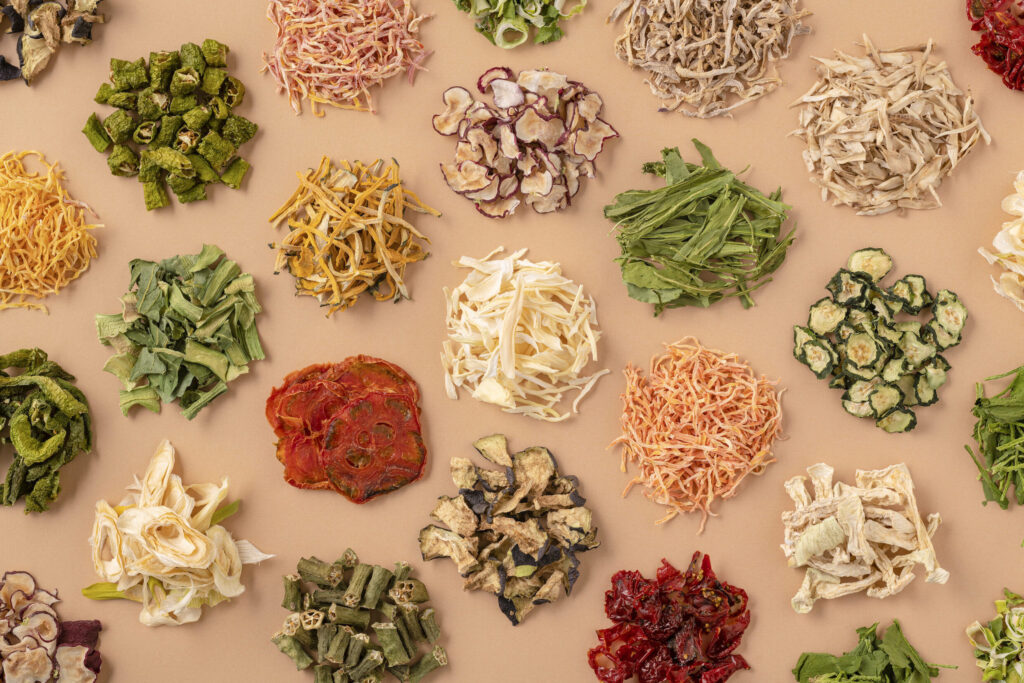
- Available for purchase in small lots from 1 kg
- We handle heirloom vegetables from across Japan
- Dried fruit and herbs also supported
The features and ways to eat 7 representative Hokkaido heirloom vegetables
We take a deeper look at 7 representative items among the 14 that are especially well-known and enjoyed both within and outside Hokkaido. We've paired historical anecdotes with ways to eat that you can try at home.
Sapporo-ki (onion) — the rich sweetness that earned it the name "phantom onion"
| Season | Early September– |
| Main growing region | Higashi Ward, Sapporo / Okadama |
| Well-suited dishes | Onion soup, takikomi gohan, a side for steak |
The Sapporo-ki is a variety that farmers in Higashi Ward, Sapporo selected and fixed from an onion the Sapporo Agricultural College introduced from America in 1878 (Meiji 11). Characterized by strong sweetness and pungency and tender flesh, it draws out a distinctive richness when heated.
About 200g per bulb, harvested from early September. Production once plummeted with the switch to F1 varieties after the war, but since being registered in Slow Food's "Ark of Taste," a revival movement has advanced, centered on the Sapporo-ki Fan Club. It shows its true worth in dishes that make use of its sweetness, such as onion soup, takikomi gohan, and a side for steak.
Sapporo giant cabbage — an 8-to-20kg giant cabbage
| Season | Late October–December |
| Main growing region | Sapporo City (Okadama, Shinoro) |
| Well-suited dishes | Nishin-zuke, izushi, cabbage rolls, sauerkraut |
The Sapporo giant cabbage is a cabbage of extraordinary size — 8 to 20kg per head, 40 to 50cm in ball diameter. Introduced from America in the early Meiji period, it took root as a winter preserved food in Hokkaido, where pickling culture developed.
Its features are thick, sturdy leaves. It's indispensable to Hokkaido's local dishes "nishin-zuke" and "izushi," and a single head can supply a family of four's winter pickles. From the Heisei period on, the number of growers plummeted, and even within Sapporo the shops that handle it are limited, but you can spot it at roadside stations in winter.
Danshaku potato — the fluffy texture that Baron Ryukichi Kawada brought over
| Season | September–December |
| Main growing region | Nanae Town, Kutchan Town, Assabu Town, and all of Hokkaido |
| Well-suited dishes | Kofuki-imo, mashed potato, croquettes, jaga-bata |
The name Danshaku ("baron") potato comes from the fact that in 1908 (Meiji 41) the businessman Ryukichi Kawada, who held the title of baron, imported the Irish Cobbler variety from Britain and cultivated it in Nanae Town on the outskirts of Hakodate. It's the origin point of Hokkaido's potatoes, and in 1928 it was selected as a recommended variety of the Hokkaido Agricultural Experiment Station.
Ball-shaped with yellowish-white skin and white flesh. It's the variety best suited to the "royal road of potato dishes" — kofuki-imo, mashed potato, croquettes. It falls apart easily when simmered, but its fluffiness and gentle sweetness after cooking are unrivaled by other varieties.
Hachiretsu-tokibi — the 8-row kernels that appear even in Takuboku Ishikawa's poem
| Season | Mid-August–late October |
| Main growing region | Sorachi region / Tokachi region |
| Well-suited dishes | Grilled tokibi, boiled tokibi, cornbread |
Hachiretsu-tokibi, named for having 8 neat rows of kernels around the ear, is a hard-kernel corn that the Sapporo Agricultural College introduced from America in the mid-Meiji period. It's also called Sapporo hachiretsu or Sapporo hachigyo.
Longer and slimmer than common sweet corn (F1 varieties), with lower sugar content, but its large kernels give it a satisfying bite, and grilling brings out a pronounced savory aroma. Said to be the model for the poem Takuboku Ishikawa composed during his stay in Sapporo — "the smell of a servant girl grilling tokibi" — it lingers in the memories of Hokkaido's people as the original scene of the "yakimorokoshi" grilled at food stalls.
Rawan-buki — a Hokkaido Heritage item 3m tall
| Season | Early June–early July |
| Main growing region | Rawan district, Ashoro Town, Tokachi region |
| Well-suited dishes | Simmered dishes, tempura, salad, canned in water |
Rawan-buki (Rawan butterbur) is a variety of Akita butterbur growing wild along the Rawan River basin of Ashoro Town in the Tokachi region. A "giant butterbur" that grows to 3m tall with stems more than 10cm thick, it was designated a Hokkaido Heritage item in 2001.
For protection, taking seedlings or seeds outside Ashoro Town is prohibited. Its season is short — June to early July — but its appeal is a tenderness that works in both Japanese and Western dishes: simmered dishes, tempura, salad, and more. Local processing plants ship it nationwide canned in water, so it can be enjoyed even in Honshu.
Masakari pumpkin — hard skin and a rugby-ball shape
| Season | October to December |
| Main growing region | All of Hokkaido (production scattered as a remnant of the settlement era) |
| Well-suited dishes | Simmered dishes, soup, pumpkin mochi, confectionery |
The masakari pumpkin is a large, rugby-ball-shaped pumpkin with skin so extremely hard it's said "you can't cut it without a masakari (axe)." Its prototype is the "Hubbard variety" that the Kaitakushi introduced from America in 1878, and it was an important source of winter nutrition in the settlement era.
Its color is black or dark green, with deep orange flesh. Characterized by a fluffy texture and a light, unassuming sweetness, it pairs well with simmered dishes, soups, and sweets alike. It was widely cultivated until the 1950s–60s, but lost its market to Western pumpkins (kuri-kabocha types) and nearly vanished for a time.
Edible lily (yurine) — Hokkaido's clout, accounting for 98% nationwide
| Season | September–October (with winter shipping) |
| Main growing region | Makkari Village, Kutchan Town, Niseko Town in the Shiribeshi region |
| Well-suited dishes | Chawanmushi, kakiage, kinton, ankake |
The edible lily (yurine, lily bulb) is a crop with overwhelming dominance as a growing region — Hokkaido accounts for about 98% of domestic production. Its wild ancestor is the Ezo lily and others, and it has a history of being used by the Ainu people, who long called it "turep" and treated it as something close to a staple food.
Cultivated lily bulbs began from the late Meiji period in the Shiribeshi region, including Makkari Village, Kutchan Town, and Niseko Town. A luxury ingredient requiring a long cultivation period of 6 years until harvest, it's used in refined Japanese dishes that make the most of its elegant sweetness and slight bitterness — chawanmushi, kakiage, kinton, ankake.
Regional character — the heirloom vegetables of Sapporo, southern Hokkaido, Shiribeshi, and eastern Hokkaido
Hokkaido, at roughly 83,000 square kilometers, is Japan's largest region, and differences in latitude, maritime climate, and inland climate translate directly into the crops of each area. We organize the features of heirloom vegetables by dividing the island into four areas: Sapporo, southern Hokkaido, eastern Hokkaido, and Shiribeshi.
Sapporo area — where Kaitakushi-derived vegetables gather
Sapporo, the prefectural capital, is where the Meiji-era Kaitakushi headquarters was located. As a result, varieties introduced from overseas took root earliest here, and cultivation spread centered on the city's Higashi Ward and Okadama.
- Sapporo giant cabbage A giant cabbage that was indispensable to households as a winter pickling ingredient
- Sapporo-ki onion The "phantom onion," originating from the Agricultural College and Higashi Ward, Sapporo
- Sapporo daicho nanban A pungent chili pepper introduced from Iwate
- Sapporo white burdock A rare variety white in both skin and flesh
- Sapporo Midori An edamame with seed registration in 1974
Southern Hokkaido area — a fusion of Honshu culture that crossed the Tsugaru Strait
The southern Hokkaido area, centered on Hakodate, was a region with active exchange with Honshu since the Edo period. Varieties from the Kansai and Tohoku regions took root after achieving cold-climate adaptation.
- Danshaku potato The origin point of Hokkaido's potatoes, whose cultivation began in Nanae Town
- Ono red turnip A deep-crimson turnip conveyed from Kansai in the Edo period
- Hakodate red turnip Derived from the Ono red turnip, an ingredient for senmai-zuke
- Oyobe cucumber A Siberian-type cucumber from the Oyobe district of Matsumae Town
Shiribeshi area — luxury ingredients nurtured by the cool land at the foot of Mt. Yotei
The Shiribeshi region at the foot of Mt. Yotei, including Makkari Village, Kutchan Town, and Niseko Town, is characterized by a cool climate with large temperature swings and volcanic-ash soil. As a growing region for luxury ingredients that take time to cultivate, it has raised its profile since the late Meiji period.
- Edible lily (yurine) Makkari Village, Kutchan Town, and Niseko Town are the heart of domestic production — a luxury ingredient raised over 6 years
- Danshaku potato Kutchan Town is also one of Hokkaido's leading growing regions, on par with Nanae Town, birthplace of the Danshaku
Eastern Hokkaido area — vegetables nurtured by wild varieties and settler farmers
Eastern Hokkaido, including Tokachi, Okhotsk, and Kushiro, is characterized by a cool climate and vast farmland. While incorporating wild mountain vegetables into its food culture, it also retains large vegetables improved by settler farmers.
- Rawan-buki A wild giant butterbur from the Rawan area of Ashoro Town, a Hokkaido Heritage item
- Akamaru A red turnip bred in 1924 in Takinoue Town, Okhotsk region
- Hachiretsu-tokibi A hard-kernel corn still preserved in the Sorachi and Tokachi regions
- Masakari pumpkin Cultivated across Hokkaido since the settlement era, and prized as a long-storage food in eastern Hokkaido too
How to buy Hokkaido's heirloom vegetables and tips for storing them
Heirloom vegetables include many rare items that rarely appear at ordinary supermarkets, so knowing the purchasing routes makes mail-order buying and shopping while traveling go smoothly. The point is that distribution circumstances differ greatly by item. The Sapporo-ki has a short shelf life, so it doesn't ride retail distribution easily, and it's mainly bought at farm stands or by direct request. For short, concentrated-season items like Rawan-buki and edible lily, distribution in the form of water-boiled or vacuum-packed goods processed right after harvest is the realistic route. We introduce methods that make them easy to obtain both within and outside Hokkaido.
Buying at farm stands, roadside stations, and JA within Hokkaido
The most reliable way to obtain them is at farm stands and roadside stations in the growing regions. Within Sapporo, JA Sapporo's farm stands "Toretakko Minami" and "Sapporo Satoland" carry them; the Sapporo-ki is available directly from farmers in Okadama, Higashi Ward; and Rawan-buki at the Ashoro Town roadside station "Ashoro Ginga Hall 21."
If you're visiting Hokkaido on a trip, checking the local roadside stations is the quickest route. Because production is small, items often sell out by midday, so we recommend visiting first thing in the morning.
Mail order to Honshu and D2C operators
Even living in Honshu, the number of items you can buy via online mail order is increasing. The Sapporo-ki is available on the Sapporo-ki Fan Club's official site, water-boiled Rawan-buki from an Ashoro Town processing plant, and edible lily from the EC sites of each growing region such as JA Shin-Otaru and JA Doo.
On major direct-from-producer sites Pocket Marché and Tabechoku, Hokkaido heirloom-vegetable growers list items individually too. Because you can buy in a way that puts a face to the grower, it's also recommended for those who want to know the cultivation story.
Enjoying them longer with dried vegetables and freezing
The drawback of fresh heirloom vegetables is that their season is short and they don't keep well. That's where dried vegetables and freezing come in handy. Sapporo giant cabbage and Danshaku potato, cut into thin strips and frozen after blanching, keep their quality for 3 to 4 months. Edible lily is suited to removing the scales and freezing wrapped in plastic, and Rawan-buki to freezing after parboiling.
handling Hokkaido and Kyoto heirloom vegetables via D2C Kyoto Heirloom Vegetables, these distribution examples are also worth referencing. If you buy in bulk during harvest season and dry or freeze them at home, you can enjoy them year-round.
A product catalog that shows around 100 items we handle
Agriture, flexibly handling everything from small lots to large lots
- Available for purchase in small lots from 1 kg
- We handle heirloom vegetables from across Japan
- Dried fruit and herbs also supported
Farmers' and government efforts to revive "phantom vegetables"
Among Hokkaido's heirloom vegetables, there are quite a few varieties that once nearly disappeared from the market. Since the 2000s, moves to revive them have accelerated through collaboration among young farmers, government, and chefs. We introduce some representative efforts.
The Sapporo-ki revival project and "Ark of Taste" registration
In 2007, the Sapporo-ki was registered in Slow Food International's "Ark of Taste"as a Japanese heirloom vegetable. The "Sapporo-ki Fan Club," launched on the back of this, continues to expand the number of growing farmers, promote it to chefs, and hold awareness-raising events.
Many famous French and Italian restaurants in the city came to specifically request the Sapporo-ki, and by the 2020s the number of growing farmers had recovered to more than 20 households. It's also drawing attention as a new standard ingredient for Sapporo ramen and soup curry.
The challenge of young farmers protecting hachiretsu-tokibi
Pushed out by F1 sweet corn, hachiretsu-tokibi at one point saw its growing farmers dwindle to just a few households. Young farmers in Sorachi and Tokachi, convinced that "the tastiest thing grilled is the old-fashioned tokibi," continue to save seed and develop sales channels.
Today it's sold as "yaki-tokibi" at Sapporo food stalls and roadside stations and is popular with tourists too. Its retro flavor apparently feels fresh, and it's drawing attention at craft-food markets outside Hokkaido as well.
Conserving Rawan-buki, designated a Hokkaido Heritage item
In 2001, Rawan-buki was designated a Hokkaido Heritage item, and Ashoro Town is advancing conservation efforts town-wide. A protected zone has been established along the Rawan River basin where it grows wild, and unauthorized harvesting and taking seeds outside the town are prohibited. As a town specialty, it's expanding its fan base nationwide through processing and sales of water-boiled cans and tsukudani.
Each June, Ashoro Town holds a "Rawan-buki Festival," where local residents and tourists can enjoy the experience of walking beneath 3m butterbur. This collaboration between government and local residents plays a major role in passing down heirloom vegetables.
FOR BUSINESS
乾燥野菜を業務用でお探しですか
国産の野菜・果物を乾燥し、必要に応じて粉砕してお出ししています。扱っている品目は100種前後で、規格は 乾燥品の一覧・パウダーの一覧 に掲載しています。
少量でのご購入は、姉妹ブランドの通販サイト OYAOYA で承っています。
Frequently asked questions about Hokkaido's heirloom vegetables
Finally, we answer some frequently asked questions about Hokkaido's heirloom vegetables.
Summary
Hokkaido's 14 heirloom vegetables are a distinctive food culture created by overseas varieties introduced by the Meiji-era Kaitakushi and native varieties selected for their adaptation to the cold climate. From representative items like Sapporo-ki, Sapporo giant cabbage, and Danshaku potato to distinctive ones like Rawan-buki and edible lily, each carries a story nurtured together with the history of settlement.
From the 2000s onward, the revival of varieties once called "phantom vegetables" has advanced, and new movements have emerged in which government, farmers, and consumers collaborate — such as the Sapporo-ki Fan Club and Ashoro Town's Rawan-buki conservation activities. To know Hokkaido's heirloom vegetables is also to relive a history in which the pioneering settlement era and preserved-food culture are inscribed into the varieties themselves. When visiting Hokkaido, tour the roadside stations and farm stands; from outside Hokkaido, use direct-from-producer EC and processed goods as appropriate, and savor the individual character of each item.
References / information sources
This article was reconstructed and written by the Agriture editorial team based on materials from the following public institutions, industry organizations, and specialized media. Each source provides comprehensive information about Hokkaido's heirloom vegetables.
- MAFF Hokkaido Regional Agricultural Administration Office, "Hokkaido's Heirloom Vegetables" — official data and historical background on 7 items
- Japan Heirloom Vegetable Promotion Association (general incorporated association), "Japan's Heirloom Vegetables – 01. Hokkaido" — a comprehensive database of 14 items
- Hyponex Japan, "Hokkaido's Local and Heirloom Vegetables|Minato no Yasai Daijiten" — features and cooking methods for 11 items
- Slow Food Foundation「Ark of Taste – Sapporo-ki」 — the international acclaim for Sapporo-ki
- Hokkaido Heritage Council, "Rawan-buki" — designation information for Hokkaido Heritage No. 20
- MAFF Hokkaido Regional Agricultural Administration Office, "Hokkaido's Traditional Dishes and Dishes Using Heirloom Vegetables" — local dishes utilizing heirloom vegetables
Other regional specialty varieties
Included in the Japan Heirloom Vegetable Promotion Association's list, but bred and registered after the war and thus positioned differently from "heirloom vegetables" in the strict sense (native varieties from before the war), these items are introduced separately here as "local specialty varieties." That they are important varieties making up Hokkaido's food culture is no different from the other 14 items.
| Item | Category | Growing region | Characteristics and standing |
|---|---|---|---|
| Akamaru | Aka kabu | Takinoue Town | A red turnip bred in 1924 in Takinoue Town, Okhotsk region. Selected and bred from a native strain, it's characterized by an oblate shape and vivid crimson color. Suited to salt-pickling and vinegar-pickling |
| Sapporo Midori | Edamame | Sapporo | An edamame variety with seed registration in 1974. Characterized by pods with no brown fuzz and a pale green color. A local specialty variety born from postwar breeding |
Related articles
- Japan's Heirloom Vegetables: Precious Varieties Handed Down in Each Region
- Kyoto heirloom vegetables: Kyoto specialties with a long history
- What are the Naniwa heirloom vegetables? An explanation of the features and season of the 25 items Osaka is proud of
- What are Yamato vegetables? Features and ways to eat the 25 heirloom vegetables Nara is proud of
Download the product catalog
We will send the materials to your email address based on the information you provide.
- What are Yamato vegetables? Features and ways to eat the 25 heirloom vegetables Nara is proud of
- What are Aomori’s heirloom vegetables? Features, season, and ways to eat the 11 items explained
Author of this article
Related articles
-
 Okinawa island vegetables: individualistic vegetables nurtured by a subtropical climate
 -
 Kaga vegetables: Kanazawa brand vegetables where tradition lives on
 -
 The appeal of Kansai heirloom vegetables | Specialties of Naniwa, Kyoto, and Yamato thoroughly explained
 -
 Kyoto heirloom vegetables: Kyoto specialties with a long history
 -
 A list of heirloom vegetables of the 8 prefectures of Kyushu and Okinawa|A thorough introduction to characteristics, growing regions, and seasons
 -
 Know the heirloom vegetables of Edo Tokyo | The city’s vanishing food culture
 -
 They'll make you smile! The fun names of heirloom vegetables and their origins
 -
 5 cases and strategies that succeeded in branding heirloom vegetables