
How to choose souvenir gifts for shareholder meetings | 5 food gift trends

Summary of this article
As 5 trends in shareholder-meeting souvenir gifts, we explain regional specialties, health-oriented organic foods, SDGs-aligned gifts, small-luxury foods, and personalized gifts. We also cover specific examples by budget band—tea bags and mini packs under 500 yen, soup sets at 500–1,000 yen, brand-rice gifts at 1,000–2,000 yen—along with the criteria for not constituting an unlawful benefit under the Companies Act, and the trend toward abolishing souvenirs and alternative measures.
TOC
What you will learn from this article
- Why food is chosen for shareholder-meeting souvenir gifts
- Trends and examples of food gifts shareholders appreciate
- Gift proposals by budget (500–2,000 yen)
- The trend toward abolishing souvenirs and alternative measures
- Legal and accounting cautions
"This year's Shareholders' meeting, what shall we do about the souvenir?"
Every year around this time, we get more consultations from IR staff and general-affairs people. A shareholder-meeting souvenir gift is a "silent message" that conveys corporate stance. What you choose shifts the corporate image shareholders hold, if only a little.
In recent years more companies are abolishing souvenirs, but voices of "we still want to continue" and "if we're doing it, we want to choose something appreciated" remain strong. This article comprehensively organizes everything from trends in food gifts handed out at shareholder meetings and IR events, to how to structure a budget, to legal points to watch.
Why food gifts are chosen as shareholder-meeting souvenirs
Consumables are easy to accept casually
Shareholders vary in age and lifestyle. With ornaments or goods, some feel "even if I get it, I have no use for it," but with food, it disappears once eaten, so anyone can accept it easily. The merit of this "consumable" is greater than you'd imagine.
Convey the company's commitment through taste
For a food maker, making its own products the souvenir is natural, but even a non-food maker can select something reflecting its values, such as "a local specialty food" or "a sustainable food." For example, when a company promoting its environmental efforts in IR chooses a dried-vegetable gift committed to domestic ingredients, consistency with its message is created.
Excellent for ease of carrying home
Shareholder meetings tend to have many elderly shareholders. Heavy items are a burden to carry home, so light, compact food gifts are welcomed. Dried foods, sweets, and tea are light and hard to break, making them reasonable on this point too.
5 trends in food gifts shareholders appreciate
Trend 1: Regional specialties / local foods
More companies choose specialties from where their head office is located. The point is that it gives shareholders the impression that "this company is rooted in its region." Foods with regional character are favored—Uji tea for Kyoto, kombu or dried vegetables for Hokkaido, mentaiko crackers for Kyushu.
| Genre | Examples | Budget guide |
|---|---|---|
| Japanese sweets | Monaka and warabimochi from a local long-established shop | 500–1,500 yen |
| Tea | Region-limited sencha, hojicha | 600–1,200 yen |
| Dried Goods | Dried-vegetable assortment, dashi packs | 500–1,000 yen |
| Seasoning | Local soy sauce, ponzu | 400–800 yen |
Trend 2: Health-oriented / organic foods
Food gifts promoting organic or additive-free appeal to health-conscious shareholders. Dried-vegetable soup, organic nuts, and gluten-free cookies are popular. Just having "made with domestic organic ingredients" or "no preservatives" on the package greatly improves the recipient's impression.
Trend 3: SDGs / sustainability-aligned gifts
For a company that touches on sustainability in its IR materials, you'll want to keep that stance consistent in the souvenir too. Dried foods made from off-spec vegetables that reduce food loss, fair-trade chocolate, and gifts using eco-conscious packaging are drawing attention.
Many of Agriture's dried vegetables are made using off-spec vegetables sourced from farmers in Kyoto, and there are cases where they're actually chosen as shareholder-meeting souvenirs. Because they also fit well with the SDGs context, it's a field seeing more inquiries from IR staff.
Trend 4: Small-quantity, high-quality "petit luxury"
The tendency to prioritize quality over quantity is strengthening. More companies choose a single high-quality item over a large assortment. Lineups that make people think "I wouldn't buy this myself, but I'm glad to receive it"—a 300g pack of brand rice, one jar of craft jam, a mini pack of premium dried vegetables—are effective.
Trend 5: Personalized / story-attached gifts
A style of adding a "story" rather than just food is spreading—original packaging with the company name or logo, gifts with a CEO message card, an enclosed leaflet describing "the background of how this product was born." It's a way of choosing that's mindful of building relationships (engagement) with shareholders.
Gift proposals by budget
Gifts under 500 yen
| Item | Features | Impression |
|---|---|---|
| 3–5 tea bags | Light, compact | Casual, good impression |
| Dried-vegetable mini pack | Practical, healthy | Conveys corporate stance |
| Individually wrapped baked sweets | A safe standard | Unremarkable |
The trick to not looking cheap even under 500 yen is to invest in the package design. Even if the contents cost 300 yen, adding an original message or corporate color to the package changes the impression.
Gifts of 500–1,000 yen
| Item | Features | Impression |
|---|---|---|
| Dried-vegetable soup set (3 servings) | Practical, with talking-point appeal | Health-oriented, highly favorable |
| Assorted Japanese sweets | Popular with older shareholders | Refined |
| Craft seasonings (dressings, etc.) | Usable at home | Sense of commitment |
This price band is the sweet spot for shareholder-meeting souvenirs. It's the band most often chosen by companies with 1,000–3,000 shareholders.
Gifts of 1,000–2,000 yen
| Item | Features | Impression |
|---|---|---|
| Brand rice + dried-vegetable set | Combines practicality and a special feel | Ample as a present |
| Assorted organic foods | Health and environmental consideration | Improves corporate image |
| Local-specialty food gift box | Appeal of regional contribution | Has story |
This is the price band often chosen by companies with several hundred shareholders, or as a special souvenir for major shareholders.
The trend toward abolishing souvenirs and alternative measures
The background of growing abolition
In recent years, more listed companies are abolishing shareholder-meeting souvenirs. Several circumstances lie behind this.
- Optimizing attendance purpose: reduce attendance aimed at souvenirs and raise the quality of discussion
- Cost reduction: for companies with many shareholders, it becomes a burden of tens of millions of yen a year
- Spread of virtual meetings: ensuring fairness with online participants
- ESG / governance viewpoint: clarify the line against unlawful benefits
Alternatives when abolishing
Even when abolishing souvenirs, some effort to maintain engagement with shareholders is needed.
| Alternative measure | Details | Benefits |
|---|---|---|
| Enhanced shareholder perks | Discounts on own products or services | Ongoing relationship building |
| Online perks | Digital coupons or exclusive content | Cost-efficient |
| Donation-type gifts | Donating to a social-contribution organization on shareholders' behalf | Alignment with ESG |
| Factory tours / experience events | An annual invitation event | Promotes understanding of the company |
We have materials available to help you understand vegetable-based novelties
Agriture OEM, flexibly handling everything from small lots to large lots
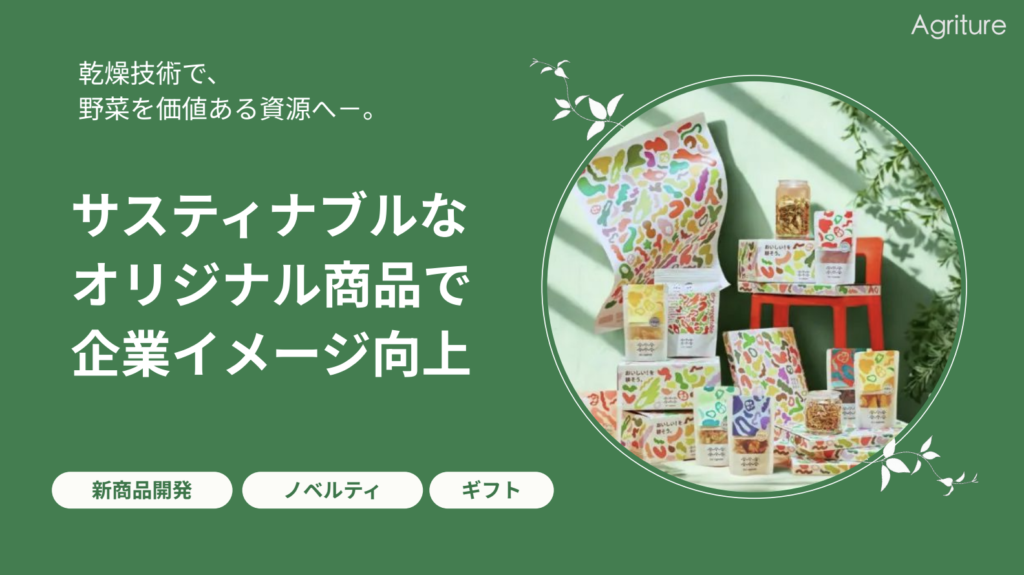
- SDGs-friendly products using non-standard vegetables
- Delivery possible in as short as two weeks
- Small lots from 500 bags
Legal and accounting cautions
Criteria for not constituting an unlawful benefit
The Companies Act prohibits providing benefits related to the exercise of shareholder rights. For a shareholder-meeting souvenir not to constitute an "unlawful benefit," keep the following conditions in mind.
- The amount is within a socially reasonable range (generally up to around 1,000 yen)
- Provided equally to all shareholders (even if limited to attendees, with no direct quid-pro-quo relationship to voting)
- Positioned separately from the shareholder-perk system
Honestly, for food at around 500–1,000 yen, the risk of being deemed an unlawful benefit is extremely low. That said, avoid operations like giving an excessively expensive gift only to specific large shareholders.
Accounting treatment and taxation
Costs for shareholder-meeting souvenirs are generally treated as entertainment expenses. The tax points are as follows.
| Item | Processing method |
|---|---|
| Account | Entertainment expenses (as shareholder-meeting costs) |
| Consumption tax | Taxable purchase (food is at the reduced 8% rate) |
| Corporate tax | Handled within the deductible limit for entertainment expenses |
Compliance with the Food Labeling Act
Even food handed out at a shareholder meeting is subject to the Food Labeling Act. Allergen labeling, ingredient labeling, and best-before-date labeling are mandatory. Especially when producing original packaging, confirm in advance that labeling obligations are met. If you commission an OEM maker, choosing one that handles the label check too gives peace of mind.
Schedule from ordering to the day
A timeline worked backward
Using a March-fiscal-year company's shareholder meeting (held in June) as an example, we summarize a guideline order schedule.
| Timing | Task | Notes |
|---|---|---|
| March | List up gift candidates | Compare 3–5 options |
| Early April | Request samples and internal tasting | Obtain management approval |
| Mid-April | Decide supplier, place formal order | For OEM products, watch the lead time |
| May | Delivery / inspection | Confirm quantity, quality, and labeling |
| June | Day of the shareholder meeting | Confirm the distribution operation |
If it includes producing original packaging, design proofing takes 2–3 weeks, so you need to start moving by early April.
How to decide the order quantity
Based on past attendance numbers, adding 10–15% as spare is common when ordering. If leftovers occur, choosing something you can redirect to internal events or for visitors means nothing goes to waste.
Using dried vegetables, Food novelties handed out at shareholder meetings please feel free to consult us about the planning and manufacturing of.
We have materials available to help you understand vegetable-based novelties
Agriture OEM, flexibly handling everything from small lots to large lots
- SDGs-friendly products using non-standard vegetables
- Delivery possible in as short as two weeks
- Small lots from 500 bags
Summary
A shareholder-meeting souvenir gift is an important communication tool that conveys corporate stance.
- Food gifts are easy for everyone to accept as "consumables"
- The trends run in 5 directions: regional specialties, health orientation, SDGs alignment, small-quantity high-quality, and story-attached
- The sweet-spot budget is 500–1,000 yen
- Even when abolishing, consider alternative measures for shareholder engagement
- Don't forget the unlawful-benefit and Food Labeling Act viewpoints
Agriture also accepts OEM production of original dried-vegetable gifts for shareholder meetings. We can propose to match your needs—company-logo packaging, small-lot support, and more. Feel free to consult us.
FAQ
Recommended reading
Commercial dried vegetables / Drying processing service / Contract processing service / The appeal and uses of whole freeze-dried strawberries | uses in confectionery and storage techniques explained / How to use yuzu peel | 10 practical ideas you can use instead of throwing it away
Download the novelty materials
We will send the materials to your email address based on the information you provide.
If you are considering product development with off-spec or your own farm's vegetables:From planning to processing, materials, package printing and novelties, you can consult us through a single point of contact. → Learn more about one-stop product development
FOR BUSINESS
乾燥野菜のOEM・受託加工を承ります
国産の野菜・果物の乾燥、100メッシュ相当までの粉砕、10g以上の小袋充填までをお受けしています。小ロットの試作から量産までご相談ください。寄せられた相談の実例は OEM・卸のご相談 に掲載しています。
乾燥品の賞味期限は、出荷日から6ヶ月程度を目安にご案内しています。
- Practical Guide to Importing Dried Vegetables: Tariffs, HS Codes, and Quarantine Explained
- How to choose corporate gifts 2026 | Food gifts that stand out for mid-year and year-end gifting
Author of this article
Related articles
-
 Food industry trade show trends 2025 | The latest developments to keep in mind
 -
 A guide to preparing for a trade show | Schedule, costs, and checklist
 -
 Prevent trade show failures! 8 common failure patterns and countermeasures
 -
 Kyoto-style food development | Gift-oriented product development OEM using Kyoto vegetables
 -
 Creating a regional brand with a Kyoto-vegetable OEM | The complete flow from planning to sales
 -
 Kyoto ingredient processing OEM | How to make the most of Kyoto vegetables and quality control
 -
 How to source commercial vegetable powder in small lots, and how to use it
 -
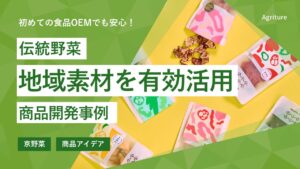 Heirloom vegetable OEM | A commercialization case guide using Kyoto vegetables and local ingredients