
We Prototyped "Dried Banana" Using Domestically Grown Bananas

Summary of this article
Agriture prototyped a "dried banana" made from domestically grown bananas. We slowly dried fully ripened domestic bananas at low temperature, finishing them with no additives and no coloring. Their signature is a fresh aroma unique to domestic fruit, distinct from imported bananas, and they can be applied to a wide range of products such as snacks, granola, sweets, and baby food.
Domestic bananas are a fruit with high sugar content and a signature rich, creamy sweetness. Drying fully ripened bananas concentrates the material's own aroma and sweetness, letting you enjoy a natural taste without sugar or additives. Unlike imported bananas, they also offer the fresh aroma unique to domestic fruit.

For this prototype, we slowly dried fully ripened domestic bananas at low temperature, finishing them with no additives and no coloring. They can be applied to a wide range of products—snacks, granola, sweets, baby food, health foods, and more.
Agriture handles OEM development and commercial supply using dried domestic-fruit materials. If you're considering product-making that draws on natural sweetness, please consult us.
Features of dried banana and component insights
The banana (Musa spp.) is a fruit of the Musaceae family. Low-temperature drying of domestic bananas concentrates the rich sweetness that comes from their high sugar content, along with a creamy texture. Potassium, vitamin B6, and dietary fiber are points of interest during development, but content varies with variety and ripeness, so we recommend confirming the flavor of each lot. Agriture's dried bananas use domestic raw materials and are finished without additives. For detailed specs, see the dried banana product page.
Choosing between fresh banana, banana chips, and dried banana
Even for the same banana, use and shelf stability differ greatly by processing form. Use the comparison table below as a guide when choosing at the development stage (figures vary with variety and ripeness).
| Item | Fresh banana | Banana chips (deep-fried) | Dried banana (low-temperature dried) |
|---|---|---|---|
| Main use | Eating as is, smoothies | Snacks, toppings | Granola, confectionery, baby food, snacks |
| Storage period guide | A few days at room temperature | About 6 months at room temperature | About 6 months at room temperature (from the shipping date) |
| Perceived sweetness | Fresh sweetness | Richness from oil | Concentrated, rich sweetness |
| Additives | None | Vegetable oil, sugar (depending on product) | Not used (Agriture specification) |
| Texture | Chewy and soft | Crisp texture | Moist to semi-dried |
Domestic bananas are more limited in supply than imports, but a reduced-pesticide cultivation story can easily add value, making them well suited to premium-line product development. Since yield and flavor change with variety and ripeness, confirmation at the prototype stage is essential.
Variations of processing form
In addition to slice-drying (chip form), Agriture also handles powder processing. Slices suit toppings for granola and trail mix, while powder suits smoothie mixes and kneading into confectionery dough.
You can check the details of turnip's powder form on the
Domestic bananas have high sugar content, and drying brings out a sticky texture and rich sweetness. Because you can achieve sweetness without adding sugar or oil, we're seeing more inquiries for "additive-free dried fruit" and "baby-food material." Since the finished sweetness and texture change with ripeness, we recommend comparing 2–3 ripeness levels in the prototype.
.
Dried banana suits product designs built around "additive-free natural sweetness" and "the story of domestic fruit." Here are representative ideas by application.
Granola, cereal, trail mix
Dried banana's sweetness works as a natural sweetener for granola and cereal. It's a material used in prototypes for premium granola combined with nuts, dried berries, and oats. We can also cut it to just the right size as a trail-mix accent.
- Sweetener and topping material for premium granola
- Fruit addition to trail mix and nut mixes
- Blending material for oatmeal and muesli
Confectionery, bakery, snacks
Chopping dried banana into banana bread, muffin, or pound cake dough gives easier moisture control than fresh banana and lets you design dough with reduced stickiness. It can also be powdered and mixed into the dough. The nutritional value and benefits of vegetable powder please also refer to.
- Kneading material for banana bread and muffins
- Blending material for chocolate bars and energy bars
- Domestic-fruit line for freeze-dried snacks
Baby food, weaning food
With no added sugar and natural sweetness, dried banana is a material we frequently receive prototype inquiries about for baby food and weaning food. Powdering it and mixing it into porridge or purée works well. The domestic, additive-free story is a design point that resonates with quality-conscious parents. Dried vegetable and fruit product list.
- Material for banana powder for baby food
- Sweetening material for weaning food and toddler snacks
- Blending material for domestic-fruit baby-food kits
Drinks, smoothies
Powdered banana is used to sweeten and flavor smoothie mixes and protein drinks. Its rich sweetness—distinct from freeze-dried—pairs well with plant-based milks and protein powders. Vegetable powder list page you can also check combinations with other materials on.
- Sweetening and flavoring material for smoothie mixes
- Flavor material for protein drinks
- Blending material for fruit green juice
FOR BUSINESS
乾燥バナナを、原料としてお探しですか
国産のバナナを乾燥・粉砕してお出ししています。カット形状や粒度の指定、継続してのお取引もご相談ください。規格は 乾燥バナナ に掲載しています。
少量でのご購入は、姉妹ブランドの通販サイト OYAOYA で承っています。
A base raw material for vegetable bouillon and dashi powder
Here are the representative specifications for Agriture's commercial lots of dried banana. We can supply it in either slice or powder form. Dried banana product specifications please refer to together with.
A vegetable base powder for baby food
| Item | Agriture's manufacturing specs and OEM support |
|---|---|
| Raw materials | Domestic banana (contract-farmed) |
| Processing step | Washing → slicing → low-temperature hot-air drying (product-temperature control) → powder processing (on request) → filling |
| Additives | No sugar, vegetable oil, coloring, or antioxidants of any kind |
| Storage period | A guide of about 6 months at room temperature (from the shipping date) (varies by storage conditions) |
| Processing shape | From 1 kg of raw material |
| Main production lot | Slice / dice cut / powder |
| Not used | Minimum prototyping lot |
Customization support
- Blending: pre-mixing available with other dried fruits, vegetable powders, and nuts
- Packaging: 500 g bags, 1 kg bags, 5 kg commercial bags, and individually portioned packs available
- Shape: slice (for pickles), dice cut (for ingredients), powder
- Growing region: a domestic contract-cultivation route is prepared
Blending: pre-blend support with other dried vegetables
Because a banana's sweetness and texture change greatly with ripeness, we recommend a process of sharing the target finish at the prototype stage.
- dried vegetable / powder OEM inquiry form Contact us with the prototyping content, application, and desired form via
- Share your intended product and target sweetness and texture in a concept hearing (via Zoom or email)
- We ship prototype samples in units of 1 kg of raw material (usually 2–3 weeks). Comparative prototypes across ripeness levels and thicknesses are possible.
- Contact us with the prototyping content, desired shape, and assumed application via
- Main manufacturing (from 10 kg of raw material). Issuing necessary documents and lot-by-lot quality inspection supported
Tell us your application—"slices for granola," "powder for baby food," and so on—and we'll propose the optimal processing conditions.
Product catalog showing the items we handle
Flexible support from small lots to large lots
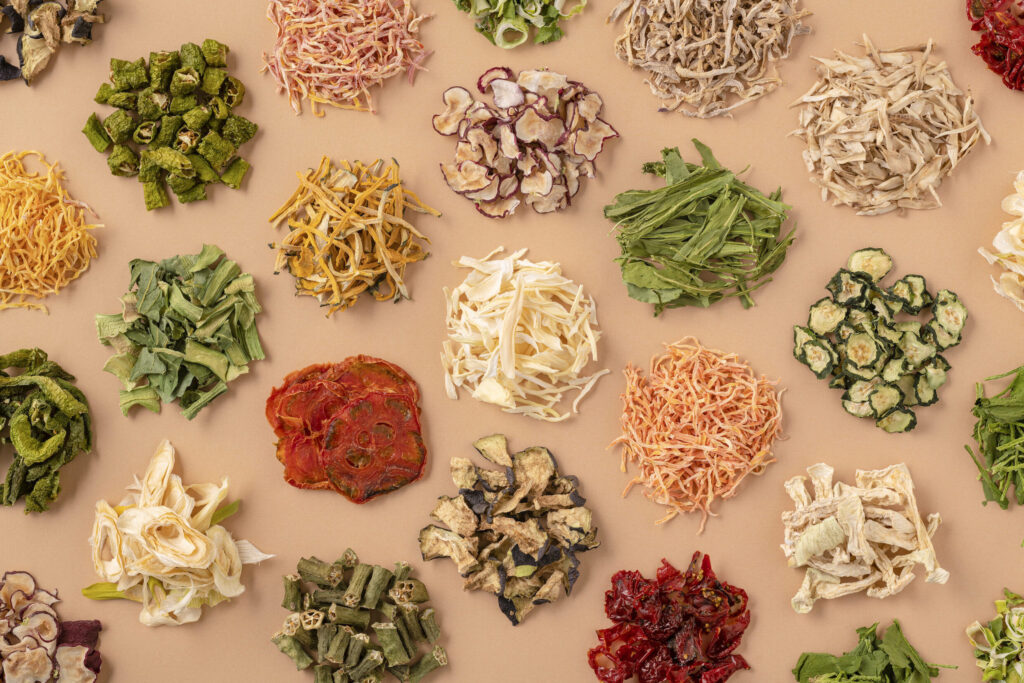
- Sold in small lots from 1 kg
- Handling heirloom vegetables from across Japan
- Dried fruits and herbs also supported
FOR BUSINESS
乾燥バナナを、原料としてお探しですか
国産のバナナを乾燥・粉砕してお出ししています。カット形状や粒度の指定、継続してのお取引もご相談ください。規格は 乾燥バナナ に掲載しています。
少量でのご購入は、姉妹ブランドの通販サイト OYAOYA で承っています。
Frequently asked questions
Q. Can domestic bananas be supplied year-round?
A. Because domestic bananas are limited in supply, we handle it through processing and storage timed to the harvest. If your annual usage is visible, letting us know the required volume in advance makes it easier to plan supply.
Q. Do you use sugar or oil?
A. Agriture's dried bananas are processed with no sugar, vegetable oil, coloring, or antioxidants of any kind. Since they're finished with the banana's own sweetness alone, they suit product designs that highlight being additive-free.
Q. Can it be used for baby food?
A. Powdered domestic banana has a prototype track record as a baby-food material. Being additive-free, it suits product designs for quality-conscious parents. That said, please make the final judgment on allergen labeling and suitability as baby food together with the product's final specifications.
Q. Can you issue a certificate of raw material origin and an analysis table?
A. We can issue both a certificate of raw-material origin showing it is a domestic raw material and a microbial test report.
Q. Can it be blended with other dried vegetables?
A. Prototyping is possible from 1 kg on a raw-material basis. You can compare slice and powder forms at the same time, and full production is guided by 10 kg of raw material and up.
Related pages and further reading
- We Prototyped "Chestnut Skin Powder" Using Domestically Grown Chestnut Skins
- We Prototyped "Dried Enoki" Using Domestically Grown Enoki
Author of this article
Related articles
-
 We released a free news release posting service on our operated “Food OEM Directory”
 -
 We Prototyped "Chestnut Skin Powder" Using Domestically Grown Chestnut Skins
 -
 A Notice About the Rose Prototype
 -
 Products from OYAOYA, A Letter from a Pear, and Agriture featured on "Urelio"
 -
 Launched the employee-benefit service “Office Yaoya (OFFICE YAOYA)”
 -
 OYAOYA, a dried-vegetable brand using Kyoto vegetables, announces it will become a consolidated subsidiary of global cutlery maker Kai through M&A
 -
 We Published the Dried Vegetable Projects Page
 -
 Is There Demand for Dried Vegetables in Dubai?