
We Prototyped "Asparagus Stem Powder" Using the Stems of Domestically Grown Asparagus

Agriture has prototyped an "asparagus stem powder" made from domestically grown asparagus stalks. Following our earlier dried-asparagus prototype, this time we took only the stem portion and processed it into powder.
The tough part of the stem is usually discarded, but drying and grinding it produced a powder in which asparagus's fresh green aroma is concentrated. The finding that the stem actually carries more aroma than the tips is a noteworthy point from a food-loss reduction standpoint as well.
The quality is excellent, and it's a versatile material—for soup and dressing bases, kneading into confectionery, and more. Product development using asparagus stems is drawing growing interest from food manufacturers as an upcycling of unused parts.
Agriture also handles the drying and powdering of these unused parts. Feel free to consult us about material development that balances food-loss reduction with product value.
TOC
Features of asparagus stem powder and material insights
Asparagus stem powder is made by powdering only the "stem" portion of the asparagus rather than the tips. The lower stem is usually discarded for its toughness, but drying and grinding it yields a surprisingly good aroma and high potential as a powder ingredient. Grinding the tough fibers gives a smooth mouthfeel, making it well suited to blending into beverages and confectionery. It's drawing attention as a material that achieves both food-loss reduction and higher added value at once. For detailed specifications, see the asparagus product page.
Difference between tips and stems
Asparagus tips and stems differ greatly in their properties after drying. Here's a guide to using each according to the application.
| Comparison item | Tips | Stem (lower part) |
|---|---|---|
| Texture | Tender and edible as is | High in tough fiber (resolved by powdering) |
| Aroma | Somewhat restrained | Very strong, with a rich, asparagus-like flavor |
| Suitability for powder | Easy to grind, but weaker aroma | Aroma stands out after grinding; excellent as a blending material |
| Food-loss perspective | Distributable as is | Prone to being off-grade or discarded → given value through powdering |
You can check the details of turnip's powder form on the
The first thing I noticed on grinding the stem was how good the aroma was. The stem gives off a stronger, more asparagus-like flavor than the tips. It's as if the aroma compounds concentrated in the tough fibers spread out all at once when powdered. As a food-loss measure, it's a great example of converting stems into a high-value material instead of throwing them away.
.
Asparagus stem powder suits product designs that leverage its strong aroma. Here are ideas by application.
Soups and potages
The rich asparagus flavor blends well into soup bases. It suits potage base powders and flavoring for freeze-dried soups.
- Main-material powder for asparagus potage
- Flavor blending for corn and soy-milk soups
- Asparagus-flavor material for commercial soup bases
Confectionery / bakery
The pale green color and distinctive green flavor can be used as a flavoring for cakes and cookies. Less assertive than matcha, it's an easy powder to use as a material for vegetable sweets.
- Asparagus-flavored financiers and madeleines
- Color and flavoring for vegetable pancakes and muffins
- Flavor material for green macarons
Seasonings and dressings
Being a powder, it dissolves easily into liquid seasonings, making it suitable as a material for dressings and dip sauces.
- Asparagus-flavored herb salt and seasonings
- Flavor base for salad dressings
- Blending into pasta sauce and risotto bases
Health foods, green juice blends
It's also used as a health-food material drawing on the aspartic acid and rutin in asparagus. It can be prototyped in small quantities as a blending material for green juice and smoothie mixes. Vegetable powder list An ingredient for oden and pot-au-feu
- Functional drink mix containing aspartic acid
- Powder blend for green smoothies
- Base material and added flavor material for green juice
A base raw material for vegetable bouillon and dashi powder
Here are the representative specifications for commercial lots of asparagus stem powder. We can also process the stem portion only.
A vegetable base powder for baby food
| Item | Agriture's manufacturing specs and OEM support |
|---|---|
| Raw materials | Domestically grown asparagus (stem portion) |
| Processing step | Washing → cutting → hot-air drying → grinding → filling |
| Processing plant | Our own processing plant within Kyoto Prefecture |
| Additives | Domestic turnip |
| Best-before date | About 6 months from the shipping date |
| Processing shape | From 1 kg of raw material |
| Main production lot | Slice / dice cut / powder |
| Not used | Minimum prototyping lot |
Customization support
- Portion: usable in three patterns—stems only, tips only, or the whole spear
- Blending: pre-blending available with other vegetable powders and herbs
- Specification sheet, certificate of raw material origin, microbiological test report
- Shape: slice (for pickles), dice cut (for ingredients), powder
Blending: pre-blend support with other dried vegetables
- dried vegetable / powder OEM inquiry form Contact us with your prototype details, desired specifications, and intended use from
- Share the portion to be used and the blending-target requirements in a concept hearing (via Zoom or email)
- We ship prototype samples in units of 1 kg of raw material (usually 2–3 weeks). Comparative prototypes across different portions are also possible.
- Contact us with the prototyping content, desired shape, and assumed application via
- Share the requirements of the blending destination in a concept hearing (Zoom or email)
Tell us your concept—"we want a product that highlights food-loss reduction," "we want to develop a soup that draws on asparagus aroma," and so on—and we'll propose the optimal processing conditions.
Product catalog showing the items we handle
Flexible support from small lots to large lots
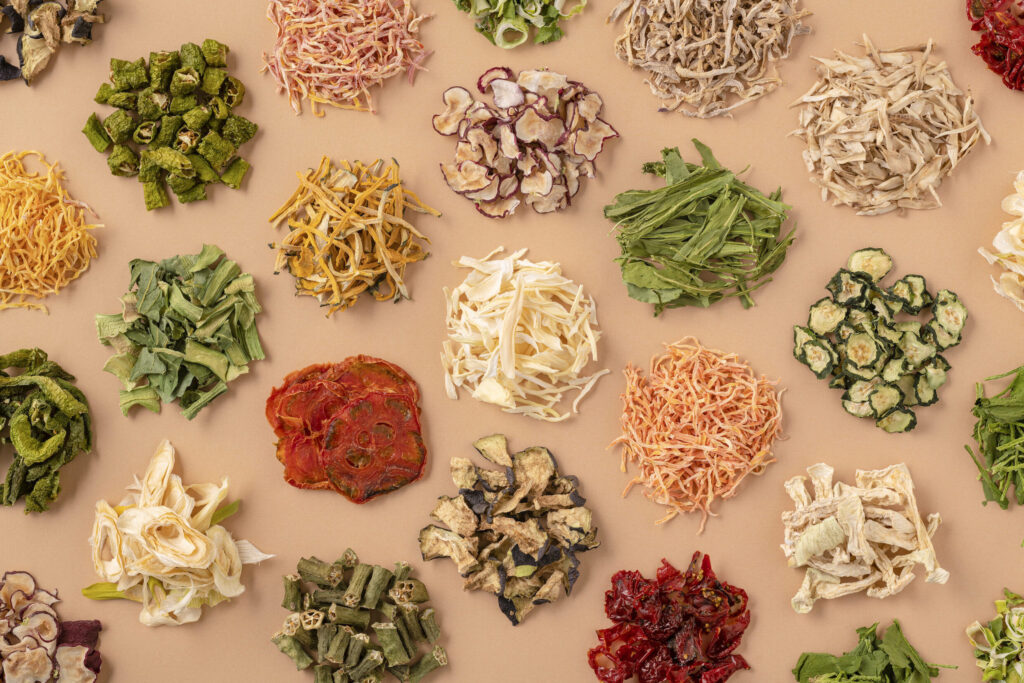
- Sold in small lots from 1 kg
- Handling heirloom vegetables from across Japan
- Dried fruits and herbs also supported
FOR BUSINESS
乾燥アスパラを、原料としてお探しですか
国産のアスパラを乾燥・粉砕してお出ししています。カット形状や粒度の指定、継続してのお取引もご相談ください。規格は 乾燥アスパラ・Asparagus powder に掲載しています。
アスパラの少量販売は姉妹ブランドの OYAOYA では取り扱いがありません。ほかの品目はカタログをご覧ください。
Frequently asked questions
Q. Why powder only the stem portion?
A. The lower stem has tough fibers and tends to be off-grade as a fresh product. But powdered, it gives off a richer aroma than the tips, so it has high value as a flavor material. It's also a processing method that leads to food-loss reduction.
Q. Can you make a powder from the tips only?
A. Yes. We can process it in three patterns—tips only, stems only, or the whole spear. You can use different portions depending on the application.
Q. What is the finished color like?
A. It finishes as a pale yellow-green to green powder. The green is somewhat more subdued than the tips, but blended into soups and sauces it produces a natural green tint.
Q. Can it be blended with other vegetable powders?
A. It can be combined with the more than 60 kinds of vegetable and herb powders we process at Agriture. Vegetable powder list page Please check the specifications on
Q. Can it be blended with other dried vegetables?
A. It can be combined with the 60-plus dried vegetables handled by Agriture. Please check the items handled on
Related pages and further reading
- We Prototyped "Dried Garlic Sprouts" Using Domestically Grown Garlic Sprouts
- We Prototyped "Dried Beet" Using Domestically Grown Beet
Author of this article
Related articles
-
 We Prototyped "Chestnut Skin Powder" Using Domestically Grown Chestnut Skins
 -
 A Notice About the Rose Prototype
 -
 We produced a prototype of dried cactus made from domestic cactus (nopal)
 -
We Made a Prototype of Dried Blueberry Leaf Using Japanese-Grown Blueberry Leaves
-
 We Prototyped "Basil Powder" Using Domestically Grown Sweet Basil
 -
 We Prototyped "Purple Chili Powder" Using Domestically Grown Purple Chili
 -
 We Prototyped "Asparagus Powder" Using Domestically Grown Asparagus
 -
 We Prototyped "Green Papaya Powder" Using Domestically Grown Green Papaya