規格外野菜とは?どれだけ発生していて、どこまで加工に使えるのか

Summary of this article
As a food-loss reduction measure to rescue discarded vegetables, we explain the problem of off-spec vegetables, which reach about 30% of the total harvest—some 5.23 million tons a year. We introduce the three causes—uneven shape, abnormal weather, and distribution circumstances—the limits of roadside-station sales, and upcycling cases through processing into dried vegetables. We also cover Agriture's policy of buying at the farmer's asking price and the affinity with Japan's traditional preserved-food culture that continues from kiriboshi daikon.
スーパーに並ぶ野菜は、どれも大きさと形がそろっています。そこから外れた野菜が「規格外野菜」です。
ただ、「規格外野菜が年間◯万トン捨てられている」という数字は、出どころをたどると農林水産省の統計を本来とは別の意味で使っていることが多くあります。この記事では国が公表している数字そのものに当たり、どこまでが確かな事実で、どこからが推測なのかを分けて整理しました。そのうえで、規格外野菜を乾燥や粉砕の原料として使うとき、産地と加工側の双方で何がネックになるのかを、京都で乾燥加工を受託している立場から書いています。
TOC
規格外野菜とは、産地が決めた出荷規格を満たさなかった野菜のこと
規格外野菜に、法律や国の基準による定義はありません。産地や出荷団体がそれぞれ定めた出荷規格があり、そこから外れたものが規格外野菜と呼ばれています。
国の標準規格は2002年になくなり、いまの規格は産地が決めている
農林水産省は高度経済成長期に、主要な野菜について標準出荷規格を順次設定していました。出荷される形状と品質をそろえることで、野菜の大量流通が可能になったためです。
その後、消費者ニーズの多様化が進み、産地間競争によって産地規格が細分化されるにつれ、国が全国一律の規格を設定する意義に乏しくなったとして、平成14年(2002年)に標準出荷規格は廃止されました。現在の出荷規格は、実需者や消費者のニーズを踏まえて各産地が主体的に定めているものです(農林水産省「青果物の出荷規格を見直してみませんか?」)。
同じ形のきゅうりでも、A産地では規格内、B産地では規格外ということが起こります。規格外野菜は全国共通のカテゴリーではなく、産地ごとに線引きが違います。
規格から外れる理由は、大きさ・形・色・傷に分かれる
- 大きさ:箱詰めの単位に合わない。大きすぎるものも小さすぎるものも外れる
- 形:曲がり、又根、実割れ
- 色:着色のムラ、日焼け
- 傷:収穫時の擦れ、虫食い、風による葉ずれ
農林水産省は、出荷規格の細分化が選別作業にとどまらず収穫・調製・袋詰め・在庫管理・輸送手配まで手間を増やし、労働力不足の一因になっている産地も見られるとして、規格の見直しを働きかけるパンフレットを作成しています。規格外野菜は野菜の側の問題というより、選別と出荷作業の設計から生まれている面があります。
「規格外」と「規格外野菜」は指しているものが違う
検索では「規格外とは」と「規格外野菜とは」が混ざりますが、前者は工業製品も含む一般語で、定められた規格を満たさない品物全般を指します。語そのものの意味は用語解説の規格外で説明しています。この記事は野菜に限った話です。
規格外野菜は年間どれくらい発生しているのか
収穫量と出荷量の差は151万8千トン(令和6年産)
農林水産省「令和6年産野菜生産出荷統計」(確報)によると、野菜計の収穫量は1,206万8,000トン、出荷量は1,055万トンでした。差は151万8,000トンで、収穫量の約12.6%にあたります。
| 年産 | 収穫量 | 出荷量 | 差 | 収穫量に占める割合 |
|---|---|---|---|---|
| 令和元年産 | 1,340万7千t | 1,157万4千t | 183万3千t | 13.7% |
| 令和2年産 | 1,304万5千t | 1,125万8千t | 178万7千t | 13.7% |
| 令和3年産 | 1,287万5千t | 1,110万6千t | 176万9千t | 13.7% |
| 令和4年産 | 1,284万2千t | 1,113万7千t | 170万5千t | 13.3% |
| 令和5年産 | 1,262万6千t | 1,099万9千t | 162万7千t | 12.9% |
| 令和6年産 | 1,206万8千t | 1,055万0千t | 151万8千t | 12.6% |
差は6年間で31万5千トン縮んでいます。収穫量そのものが減っているため、割合でも13.7%から12.6%へ下がりました。
この差は「廃棄量」ではない
「収穫量の3割が捨てられている」「収穫量と出荷量の差が規格外野菜の廃棄量」と書かれているのを見かけますが、統計の定義に当たると、そうは読めません。
同統計の用語の説明では、収穫量は「収穫したもののうち、生食用又は加工用として流通する基準を満たすものの重量」と定義されています。出荷量は「収穫量のうち、生食用、加工用又は業務用として販売した量をいい、生産者が自家消費した量、生産物を贈与した量及び種子用又は飼料用として販売した量を差し引いた重量」です。
差の151万8千トンに積み上がっているのは、次のものです。
- 生産者が自家消費した分
- 贈与した分
- 種子用・飼料用として販売した分
- 需給調整事業による産地廃棄(収穫量には含み、出荷量には含まない)
さらに、そもそも流通の基準を満たさず畑に残した分は、収穫量にも入っていません。この差をそのまま「規格外野菜の廃棄量」と置き換えると、意味が変わってしまいます。
国は規格外野菜の発生量を単独で集計していません。「規格外野菜◯万トン」という数字を見たら、それが何と何の差なのかを先に確認してください。
食品ロス461万トンの内訳に、畑で出た分の区分はない
農林水産省と環境省が2026年6月30日に公表した令和6年度の食品ロス発生量推計値は461万トンでした。内訳は事業系237万トン、家庭系224万トンです。事業系の内訳は、食品製造業110万トン、食品卸売業9万トン、食品小売業48万トン、外食産業70万トンとなっています。
事業系は食品リサイクル法に基づく事業者からの報告等をもとに集計されており、この4区分に農業生産段階はありません。畑で発生した規格外野菜は461万トンの外側にあります。「規格外野菜も食品ロス461万トンの一部」と書くと誤りになります。
規格外野菜とフードロスのつながりはThe relationship between off-spec vegetables and food loss for more.
出荷規格を満たさなかった野菜は、いまどこへ行っているのか
自家消費・無償贈与・加工用・飼料肥料用が主な行き先
農林水産省は、出荷規格を満たさない野菜のうち利用できる品質のものについて、「収穫後に自家消費や無償贈与、加工用等の食用に充てられるほか、飼料・肥料用等の非食用としても多くが活用されています」と説明しています。すべてが捨てられているわけではありません。
同じ説明の中で、こうした野菜は「定時・定量での供給が難しく、出荷や輸送にもコストがかかる」ため市場で流通するケースは少ないとも書かれています。買い手がいないのではなく、買い手が求める条件と合わないというのが実態に近い書き方です。
直売所と産直ECで売り切れる量には上限がある
道の駅や直売所は規格外野菜の代表的な出口ですが、売れる量は店頭に置ける面積と来客数で決まります。産直ECも、注文が入ったときに出せる量を確保できるかどうかで運用が決まります。収穫のピークにまとめて出てくるものを、日々の小売で吸収し切るのは難しいところです。
「規格外だから安い」という値付けが定着している点も、産地から見ると別の負担になります。生産コストは規格品と変わらないため、値引きして数を売るほど手取りが薄くなります。
農林水産省が事例を公募し、シンポジウムも開いている
農林水産省は、出荷規格を満たさない野菜に「もったいない野菜」などの愛称を付けて販売・活用している事例を公募し、ウェブサイトで公開しています。2025年には規格外青果物シンポジウムを開催し、食品メーカーを中心に対面とオンライン合わせて300人以上が参加しました。
公開されている事例には、出荷規格を満たさないさつまいもを麹と合わせて芋蜜にしたもの、規格外のなすを大容量袋で販売するもの、A品からC品までをサイズ込みでパックして選別の手間ごと省くにんじんなどがあります。共通しているのは、規格外品を安く売るのではなく、加工か売り方のどちらかを変えている点です。
規格外野菜を加工原料として使うときの条件
定時・定量で揃わないことが、加工側の最初の壁になる
食品メーカーが原料に規格外野菜を採用するとき、価格より先に問題になるのが供給の不安定さです。商品を継続して売るには、決まった時期に決まった量が要ります。規格外野菜は、発生量も発生時期も読めません。
この壁の越え方は2つあります。1つは、発生した分をその都度受け入れて乾燥させ、常温で置ける在庫に変えておくこと。もう1つは、商品側を「入ってきた原料で作れる設計」にすることです。単一素材の商品より、ブレンドを前提にした商品のほうが原料の振れを吸収できます。
乾燥では形を問わないが、素材によって仕上がりが変わる
乾燥加工は原料をカットしてから乾かすため、曲がりや又根、大きさのばらつきは仕上がりに影響しません。大きく育ちすぎた野菜はむしろ可食部が多く、歩留まりが良くなります。
一方、素材の性質で工程が止まることがあります。弊社の製造現場では次のような違いが出ています。
- 糖度の高いもの(ぶどう、柿など)は、乾燥はできてもパウダーにはできない。粘りが残って粉砕機にかからない
- 繊維の強いもの(よもぎなど)は、粉砕しても粉末状にならず、毛羽立った仕上がりになる
- 水分の多い葉物は乾燥後の重量が大きく落ちるため、必要な生原料の量が想定より膨らむ
規格外かどうかより、素材そのものの性質のほうが仕上がりを決めます。
乾燥と粉砕でできること、できないこと
Agritureは京都を拠点に、国産野菜の低温乾燥と温風乾燥、粉砕(100メッシュ相当まで)、ブレンド、小袋充填を受託しています。業務用原料の卸は100gから対応しています。
対応できないものもはっきりしています。フリーズドライ、焙煎、レトルト、野菜チップスは受けていません。規格外野菜の活用というとチップスが連想されやすいところですが、弊社の設備では作れません。
乾燥品の賞味期限は、出荷日から6ヶ月程度です。「乾かせば1年以上もつ」と書かれることがありますが、製品として保証できる期間は包装形態と保管条件で変わります。
粉体の用途はCommercial vegetable powder、受託加工の範囲はOEM dried contract processing serviceで詳しく説明しています。
規格外野菜を商品にするまでの流れ
原料は生のまま送ってもらい、洗浄から自社で行う
産地から受け入れる原料は、生のままで構いません。洗浄と下処理は弊社で行い、乾燥、必要に応じて粉砕、という順で進めます。産地側で乾かしてから送るより、届いた状態を見てから工程を決められるぶん、仕上がりが安定します。
試作で決めるのは、味よりもカットの厚みと乾燥条件
同じ野菜でも、品種と収穫時期で水分量と繊維の強さが違います。試作の目的は、その素材に合うカットの厚みと乾燥温度・時間を決めることにあります。ここを決めずに本製造へ進むと、ロットごとに色と食感が変わります。
産地との値決めをどう設計するか
規格外野菜を買い叩くと、翌年から原料が集まらなくなります。生産コストは規格品と変わらず、育てる手間も同じだからです。継続して原料を確保するには、その産地が普段出荷している価格を基準にした値決めのほうが、結果的に長く続きます。
未利用の資源を事業にする進め方は未利用資源を活用した新ビジネスにまとめています。実際の取り組みは導入事例.
Summary
- 規格外野菜は、産地が定めた出荷規格を満たさなかった野菜のこと。国の標準出荷規格は2002年に廃止され、いまの規格は産地ごとに違う
- 令和6年産の収穫量と出荷量の差は151万8千トンで、収穫量の約12.6%。ただしこの差は自家消費・贈与・種子用飼料用販売などの合計であって、廃棄量ではない
- 食品ロス461万トンの内訳に農業生産段階の区分はなく、畑で出た分は含まれていない
- 加工原料として使うときは、価格より供給の不安定さが先に問題になる
- 乾燥は形を問わないが、糖度と繊維の性質によって仕上がりが変わる
FAQ
Q 規格外野菜に国の基準はありますか?
A ありません。国の標準出荷規格は平成14年(2002年)に廃止され、現在の出荷規格は各産地が定めています。同じ形の野菜でも、産地によって規格内と規格外が分かれます。
Q 規格外野菜は年間どれくらい発生していますか?
A 発生量そのものを集計した公的統計はありません。農林水産省「令和6年産野菜生産出荷統計」の収穫量1,206万8,000トンと出荷量1,055万トンの差、151万8,000トンが引用されることが多いのですが、この差には生産者の自家消費、贈与、種子用・飼料用としての販売が含まれます。規格外野菜の廃棄量とは別の数字です。
Q 規格外野菜は食品ロスに含まれますか?
A 農林水産省・環境省が公表する食品ロス量(令和6年度推計値461万トン)の内訳は、食品製造業・食品卸売業・食品小売業・外食産業と家庭で、農業生産段階の区分はありません。畑で発生した分はこの461万トンには入っていません。
Q 規格外野菜を乾燥加工に回すと、規格品と仕上がりが変わりますか?
A カットしてから乾かすため、形や大きさのばらつきは仕上がりに影響しません。仕上がりを左右するのは品種、収穫時期、水分量、繊維の強さです。
Q 少量でも受託してもらえますか?
A 業務用原料の卸は100gから対応しています。受託加工は原料の状態と加工内容で条件が変わるため、素材と想定数量をお知らせください。
Q 野菜チップスは作れますか?
A 対応していません。フリーズドライ、焙煎、レトルトも受けていません。乾燥(低温・温風)、粉砕、ブレンド、小袋充填が対応範囲です。
Recommended reading
- The relationship between off-spec vegetables and food loss
- Agriture's sustainable initiatives
- 規格外野菜の加工・商品化支援
- 業務用乾燥野菜・ドライ野菜
We have materials available to help you understand dried processing OEM
Agriture OEM, flexibly handling everything from small lots to large lots
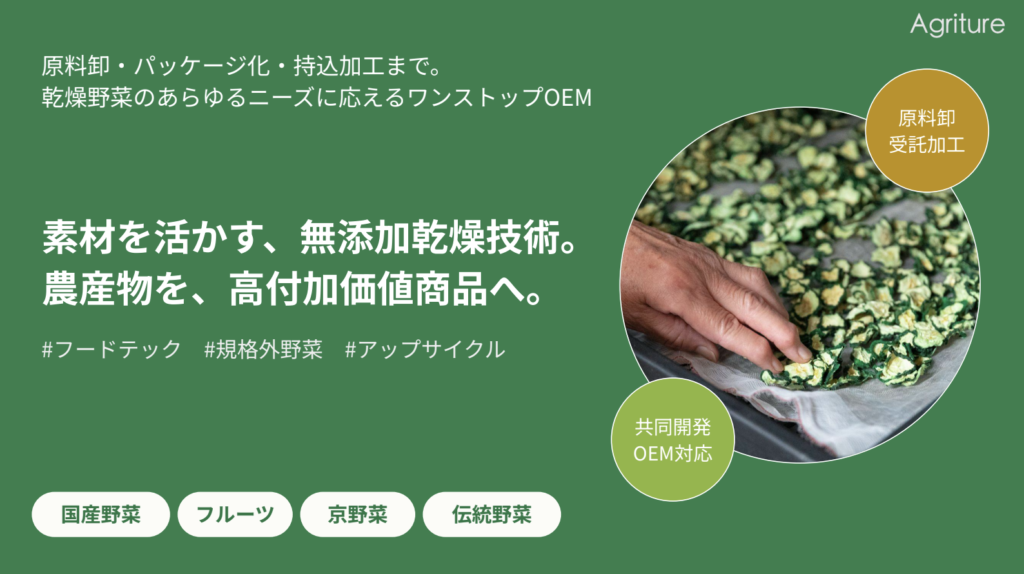
- OEM available from small lots of 10 kg
- Drying of brought-in raw materials also possible
- Support from processing to filling in one place
Download the OEM contract processing materials
We will send the materials to your email address based on the information you provide.
- 7 Innovative Cases of Overseas Fair Trade Companies Changing the World
- The Complete Rolling Stock Guide 2026 | 7 Recommended Foods and How to Use Dried Vegetables