切り干し大根の作り方と戻し方。干す日数と水に浸ける時間

Summary of this article
Kiriboshi daikon can be made at home simply by cutting and drying daikon. We introduce how to dry, rehydrate, and store it, popular recipes, and the difference from thick-cut wariboshi daikon.
Kiriboshi daikon, indispensable to simmered dishes. In fact, it can be made easily at home simply by cutting and drying daikon. Homemade, its sweetness is rich and there is no worry about additives. Still, many people hesitate with "it does not dry well," "I worry about mold," or "I do not know how to rehydrate or store it."
This article comprehensively explains how to make kiriboshi daikon, from cutting the daikon and sun-drying to time-saving methods using a microwave or oven, failure-proof tips, and how to rehydrate, store, and popular recipes. From the perspective of Agriture, which manufactures dried vegetables, we also introduce the difference from and use of thick-cut wariboshi daikon.
TOC
What is kiriboshi daikon? Types and characteristics
Kiriboshi daikon is a dried good made by cutting daikon into thin strips and drying it. A preserved food made in various regions since the Edo period, it is known for growing regions such as Miyazaki Prefecture. Drying removes the moisture and concentrates the sweetness and umami. First, let us grasp the types and the flavor that drying changes.
The difference between kiriboshi, wariboshi, and julienne
Even with the same dried daikon, the name and texture change by cutting method. Choosing to suit the application stabilizes the finish of the dish. Use the list below as a guide.
| Type | Cutting method | Texture | Well-suited dishes |
|---|---|---|---|
| Kiriboshi daikon | Thin julienne | Soft and takes on flavor | Simmered dishes, salads, vinegared dishes |
| Wariboshi daikon | Thick-cut split lengthwise | Crunchy, keeps a bite | Harihari pickles, simmered dishes |
| Sengiri daikon | Another name for kiriboshi | Same as kiriboshi | Same as above |
| Hanagiri daikon | Round or thick slices | A texture with thickness | Simmered dishes, stir-fries |
The sweetness and umami that increase with drying
Sun-drying daikon removes the moisture and concentrates the sugars and umami. The appeal of kiriboshi daikon is a natural sweetness and richness that does not come out raw and that spreads the more you chew. Drying it in sunlight changes it into a flavor a little different from raw daikon. The nutrition of dried vegetables and the difference from raw is explained in detail in A nutritional comparison of dried and raw vegetables.
The difference between sun-drying and machine drying
Kiriboshi daikon can be made by sun-drying with the power of the sun and by drying slowly with a machine. Sun-drying brings out old-fashioned flavor and sweetness but is affected by the weather. Using a microwave, oven, or food dehydrator lets you make it in a short time regardless of weather. If you emphasize aroma and sweetness, choose sun-drying, and if you seek ease and consistency, choose machine drying, deciding by purpose.
FOR BUSINESS
乾燥切り干し大根を、原料としてお探しですか
国産の切り干し大根を乾燥・粉砕してお出ししています。カット形状や粒度の指定、継続してのお取引もご相談ください。規格は 乾燥切り干し大根 に掲載しています。
少量でのご購入は、姉妹ブランドの通販サイト OYAOYA で承っています。
How to make kiriboshi daikon (homemade, sun-dried)
The only ingredient is daikon. The tools are a knife or slicer, and a colander or net for drying. The procedure is the simple two steps of "cut, then dry." Choosing fresh, juicy daikon brings out solid sweetness after drying.
How to cut the daikon
Cut the daikon, with the skin on or peeled, into thin strips of around 5 mm. Using a slicer makes the thickness even and prevents uneven drying. A thicker julienne keeps a bite, and a thinner cut finishes soft and takes on flavor. Because the area near the skin brings out texture and richness, washing it well and drying it with the skin on is also recommended. Making the length about 5 to 6 cm makes it easy to use in dishes.
How to dry (sun-drying, indoor drying)
Spread the cut daikon on a colander, drying net, or mesh without overlapping, and dry it in a well-ventilated place. If sunny days continue, 2 to 4 days in the sun is a guide. Turning it over a few times partway dries it evenly. When drying indoors, aiming a fan at it speeds the drying. Drying it until bone-dry suits long-term storage, and stopping at half-dry finishes it soft and easy to rehydrate. For small amounts, putting it in a laundry net and hanging it prevents insects and dust.
Tips and timing for drying it cleanly
The time suited to making kiriboshi daikon is around November to February, when the air is dry and the temperature is low. Because it spoils readily before drying when the temperature is high, choose sunny winter days. To prevent failure, bring it indoors at night to avoid humidity, and do not dry it on rainy days. The mechanism of drying is The difference between freeze-drying and dried vegetables.
Time-saving preparation with a microwave or oven
When "you do not have days to sun-dry" or "you want to make it outside winter too," a microwave or oven is handy. Because it removes moisture in a short time, you can make it the very day you think of it.
Making it in a microwave
Lay cooking paper on a heatproof plate, spread the julienned daikon on it, and arrange it without overlapping. Heat at 500 W for 3 to 4 minutes, then take it out once and loosen it, repeating several times while watching. When moisture comes out, changing the paper frequently speeds the drying. Stopping at semi-dry and using it right away rather than drying completely is also easy. Because overheating scorches it, the tip is to repeat short heatings.
Making it in an oven or food dehydrator
For an oven, lay cooking paper on the tray, spread the daikon, and dry it at around 100C for 1 to 2 hours. Mixing the whole partway finishes it evenly. If you have a food dehydrator, drying it slowly at 50 to 60C over 6 to 10 hours finishes it cleanly without unevenness. In either case, drying it completely allows room-temperature storage, and if semi-dry, refrigerate or freeze it and use it up soon. The characteristics of each drying method are A summary of the types of dried vegetables also compares.
Tips for not failing at making kiriboshi daikon
Common homemade failures are the three of mold, discoloration, and being half-dry. Knowing the causes and remedies finishes it cleanly.
- Mold grows: readily happens in high-temperature periods or with thick cuts. Cut thinly and dry in good ventilation on a dry winter day
- It turns brown: the color deepens when exposed to air and humidity during drying or storage. There is no quality problem, but if it bothers you, seal it and keep it in a cool, dark place
- Half-dry and sticky: a sign of insufficient drying. Dry until completely dry, or refrigerate it if using it right away
- Insects and dust cling: put it in a laundry net or drying net and dry it away from the ground
What is especially important is "cutting thinly, in a period when the temperature falls, with air passing through." Keeping these three points lets you make clean kiriboshi daikon close to store-bought at home.
How to rehydrate kiriboshi daikon
Before using it in a dish, rehydrate it in water. Because over-rehydrating removes texture and flavor, it is important to adjust to the dish.
A guide to rehydration time by dish
Soaked in plenty of water, it swells to about 3 to 4 times. Changing the degree of rehydration by dish finishes it with good texture. Use the table below as a guide.
| Dish | Guide to rehydration time | Finish |
|---|---|---|
| Simmered dishes | Around 10 minutes (somewhat firm) | Absorbs the simmering liquid and takes on flavor |
| Salads, vinegared dishes | Around 15 minutes (firm) | A crunchy texture |
| Miso soup / soup | Directly, without rehydrating | Absorbs the liquid and becomes soft |
| Harihari pickles | 5 to 10 minutes (short) | Keeps the crisp texture |
After rehydrating, lightly rub-wash it and squeeze out the water before using. Using lukewarm water saves time, but water rehydration retains more flavor. For rehydrating dried vegetables in general, A guide to rehydrating dried vegetables is a useful reference.
Using the rehydration liquid and using it without rehydrating
The rehydration liquid has the daikon's sweetness and umami dissolved into it. Rather than discarding it, using it as simmering liquid or as dashi for miso soup adds richness to the dish. For miso soup or soup, it also finishes deliciously simply by adding it without rehydrating and simmering. Using up the nutrition and flavor without waste is a pleasure unique to homemade. If it has become soft from over-rehydrating, using it as a soup ingredient or in kakiage keeps the texture from bothering you.
How to store kiriboshi daikon
Choose the storage place to match the degree of drying and the pace of use. The table below is a guide.
| State | Storage place | Guide to shelf life |
|---|---|---|
| Fully dried kiriboshi daikon | Room temperature (desiccant plus airtight) | A few weeks to a few months |
| Half-dry (semi-dry) | Refrigerator | About one week |
| The batch made in bulk | Freezer | 1 to 2 months |
| After rehydrating | Refrigerator | The same day to the next day |
Well-dried kiriboshi daikon can be put in an airtight container or storage bag together with a desiccant and stored at room temperature away from direct sunlight and humidity. Because absorbing moisture worsens the color and drops the flavor, use it up soon after opening. Rehydrated kiriboshi daikon spoils readily, so use it up within the day. For a way to use it as a make-ahead standing dish, Standing dishes made with dried vegetables.
Popular kiriboshi daikon recipes
Rehydrated kiriboshi daikon can be used widely, not only in simmered dishes but in salads, pickles, and soups. We introduce recommended, easy-to-make recipes.
The standard simmered dish
The most popular is the standard simmered dish cooked together with carrot and aburaage. Simmer the rehydrated kiriboshi daikon in dashi, soy sauce, mirin, and sugar. As a guide, 1 cup of dashi, 1 to 2 tablespoons each of soy sauce and mirin, and a little sugar per portion of rehydrated kiriboshi daikon. Using the rehydration liquid as simmering liquid deepens the sweetness and umami further. Making a larger batch as a standing dish is handy as a side dish on busy days.
Salad, Chinese-style dressing, vinegared dishes
Firmly rehydrated kiriboshi daikon dressed with tuna and cucumber into a salad lets you enjoy a crunchy texture. Dressed with sesame oil, soy sauce, and vinegar it becomes a Chinese-style salad, and dressed with sweet vinegar it becomes a refreshing vinegared dish. Because it can be made without using heat, it is handy when you want one more dish. Combined with mayonnaise, it also becomes a flavor easy for children to eat.
Miso soup, egg-bound dishes, mixed rice
For miso soup, simply adding it without rehydrating makes a bowl with the daikon's sweetness dissolved in. Simmering rehydrated kiriboshi daikon and binding it with egg makes a gently flavored side dish. Chopping it finely and using it as an ingredient in takikomi rice or mixed rice spreads sweetness the more you chew. Keeping it on hand lets you quickly add a dish, from soups to rice dishes. For time-saving recipes using dried vegetables, 10 selected dried vegetable recipes is also a helpful reference.
Harihari pickles, matsumae pickles
Pickling thick-cut kiriboshi daikon or wariboshi daikon in a pickling liquid of soy sauce, vinegar, and sugar makes crisp-textured harihari pickles. Adding kombu or chili pepper increases the flavor. Combined with herring roe, dried squid, and kombu, it also becomes matsumae-pickle-style. If you want to enjoy the bite, thick-cut wariboshi daikon suits.
How to choose store-bought kiriboshi daikon
When you do not have time to make it, choosing store-bought kiriboshi daikon is also an option. Confirming the following points when buying lets you choose a delicious one.
- Color: a natural cream to amber color, rather than whitish, often means the umami has come out through sun-drying
- Origin: domestically grown has solid aroma and sweetness. Confirm the origin on the ingredient labeling
- Thickness: for soft and flavor-absorbing, choose julienne; for emphasis on bite, choose thick-cut or wariboshi
- Additives: choosing one with simple ingredients, not using bleaching agents or the like, is reassuring
A hearty bite with a thick cut: wariboshi daikon as an option
When "you want a dried daikon with more bite" or "you want to use it in pickles or Japanese prepared dishes," thick-cut wariboshi daikon is recommended. Its texture, different from kiriboshi daikon, is the appeal.
The difference in texture from kiriboshi
Agriture's Dried Wariboshi Daikon is a thick-cut type made by splitting daikon lengthwise and drying it. Unlike thin-julienne kiriboshi daikon, a solid bite and volume remain when rehydrated. Drying domestically grown daikon slowly at low temperature draws out the crispness of harihari pickles and a hearty bite in simmered dishes. For soft and flavor-absorbing, use kiriboshi; for keeping texture, use wariboshi, choosing by dish.
FOR BUSINESS
乾燥切り干し大根を、原料としてお探しですか
国産の切り干し大根を乾燥・粉砕してお出ししています。カット形状や粒度の指定、継続してのお取引もご相談ください。規格は 乾燥切り干し大根 に掲載しています。
少量でのご購入は、姉妹ブランドの通販サイト OYAOYA で承っています。
If you want to use it commercially or for OEM
When you want to use dried daikon in pickles, Japanese prepared dishes, or as a raw material for your own brand's product, the thickness of the split and the degree of drying can be adjusted to suit the application. For blending into batters and soups, daikon powder is also an option. For consultation on raw material supply and product development, Custom processing of dried vegetables.
FAQ
We have compiled questions often asked about making kiriboshi daikon.
A product catalog that shows around 100 items we handle
Agriture, flexibly handling everything from small lots to large lots
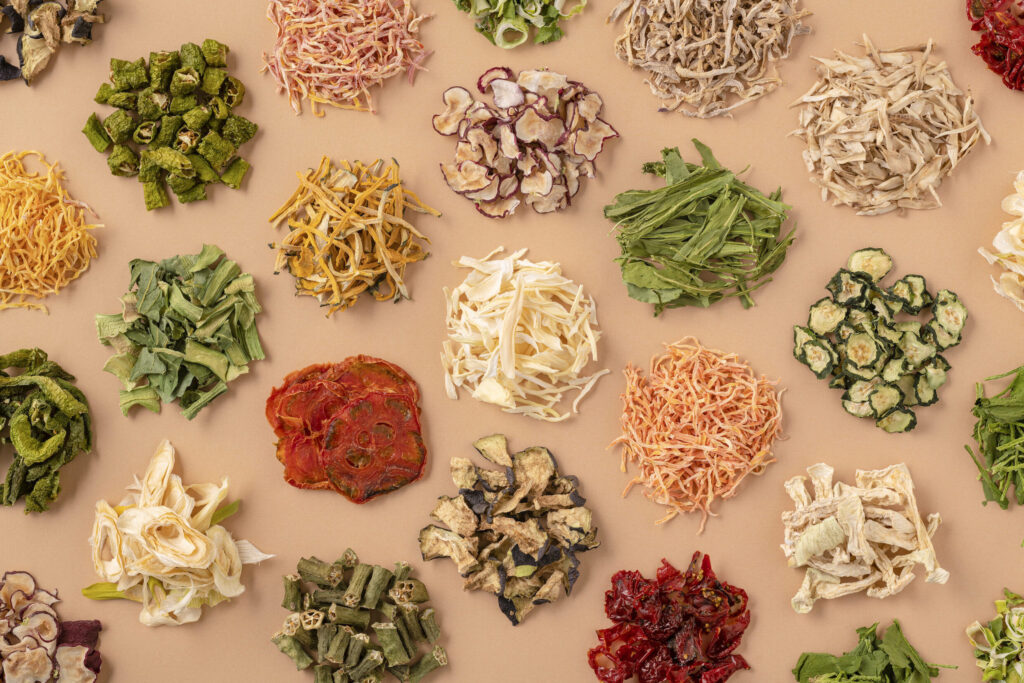
- Available for purchase in small lots from 1 kg
- We handle heirloom vegetables from across Japan
- Dried fruit and herbs also supported
Summary
Kiriboshi daikon can be made easily at home simply by cutting daikon into thin strips and drying it in the dry winter period. When you do not have time, using a microwave or oven lets you make it within the day. Making the thickness even with a slicer, cutting thinly and drying in good ventilation, and avoiding rain and night dew are the tips for preventing mold and discoloration. When rehydrating, change the water amount and time to suit the dish, and using the rehydration liquid too leaves no waste.
Homemade kiriboshi daikon can be used widely in simmered dishes, salads, miso soup, and harihari pickles. When you want to enjoy a bite or save effort, incorporate thick-cut wariboshi daikon too and savor the deliciousness of dried daikon at the everyday table.
- How to Make Dried Mandarin: Tips for Making It Whole with the Peel, Plus Storage and Recipes
- How to Make Fruit Tea: Types and Blending Tips with Dried Fruit