
What Are the Benefits of Contract Food Processing? | Comparison with In-House Manufacturing and Points for Use

Summary of this article
We explain five benefits of contract food processing: a major reduction in initial investment, use of the specialized technology of GMP-certified factories, flexible support from small to large lots, a lighter burden of schedule management, and shorter time to market. We introduce practical use points such as the difference between OEM, ODM, and subcontracting, comparison points with in-house manufacturing, how to choose a reliable manufacturer, and the importance of creating clear specification documents.
You want to launch a new business in the food industry. You want to make products under your own brand. For those holding such thoughts, "contract food processing" becomes a powerful option.
But when considering contract processing for the first time, anxieties are inevitable. "Is there really a cost benefit?" "Can quality be maintained?" "Where should I ask?"
Many people hold such questions.
This article explains the benefits of contract food processing while comparing it with in-house manufacturing, and conveys the points when actually using it. While also touching on manufacturing-outsourcing forms such as OEM and ODM, we provide hints for finding the optimal option for your business.
TOC
What is contract food processing? Understanding the basics of OEM and ODM
Contract food processing means specifying a product's standards, quality, and design, and asking another company to manufacture or process it. Even without owning a factory yourself, by entrusting it to a business that already has equipment, you can greatly keep down initial investment. This system is widely used in forms such as "OEM" and "ODM."
What is OEM?
OEM stands for "Original Equipment Manufacturer." It is a method in which a company asks another company to handle the manufacturing process for its own brand's products.
For example, suppose you want to sell honey of a new brand. If you have no manufacturing equipment, you ask an OEM manufacturer that produces honey. The OEM manufacturer handles the manufacturing, but the finished product is sold under the client's brand.
What is the difference from ODM?
ODM stands for "Original Design Manufacturer," a form in which everything from product design to manufacturing is asked of another company all at once.
When the client does not have concrete product design or development know-how, the ODM manufacturer handles recipe development, product design, packaging, and manufacturing in an integrated way. The finished product is sold under the client's brand.
Let's also nail down the difference from subcontracting
Subcontracting refers to outsourcing part of the production line to another company when manufacturing your own product.
Whereas OEM outsources "all" of the manufacturing process, subcontracting differs in that it outsources only "part." It is effective when you want to hold a production line in-house while preventing technical shortfalls or cost increases.

FOR BUSINESS
乾燥野菜のOEM・受託加工を承ります
国産の野菜・果物の乾燥、100メッシュ相当までの粉砕、10g以上の小袋充填までをお受けしています。小ロットの試作から量産までご相談ください。寄せられた相談の実例は OEM・卸のご相談 に掲載しています。
乾燥品の賞味期限は、出荷日から6ヶ月程度を目安にご案内しています。
The 5 benefits of contract food processing
The biggest reason to choose contract processing lies in its many benefits.
Here, we explain in detail five benefits that are especially noteworthy.
1. You can greatly reduce initial investment
Building your own factory and installing manufacturing equipment costs an enormous amount. Land acquisition, building construction, machinery and equipment, hiring personnel, obtaining various certifications. All of these require investment on the scale of tens of millions to hundreds of millions of yen.
With contract processing, because you ask a manufacturer that already has equipment, such initial investment becomes unnecessary. Being able to redirect the freed-up funds to product development and marketing is a major strength.
2. You can leverage specialized technology and quality
Food manufacturing requires advanced technology and experience. Temperature control, hygiene control, optimization of the manufacturing process. Building these from scratch in-house is not easy.
Contract-processing manufacturers have years of track record and know-how, and many companies have obtained GMP and HACCP certifications. By leveraging such specialized technology, you can stably supply high-quality products.
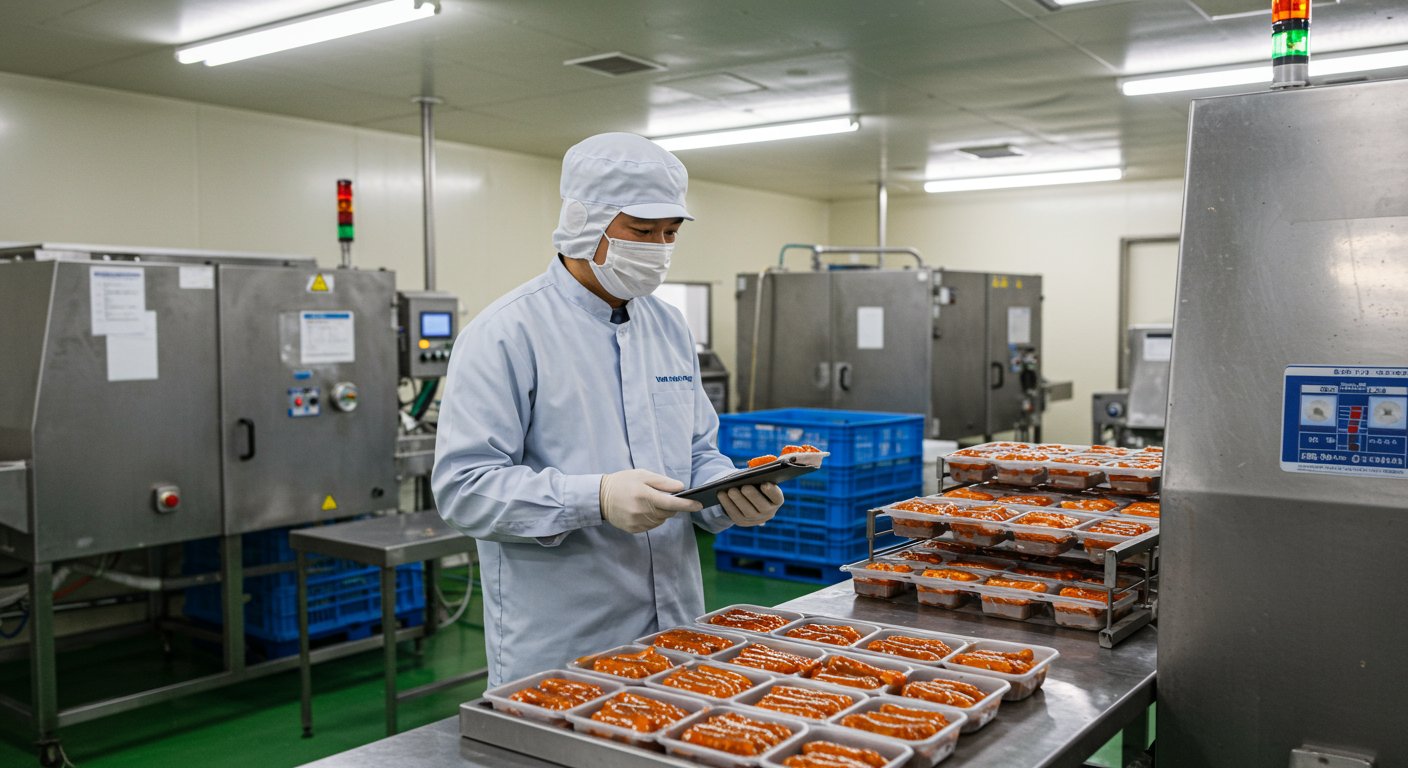
3. Flexible support from small to large lots
In in-house manufacturing, considering the equipment's utilization rate, production above a certain volume becomes necessary. But for test-marketing new products or seasonal products, small-lot production is often required.
Among contract-processing manufacturers, many companies are good at small-lot support. Because you can gradually increase production volume while watching the market's reaction, you can keep inventory risk to a minimum.
4. Lighter burden of manufacturing-schedule management
Asking multiple processes of different businesses takes enormous effort in schedule adjustment and material movement.
If you choose a contract-processing manufacturer capable of integrated manufacturing, you can request everything from raw-material processing to formulation, filling, and packaging in one stop. The burden of schedule management decreases, and you can concentrate that on sales promotion and promotion.
5. Shorter time to market
Setting up an in-house manufacturing system requires a long time, from equipment installation to human-resource development.
With contract processing, because you can leverage existing equipment and know-how, you can greatly shorten the period from product planning to market launch. There are also manufacturers that can handle prototyping in as little as two weeks and first-time manufacturing usually in 2–3 months. Being able to respond quickly to market trends is a major advantage in business.
Comparison points between in-house manufacturing and contract processing
The benefits of contract processing are clear, but in-house manufacturing also has advantages.
Which to choose differs by business scale and strategy. Here, we organize the points to nail down when comparing the two.
Comparison on cost
In-house manufacturing has large initial investment but may keep the unit price down at mass production. However, running costs such as equipment maintenance, personnel, and utilities also need to be considered.
Contract processing requires no initial investment and has the flexibility to produce just the amount needed when needed. Because you can start from small lots and expand gradually according to demand, you can keep risk to a minimum.
Quality control and traceability
In in-house manufacturing, because you can manage all processes yourself, the transparency of quality control rises.
Meanwhile, even with contract processing, if you choose a reliable manufacturer that has obtained GMP or HACCP certification, you can maintain a high quality level. With a manufacturer that has an integrated manufacturing system, cause investigation when trouble occurs can also be done smoothly.
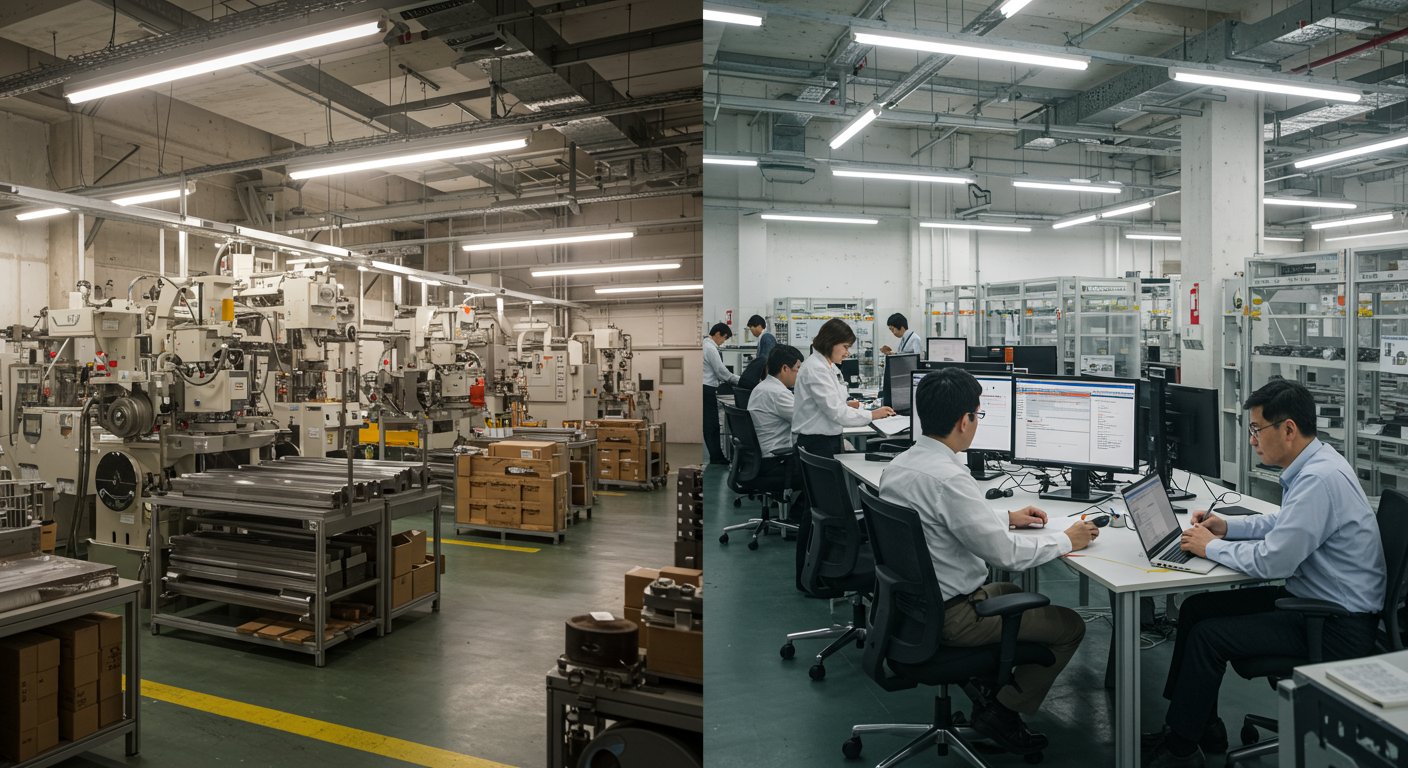
Flexibility and speed
In in-house manufacturing, due to equipment constraints, the product forms that can be handled may be limited. Introducing a new dosage form or processing method requires additional investment.
Contract-processing manufacturers have equipment supporting diverse dosage forms—tablets, capsules, granules, jelly, drinks. You can select the optimal form to match market needs, raising the freedom of new-product development.
Business scale and future plans
At a stage where the business scale is small, the benefits of contract processing are considered large.
But once the business expands and stable mass production becomes foreseeable, it is worth considering a shift to in-house manufacturing. A hybrid form that gradually builds in-house manufacturing capacity while complementing part of it with contract processing is also one option.
Important points when using contract food processing
To make contract processing a success, you need to nail down several key points.
Here, we explain points to note when actually using contract processing.
How to choose a reliable manufacturer
Selecting a contract-processing manufacturer is an important decision that determines the product's quality and the business's success or failure.
When selecting, confirm the following points. Quality-certification status such as GMP and HACCP, the dosage forms and processing technology that can be handled, the minimum lot and delivery time, track record and reputation, and smoothness of communication—judging these comprehensively is essential.
Creating clear specification documents
To make contract processing a success, clearly conveying the product specifications is indispensable.
With vague expressions like "we can do anything" or "please inquire for details," you won't get the product you expect. Concretely stating the processing content that can be handled, the lot quantity, delivery time, and use, and attaching photos and examples of track record, is effective.
Using matching sites
The food OEM market continues to expand, and using matching sites is drawing attention.

On matching sites, because you can narrow down by concrete search conditions such as "small lot," "powder processing," "domestic-material support," and "tea-bag filling," you can efficiently find a processing manufacturer that fits your conditions. It functions like an online trade show where you connect directly with prospective customers already considering ordering.
About Food OEM no Madoguchi here

The importance of the initial response
When you receive an inquiry on a matching site or Trade show, the speed of the initial response greatly influences the closing rate.
Prompt and courteous response, and accurately grasping the other party's needs, are required. The speed from inquiry to proposal becomes a factor that differentiates you from competitors.
Use from a mid-to-long-term perspective
Contract processing should be regarded not as a mere cost-reduction measure but as part of a business strategy.
Being listed on a matching site also has value as a mid-to-long-term SEO asset. Pages within the site tend to rank high in search engines, and the effect of exposing your company name for keywords such as "○○ OEM" and "small-lot food processing" can also be expected. By using it together with trade shows and business-meeting events, you can level out lead acquisition.
Confirm the scope of the party you ask
When requesting contract food processing, it's important to confirm not only the processing content that can be handled but also how far the work can be entrusted. The scope you can request—raw-material processing, manufacturing, filling, packaging, quality control—differs by manufacturer.
Also, if you want to entrust the operation of the manufacturing process and even personnel management externally, it's good to also understand the mechanism of manufacturing subcontracting.
For details, it is explained in Persol Factory Partners Co., Ltd.'s "Introducing the Scope of Manufacturing Subcontracting in Food | An Explanation from the Difference with OEM to Points for Selecting a Company."
FOR BUSINESS
乾燥野菜のOEM・受託加工を承ります
国産の野菜・果物の乾燥、100メッシュ相当までの粉砕、10g以上の小袋充填までをお受けしています。小ロットの試作から量産までご相談ください。寄せられた相談の実例は OEM・卸のご相談 に掲載しています。
乾燥品の賞味期限は、出荷日から6ヶ月程度を目安にご案内しています。
Summary: Accelerate your business with contract food processing
Contract food processing is a powerful option that lets you launch high-quality products to market while keeping initial investment down. Compared with in-house manufacturing, it has advantages in flexibility, speed, and the use of specialized technology. Especially during the business-launch period and when developing new products, the benefits of contract processing stand out.
The keys to success lie in selecting a reliable manufacturer, creating clear specification documents, and prompt communication. If you use platforms such as matching sites, you can efficiently find a processing manufacturer that fits your conditions.
Use contract food processing strategically, and accelerate your business to the next stage.
Why not find the optimal partner for your business right now on a food OEM matching site?
If you are considering product development with off-spec or your own farm's vegetables:From planning to processing, materials, package printing and novelties, you can consult us through a single point of contact. → Learn more about one-stop product development
- The Complete Guide to Choosing a Filling OEM | Points for Selecting a Contractor Without Regret
- How to Increase Food OEM Inquiries | A Practical Guide to Lead Acquisition and SEO Measures
Author of this article
Related articles
-
 Original coffee marketing strategy | Ways to grow sales
 -
 ベジタリアンとは?国の規格が分けている4つの区分と食べられないもの
 -
 長ねぎと白ねぎは同じもの?ねぎの種類と呼び名を国の資料で確かめる
 -
 柚子の種類は何種類あるのか、公の資料で名前が残る系統を数えた
 -
 ゆずの時期は年に二度、青ゆずは7月から黄ゆずは10月から
 -
 ゆずの産地は高知が半分を占め、二位は徳島から愛媛に変わった
 -
 Preventing Food OEM Failures: Common Failure Cases and Countermeasures for Success
 -
 How to find a food OEM | How to efficiently find the best manufacturing partner