What are the characteristics of Nagano-grown apples? Explaining the appeal unique to the production area

Summary of this article
Nagano apples boast the second-largest production in Japan and grow to high quality thanks to differences in elevation, wide day-night temperature swings, and low annual rainfall. The “Apple Three Brothers®”—Akibae, Shinano Sweet, and Shinano Gold—have recorded sugar levels of 14–15%. With many original varieties such as Shinano Lip and Shinano Dolce, fresh apples ship over about five months, from August to December. We also introduce storage techniques and a variety of ways to enjoy them.
TOC
Why Nagano Is Suited to Apple Growing
Nagano is known as one of Japan’s leading apple-growing regions, on a par with Aomori, and Shinshu-brand apples are highly rated in markets nationwide. Why is Nagano’s land suited to growing apples? The answer lies in its terrain of connected inland basins and the distinctive climate that its high elevation brings. Let’s look at the region’s strengths from both the terrain and the climate.
The Cool Climate Brought by High Elevation
Nagano’s apple-growing regions spread across highlands above 300 meters in elevation. Located inland, far from the sea, the air tends to be dry, creating an environment where apples can be grown while keeping disease in check. The higher the elevation, the less the temperature rises even in summer, and the apples ripen slowly over time. In the cool air the flesh tightens and its density increases, giving rise to a satisfying bite and juiciness.
Differences in climate due to elevation lead to distinct character among growing regions even within Nagano. Because harvest timing and suitable varieties change by area, choosing a growing region is itself a choice of flavor. Knowing an apple’s differences by growing region makes it easier to choose the right one for your taste.
Wide Day-Night Temperature Swings Cultivate Sugar and Aroma
Essential to describing the flavor of Nagano apples is the wide temperature difference between day and night. The basin terrain and high elevation combine so that daytime temperatures rise as the fruit basks in sunlight, then drop sharply at night. This temperature gap is the key to drawing out an apple’s sweetness and aroma.
Apples store sugar through daytime photosynthesis and consume it through nighttime respiration. When nighttime temperatures are low, respiration is suppressed and the sugar made during the day tends to remain in the fruit. The wider the temperature swing in a region, the more the sugar tends to concentrate, and Nagano’s highlands are blessed with these conditions. The cool climate is also thought to promote the formation of aromatic compounds, supporting the honeyed flesh and rich fragrance characteristic of Shinshu apples.
The Shinshu-Born Original Varieties, the “Apple Three Brothers”
What characterizes Nagano’s apples are the original varieties the prefecture has developed over many years. Among them, the three varieties Akibae, Shinano Sweet, and Shinano Gold are called the “Apple Three Brothers” and are beloved as the face of Shinshu. Each differs in taste, texture, and season, offering the pleasure of choosing to suit your preference. Centering on the three brothers, we introduce the Shinshu-born varieties.
The Three Brothers: Akibae, Shinano Sweet, and Shinano Gold
Akibae is the earliest of the three, appearing around early October. It is characterized by a dark crimson color that goes beyond deep red, giving it visual impact. With a good balance of sweetness and acidity, plenty of juice, and a firm texture, it suits those who like a rich flavor.
Shinano Sweet, as its name suggests, is a variety with standout sweetness, in season from mid to late October. Its acidity is mild and the sweetness comes to the fore, so it is easy to eat for children and older people alike and is welcomed as a gift. The flesh is not too soft, keeping a pleasant crispness.
Shinano Gold is an eye-catching variety with yellow skin, coming into season from late October through November. Its sweetness and acidity are both distinct, and its firm, dense flesh gives it a good texture and a reputation for keeping well. It is of course delicious eaten raw, and its flavor holds up well even when processed, making it versatile. Comparing an apple’s popularity and characteristics by variety reveals where each of the three brothers stands.
Distinctive Varieties Such as Shinano Dolce and Shinano Piccolo
Beyond the three brothers, Shinshu has an array of distinctive original varieties. Shinano Dolce is an early variety on the market from mid-September to early October, with just the right acidity within its sweetness, plenty of juice, and a pleasantly crisp texture. It suits those who want to enjoy a high-quality apple early in the season.
Shinano Piccolo is a variety characterized by its small, palm-sized fruit. It is easy to bite into whole, skin and all, and is popular for how well it works in lunch boxes, as a snack, or when serving guests. Despite its size, it has a good balance of sweetness and acidity, and its cute appearance means it is also chosen as an apple to add to a gift. Having such a wide variety supports the depth of Nagano apples.
A Harvest Relay Lasting from August to December
One of the great appeals of Nagano apples is being able to enjoy seasonal apples over a long period. With growing regions of varying elevation and a wide range of varieties, apples are harvested one after another—like a relay of varieties—from late summer through year’s end. Because the leading role changes with each period, you can encounter the very apple that can only be tasted at that time.
Early Varieties Beginning at the End of Summer
Nagano’s apple season begins in earnest with Tsugaru in August. Tsugaru is a representative early variety; with strong sweetness and abundant juice, it is favored by those who want to enjoy a fresh, juicy apple at the end of summer. Following it, early varieties such as the Shinano Dolce introduced earlier appear in September, coloring the early-autumn table.
Many early varieties have soft, juicy flesh, and their texture tends to change as time passes after harvest. Enjoying them fresh, right when they first hit the shelves, is the trick to appreciating early apples.
Mid- and Late-Season Varieties from Autumn into Winter
As October arrives, the Apple Three Brothers—Akibae, Shinano Sweet, and Shinano Gold—come into season one after another, making this the liveliest period of the season. Then, from November through December, Fuji takes the leading role. With an excellent balance of sweetness and acidity, firm flesh and good texture, and high storability, Fuji is said to be the most beloved variety in Japan. Grown in Nagano’s cool climate, Fuji tends to develop honey, making it a staple for year-end gifts and seasonal presents. characteristics and how to choose Fuji Knowing these makes choosing winter apples much more enjoyable.
Thanks to this harvest relay—beginning with Tsugaru and closing with Fuji—Nagano apples delight the table over a long period.
How to Choose Nagano Apples
Even among Nagano apples, flavor varies greatly by variety and condition. Since you’re choosing by growing region, you’ll want to pick out a good one at the store. Knowing how to judge freshness and ripeness from appearance and feel leads to a more satisfying apple choice.
Judging by Color, Firmness, and Weight
When choosing an apple, first check the overall coloring. For red varieties, deep and even color; for yellow varieties, a clear ground color—these are signs of being well ripened. Whether the surface is firm and glossy and not shriveled is also an important guide.
One that feels heavy in the hand often contains plenty of juice. If the size is the same, choosing the heavier one reduces the chance of disappointment. One whose bottom (the base of the fruit) is tinged yellow can be judged to be riper and close to eating ripeness. A firm, un-withered stem is another clue to freshness.
Choosing Variety and Season to Suit Your Use
You can enjoy apples more by choosing the variety to match your use. To eat them raw, sweet Shinano Sweet or honeyed Fuji are good choices. If you prefer a firm flavor with acidity, Akibae or Shinano Gold are options.
For heating, Shinano Gold—with firmer flesh that holds up without falling apart—is easy to work with and keeps its flavor even in baked goods or jam. For gifts, Shinano Sweet, with its showy looks and balanced flavor, or year-end-appropriate Fuji are ideal. Neighboring Yamagata is also known as a fine apple-growing region that makes the most of temperature swings, but the wealth of Shinshu-original varieties is a strength unique to Nagano. Characteristics of Yamagata-grown apples Comparing them reveals the distinct character of each growing region.
The Many Ways to Enjoy Nagano Apples
Nagano apples are not limited to eating raw. Making the most of their wide variety and high quality, they also shine as processed goods and gifts. Knowing ways to enjoy them to suit the occasion and your taste lets you appreciate their appeal even more deeply.
A Flavor That Spans Raw Eating to Processing
The easiest is eating them raw, biting straight in with the skin on. Shinshu apples are prized for their juiciness and good texture, so enjoying them simply lets that character stand out. A small variety like Shinano Piccolo is easy to eat whole and keeps your hands clean, making it perfect for a snack or an outing.
Enjoying them processed is another good option. Grate them into yogurt or dressing, or slice them thin to add color to a salad—the range of dishes expands. Using varieties suited to heating, they also shine as compote, jam, or a filling for baked goods. Dried apple concentrates the fruit’s natural sweetness and aroma and is popular as a snack or baking ingredient. Nagano’s fine apples can also be enjoyed beyond their season through such processing—another part of their appeal.
Shinshu Apples as Gifts
Excellent in both taste and appearance, Nagano apples are welcomed as gifts. Honeyed Fuji and richly sweet Shinano Sweet in particular are staples for year-end and seasonal greetings. Gift apples packed in decorative boxes are matched for size and coloring, giving a showy impression when opened.
The table below summarizes representative varieties and how to enjoy them. Use it as a reference when choosing.
| Variety | Season guide | Flavor tendency | Best ways to enjoy |
|---|---|---|---|
| Tsugaru | August | Sweet and juicy | Eaten raw |
| Akibae | Early October | Well-balanced sweet-tart and rich | Eaten raw |
| Shinano Sweet | Mid to late October | Standout sweetness | Eating fresh, gifting |
| Shinano Gold | Late October–November | Distinct sweet-tart, firm texture | Raw eating and processing |
| Fuji | November–December | Balanced sweet-tart and honey | Eating fresh, gifting |
How to Buy Nagano Apples
There are several ways to get hold of Nagano apples. Since you’re at it, you’ll want to choose fresh ones that suit your taste. Knowing the features of each place to buy lets you use them according to your purpose.
Encountering a Seasonal Apple at a Local Farm Stand
If you have a chance to visit Nagano, a local farm stand is worth a look. Farm stands line up freshly harvested apples, and you can also come across region-limited varieties not found in stores or blemished bargains not sent out as gifts. Producers often sell directly, and being able to ask about that season’s recommendations and eating ripeness is a pleasure unique to the growing region. With a good balance of price and freshness, it also suits buying in bulk for home use.
Fresh Apples Delivered Direct from the Grower
Even if you live far away, direct-from-grower services let you enjoy Nagano apples at home. Since they are shipped a short time after harvest, freshness is well maintained, and you can choose the variety and box size when ordering. There are also services that deliver directly to a recipient as a gift, handy for seasonal greetings and celebrations. During peak season popular varieties can sell out early, so if you have a target variety like Fuji, it’s reassuring to act early.
Summary: The Deep World of Apples Nurtured by Shinshu’s Climate
The deliciousness of Nagano apples is supported by Shinshu’s distinctive climate—high elevation and wide day-night temperature swings. Fruit that ripens slowly in the cool climate has firm flesh and carries plenty of sweetness and aroma. Having an abundance of Shinshu-original varieties—not only the Apple Three Brothers of Akibae, Shinano Sweet, and Shinano Gold, but also Shinano Dolce and Shinano Piccolo—is another great appeal of Nagano.
Thanks to the harvest relay that begins with Tsugaru in August and continues to Fuji in November and December, you can enjoy seasonal apples over a long period. Choose by color, firmness, and weight, and pick varieties to match your use and taste, and you can fully appreciate their appeal—raw, processed, or as a gift. Make good use of farm stands and direct-from-grower delivery, and enjoy the deep world of apples Shinshu has nurtured.
Honey-cored Shinshu apple, domestic dried apple
Sugar-free, a crunchy new texture—dried fruit of honey-cored "leaf-unremoved Shinshu apple"
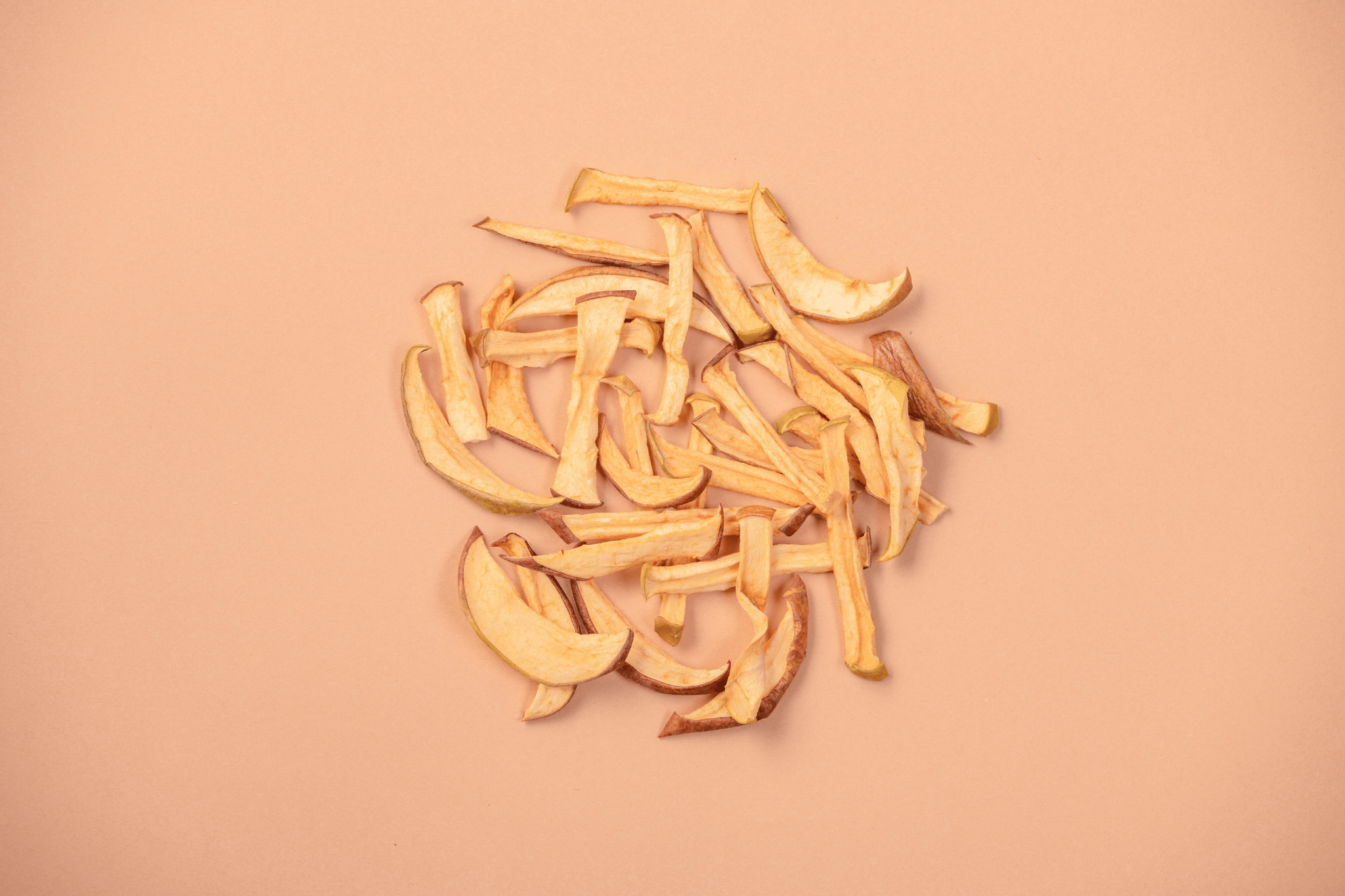
- Made with honey-cored "leaf-unremoved Shinshu apple"
- Sugar-free, dense natural sweetness
- Available in two forms, stick and dice
Recommended reading
- Differences among apple-producing regions | Comparing Aomori, Nagano, and Yamagata
- Characteristics of Yamagata-grown apples
- What are the characteristics of Fuji apples?
- Apple-variety popularity ranking
FOR BUSINESS
乾燥りんごを、原料としてお探しですか
国産のりんごを乾燥・粉砕してお出ししています。カット形状や粒度の指定、継続してのお取引もご相談ください。規格は 乾燥りんご に掲載しています。
少量でのご購入は、姉妹ブランドの通販サイト OYAOYA で承っています。