Hojicha Is the Easy One to Bag, and the Roast Is Why

Of the Japanese teas that come through our line, hojicha is the least fussy. Not because it is a lesser product, but because the roast has already done the thing that makes matcha difficult to put on a shelf.
That has a direct consequence for your bill, and it is the reason a hojicha launch is usually cheaper to package than a matcha one at the same bag count.
目次
The roast removes the colour problem
What makes matcha awkward is that its selling point is a colour that light and air take away. A clear bag shows the customer the green and then slowly removes it, which is why the matcha default is an opaque aluminium pouch.
Hojicha is already brown. The roast is the product. There is no vivid colour left to protect, which puts the cheap half of our stock list back on the table.
| Option | Size | Per piece | Why it works for hojicha |
|---|---|---|---|
| Plain semi clear matte pack | 100 by 120 mm | USD 0.10 | Cheapest bag we hold. Sample sizes, trial packs |
| Clear flat pouch | 120 by 140 mm | USD 0.15 | Shows the leaf. Right for a refill / a boxed product |
| Clear stand up pouch with zipper, window | 120 by 200 mm | USD 0.45 | Shelf presence plus a resealable top |
| Biomass metallised kraft, three side seal | 110 by 125 mm | USD 0.20 | Paper face, barrier back, for a craft look |
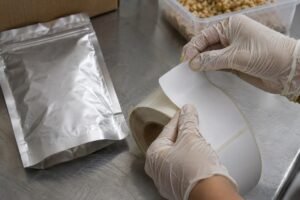
| Aluminium stand up pouch with zipper | 130 by 130 mm | USD 0.30 | Still the safe choice for a powder |
Set the clear flat pouch at USD 0.15 against the aluminium pouch at USD 0.30 and the saving is fifteen cents a unit, which is USD 75 across a 500 bag run. Not enormous, but it is the same money as a whole label position, and with hojicha you are not giving anything up to get it.
What the bag still has to do
Two things do not go away with the roast. Tea picks up moisture, and aroma leaves. A zipper matters on anything a customer opens more than once, and a barrier face is worth paying for if the product sits on a warm shelf for months.
We fill and heat seal in ambient air on every format. There is no nitrogen flushing and no vacuum, so the bag is the only protection the product gets from us. For a roasted tea that is usually acceptable, and for a bright green powder it often is not. That is the real difference in one sentence.
Leaf or powder, and why the bag size changes
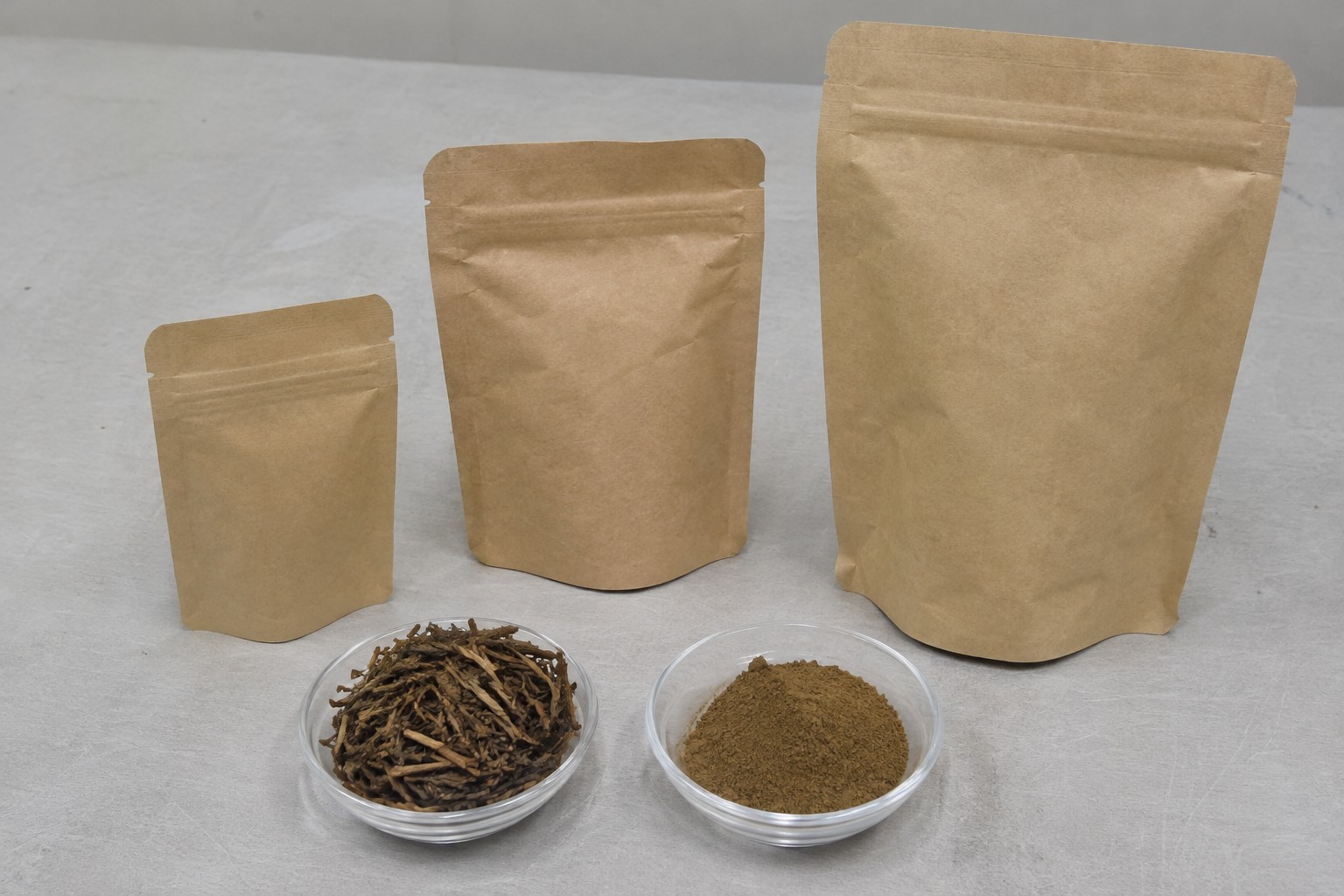
Hojicha reaches us in both forms, and they behave nothing alike on a filling line.
Roasted leaf is extremely light for its volume. A bag that holds 100 g of a dense dried vegetable powder will not come close to holding 100 g of hojicha leaf. The practical effect is that leaf products need a physically large bag for a modest weight, which pushes you up the price list for reasons that have nothing to do with protection.
Hojicha powder is the opposite problem and a familiar one: it behaves like matcha, slower through a filler, prone to packing down, and it leaves a little of itself in the machine on every bag.
The practical consequence for leaf is that you cannot pick a bag from a size chart. A 100 g hojicha leaf product may need a bag two sizes up from the one the weight suggests, and that moves it to a different price on the stock list. Tell us the fill weight with the bag you are considering and we will check the two against each other before anything is ordered. If you are supplying printed bags, raise it earlier still, because a print run cannot be undone and this is the mistake that makes one expensive.
| Format | Fill weight | Net material for 500 bags | Bag to look at first |
|---|---|---|---|
| Leaf, retail | 50 g | 25 kg | Clear stand pouch, 120 by 200 mm |
| Leaf, retail | 100 g | 50 kg | A larger stand pouch. Ask us for the fit |
| Powder, retail | 30 g | 15 kg | Aluminium pouch, 130 by 130 mm |
| Powder, sample | 10 g | 5 kg | Three side seal sachet |
Those are net weights, meaning what ends up inside the bags. Filling to a target weight always leaves some material behind, so send a margin on top. Tell us the weight you plan to ship with the bag count you want, and we will say whether it is comfortable before you book the freight.
Hojicha sells well as a brewing bag
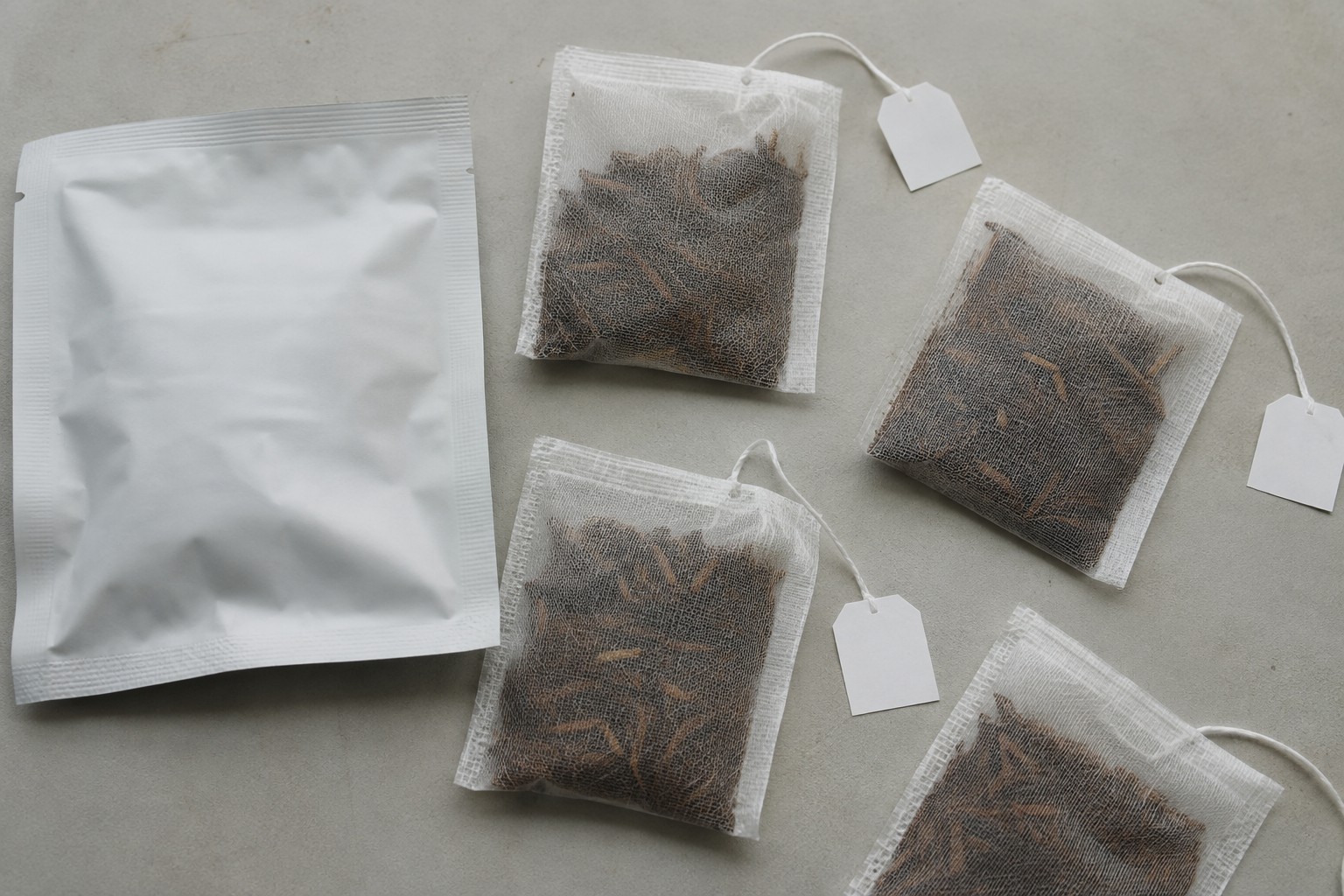
More of the hojicha we see is destined for individual brewing bags than is true for any other tea on our list, which makes sense: it is the everyday drink of the group, the one people make a pot of without ceremony.
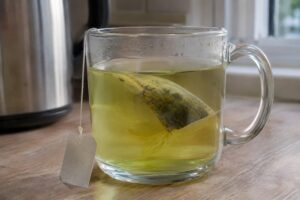
We stock a tagged mesh filter at 65 by 80 mm for USD 0.25 a piece, and it is one of the few items on our list that is genuinely hard to buy in small quantities anywhere else. The filter bag article covers the arithmetic, which is not what people expect, because our minimum counts filled units and a retail carton holds twenty of them.
A worked first order
Five hundred retail bags of 50 g leaf, our clear flat pouch, one front label, twenty five kilograms of roasted leaf from your producer.
| Line | Unit | 500 bags |
|---|---|---|
| Fill & seal | USD 0.65 per bag | USD 325.00 |
| Clear flat pouch, 120 by 140 mm | USD 0.15 per piece | USD 75.00 |
| Label application, one position | USD 0.15 per position | USD 75.00 |
| Set up fee, first order only | USD 130 once | USD 130.00 |
| Dispatch handling | USD 2.55 per shipment | USD 2.55 |
| Total, first order | USD 607.55 | |
| Per bag, first order | USD 1.22 | |
| Per bag, repeat orders | USD 0.96 |
Under a dollar a bag on a repeat order is about as cheap as our line gets, and the reason is the bag. Put the same tea in an aluminium pouch at USD 0.30 and the first order total moves to USD 682.55. Everything else on the invoice is identical, because the fill rate does not care what is in the bag.
Blends, and the one thing we can do with them
Hojicha gets sold blended more often than matcha does. Hojicha with roasted rice, hojicha with ginger, hojicha with a second tea. Two different requests hide in that, and only one of them is ours.
We do not formulate. If you want somebody to work out the ratio, test it and tell you what tastes right, that is a contract manufacturer. What we can do is weigh two finished components into the same bag to a ratio you specify. That is charged at USD 1.10 a bag instead of USD 0.65, because it is two weighing operations instead of one.
The practical difference: send us a blend your producer already made and it is an ordinary fill. Send us two ingredients with instructions and it is a measured mix. Send us two ingredients and ask what ratio works, and we will point you elsewhere.
If the blend is going to be a permanent product, it is usually cheaper to have your producer blend it once, in bulk, and send it to us as a single material. You pay USD 0.65 a bag instead of USD 1.10, and the ratio is consistent in a way that two separate weighings never quite are.
The roast is not ours to adjust
We do not roast. We do not blend. The roast level is the single thing that distinguishes one hojicha from another, it is decided by your producer long before anything reaches Kyoto, and it is fixed by the time it ships to us.
So settle it upstream, with a sample in your hand, and treat it as final. What a packer will not do has the full boundary. If you have not chosen a producer yet, who sells the tea and who bags it explains how the two suppliers divide up, which works the same way for hojicha as it does for matcha.
What to tell us when you ask
- Leaf or powder, and if powder, how fine.
- The fill weight per bag and the total bag count.
- Whether you want a stock bag or are supplying printed bags yourself.
- Whether a brewing filter is part of the range.
- The date you need finished stock in your own warehouse.
With those five we can price it. Rates, minimums and conditions are on the contract packing page.
Questions we get asked
Why is hojicha cheaper to bag than matcha?
The roast already removed the colour you would otherwise be protecting, so a clear bag becomes a real option. The clear flat pouch is USD 0.15 against USD 0.30 for the aluminium one, which is USD 75 across a 500 bag run.
Does hojicha still need a barrier bag?
It depends on the product and the shelf. Tea picks up moisture and aroma leaves, and we fill in ambient air with no gas flushing, so the bag is the only protection we add. A zipper matters on anything opened more than once.
Is leaf different from powder on your line?
Very. Roasted leaf is extremely light for its volume, so a leaf product needs a physically large bag for a modest weight. Hojicha powder behaves like matcha: slower through a filler and prone to packing down.
Can you roast it, or adjust the roast?
No. The roast level is decided by your producer and it is fixed by the time it ships to us.
Can you make hojicha tea bags?
Yes, in our tagged mesh filter at 65 by 80 mm, USD 0.25 a piece. Read the filter bag article first, because our minimum counts filled filters and a retail carton holds twenty of them.
Related reading
- Loose leaf is not a powder
- Tea filter bags in small quantities
- Stock bags and what each one costs per piece
- What 500 bags of matcha costs
- Who sells you the tea, and who bags it
Tell us leaf or powder, the fill weight and the bag count. That is enough to price a run. WhatsApp reaches us fastest, and we answer in English. If you would rather not use it, the enquiry form does the same job.
Message us on WhatsApp Use the enquiry form Agriture Inc., Kyoto, Japan- Private Label Matcha: Who Sells You the Tea, and Who Bags It
- Tea Filter Bags in Small Quantities, and the Arithmetic Nobody Expects
この記事を書いた人
関連記事
-
 Organic, Halal, Vegan: the Claims We Cannot Certify
-
What Goes on the Label, and Who Supplies It
-
Boxed Sets and Multi Packs: the Count That Decides Everything
-
Private Label Matcha: Who Sells You the Tea, and Who Bags It
-
Tea Filter Bags in Small Quantities, and the Arithmetic Nobody Expects
-
Pack It in Japan, or Ship It Home in Bulk and Pack It There
-
Dried Shiitake: the One Where the Customer Wants to See It
-
Sakura: the Form It Arrives In Decides Whether We Can Run It at All