Tea Filter Bags in Small Quantities, and the Arithmetic Nobody Expects

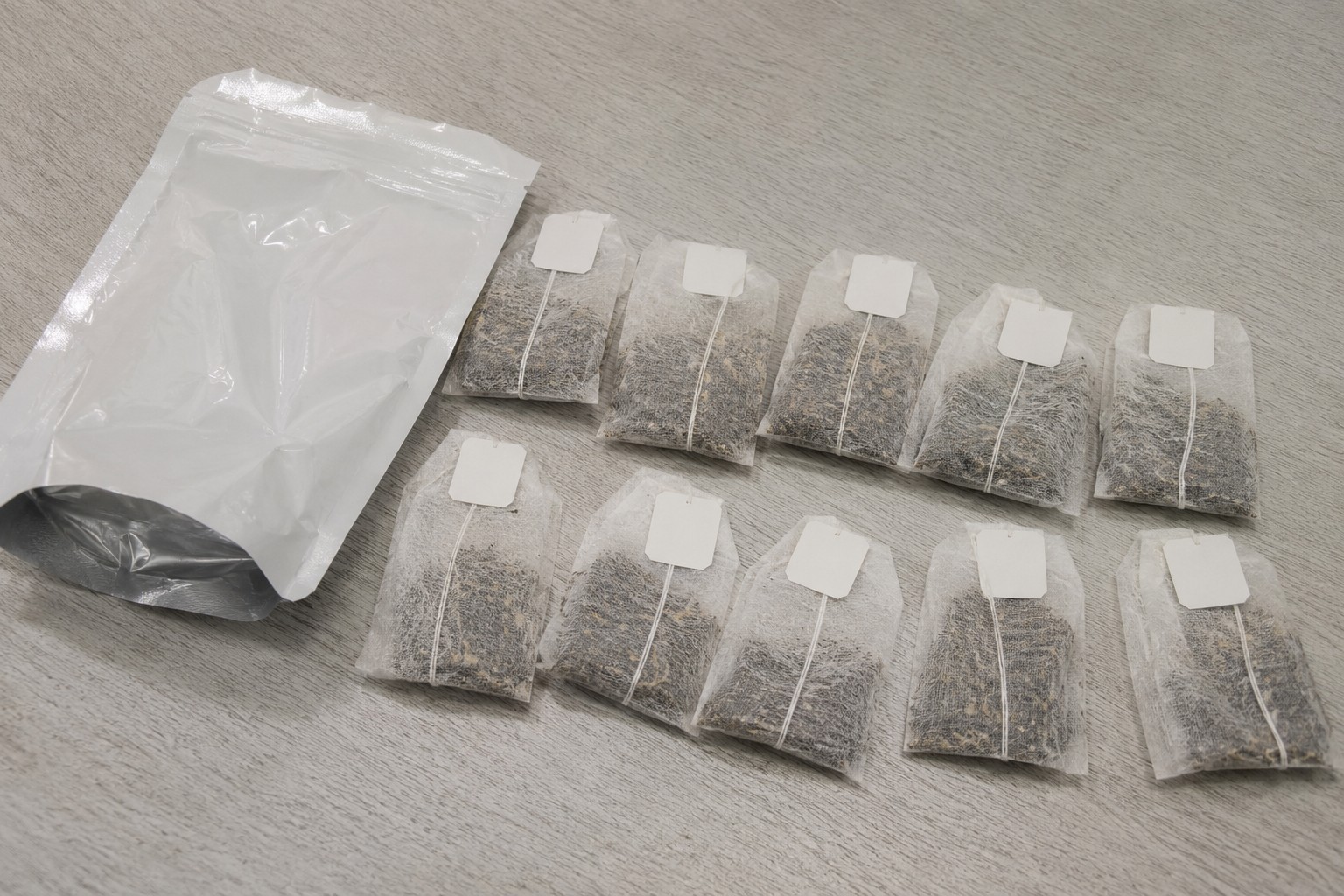
Of everything on our stock list, the tagged mesh filter is the item people are most relieved to find. It is a 65 by 80 mm brewing bag with a string and a tag, it costs USD 0.25 a piece, and it is the one format that small brands routinely cannot source anywhere at a sane quantity.
It also comes with a counting problem that catches almost everybody, and it is better to meet it here than in a quotation.
目次
Why the format is hard to buy elsewhere
Filling a flat pouch is a simple operation. Filling a tagged brewing bag is not: the filter has to be formed or fed, the leaf weighed into it, the bag closed, the string and tag attached without fouling the seal. The machinery that does it is specialised, and the companies that own it are generally set up for volumes a long way above a first order.
The usual answer a small brand gets is a minimum in the tens of thousands, or a polite no. That is the gap this format sits in for us.
The arithmetic that surprises people
Our minimum is 500 bags per order, and a filter is a bag. So 500 is five hundred filled brewing bags, which is not five hundred products.
| Retail carton holds | Filters for 500 units | What 500 filters is instead |
|---|---|---|
| 10 filters | 5,000 | 50 retail cartons |
| 20 filters | 10,000 | 25 retail cartons |
| Single serve, sold loose | 500 | 500 retail units |
Read the right hand column first. If your product is a carton of twenty brewing bags, then our minimum order produces twenty five cartons, which is a sampling exercise, not a launch. If you want five hundred cartons of twenty, that is ten thousand filters, and the conversation is a different one.
This is the opposite of the usual problem. For a powder in a pouch, 500 bags is often more product than a new brand wants. For brewing bags, 500 is often less than they need. Work out your carton count before you work out anything else.
The cost per filled filter
Filling is USD 0.65 a bag and the filter is USD 0.25, so the packing side of each brewing bag is USD 0.90 before labels and before the tea. Across 500 that is USD 450, plus the one time USD 130 set up on a first order.
Notice what that does at carton level. Twenty filters at USD 0.90 is USD 18 of packing inside a single retail carton, which is a serious number against most shelf prices. Brewing bags are an expensive format per gram of tea sold, and that is true at every packer, not only here. The format earns its place through convenience, so price it accordingly.
What goes in a filter, and what does not
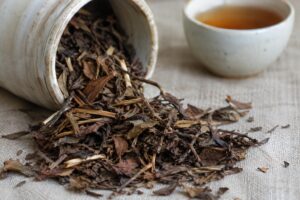
Loose leaf is the natural fit. Cut leaf, broken leaf, roasted leaf, herb blends that arrived already blended: all of these are what the format exists for.
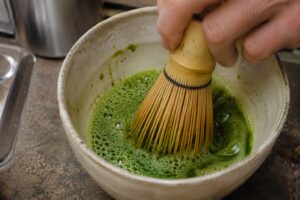
Very fine powder is the wrong fit, and not because of our line. A mesh filter is a mesh. A matcha grind will pass straight through it into the cup, which is how matcha is drunk anyway, so there is no reason to put it in a brewing bag. If your product is a powder, the stock pouch list is the page to read.
One material question we answer honestly rather than optimistically: if your leaf is unusually fine, unusually oily, or has shown any tendency to clump, tell us before you ship it. Where there is a real question about how it feeds, we will say we need the material in hand to answer it.
The outer packaging is a separate question
What we quote is the filled filter. A retail carton, a tin, a sleeve or a printed outer is not on our stock list, which covers bags. If your product needs one, raise it in your first message so we can tell you what is possible on your order instead of discovering it at the end.
Labels we do apply: USD 0.15 per position, and a back label counts as a second position. On a brewing bag format the label usually belongs on whatever holds the filters, so this is worth thinking through before artwork goes anywhere near a printer.
The order of questions that works here is unusual, so it is worth stating. Settle the retail unit first, then the carton count, then the filter count, then talk to us. Every other format on our list works the other way round, starting from the bag and ending at the shelf. Brewing bags are the exception because the shelf unit and the filled unit are not the same object.
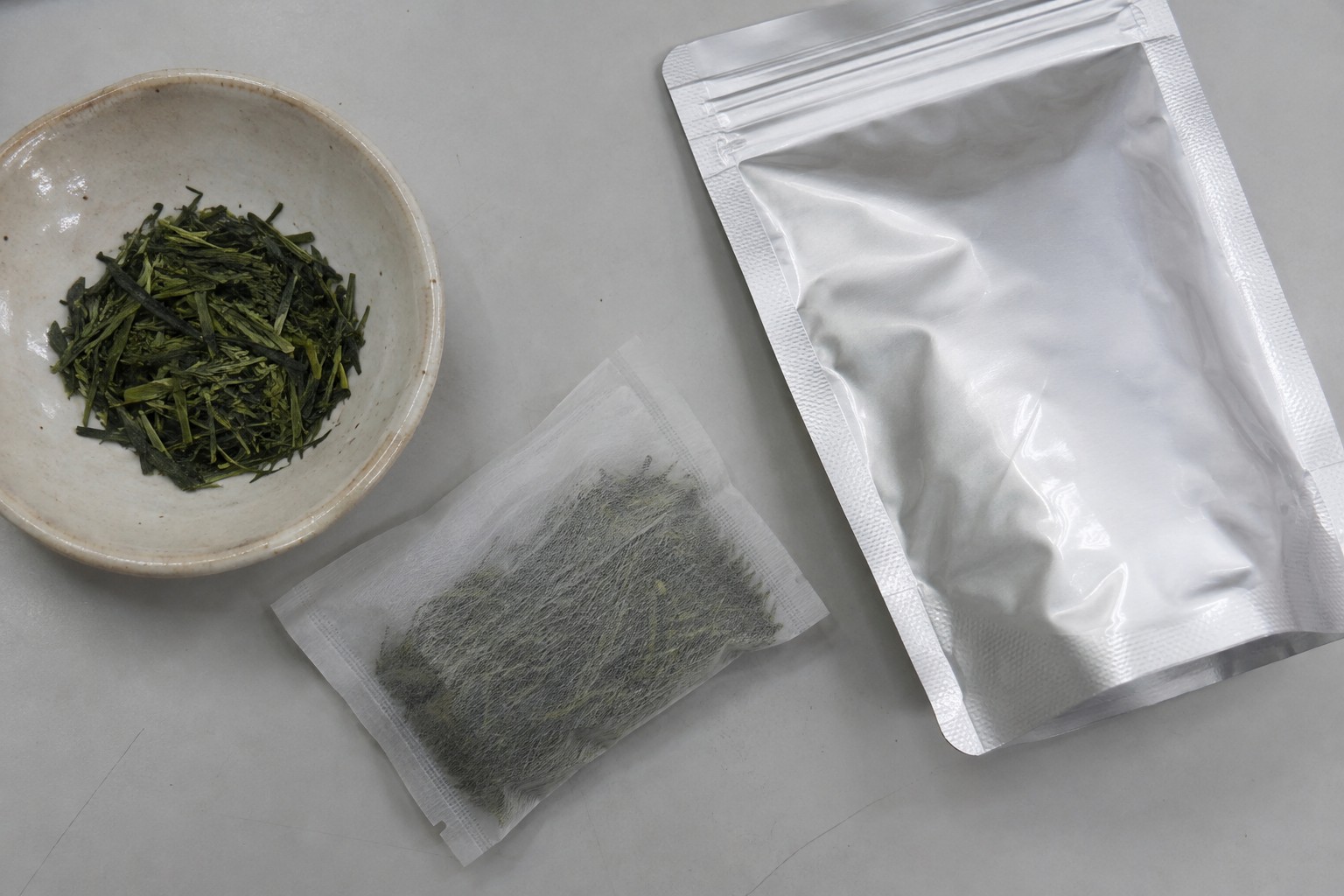
What it costs at two realistic volumes
Both of these are the packing side only. The tea is yours, and so is the freight.
| Line | 500 filters | 10,000 filters |
|---|---|---|
| Fill & seal, USD 0.65 each | USD 325.00 | USD 6,500.00 |
| Tagged mesh filter, USD 0.25 each | USD 125.00 | USD 2,500.00 |
| Set up fee, first order only | USD 130.00 | USD 130.00 |
| Dispatch handling | USD 2.55 | USD 2.55 |
| Total, first order | USD 582.55 | USD 9,132.55 |
| Per filled filter | USD 1.17 | USD 0.91 |
The right hand column is a real first order for a brand that already sells something. Twenty five cents of it is the filter itself, which is the part you cannot buy on its own at this quantity, and that is the whole argument for the format sitting on our list.
Notice how little the per unit figure moves. It falls from USD 1.17 to USD 0.91 across a twentyfold increase, and almost all of that is the set up fee spreading out. The fill rate itself does not change with volume at any point, so there is no quantity at which this format becomes cheap. Price the convenience, not the gram.
The same tea, three ways
One kilogram of leaf, sold three different ways, to show where the format puts your money. Packing cost only, at our rates, on a repeat order so the set up fee is out of the picture.
| Format | Units from 1 kg | Packing cost | Packing per kg of tea |
|---|---|---|---|
| 100 g retail pouch, PKG-017 | 10 | USD 8.00 | USD 8.00 |
| 50 g retail pouch, PKG-017 | 20 | USD 16.00 | USD 16.00 |
| 2 g brewing filter, PKG-014 | 500 | USD 450.00 | USD 450.00 |
Four hundred and fifty dollars of packing on a kilogram of tea is not a mistake in the table. It is what the format costs, because you are paying to perform five hundred filling operations instead of ten. Nobody can make that number small.
Which is the argument for selling brewing bags at a price that reflects it, and for not treating them as a cheap line extension of a loose leaf product. They are a convenience product, and convenience is the thing the customer is buying.
Why the minimum counts filled units
This is the root of the confusion above, and it is worth stating directly. Our minimum is a labour number. Five hundred is roughly the point where setting up a line, running it and clearing it down stops costing more than the job earns, and that calculation is about operations, not about how much product leaves the building.
A filled brewing bag is one operation, exactly like a filled pouch. So a 2 g filter and a 500 g pouch count the same towards the 500, and cost the same USD 0.65 to fill. For most formats that works in your favour, which is why there is no minimum on grams at all. For brewing bags it works against you, because the retail unit is a carton of them rather than one of them.
Nothing about that is specific to us, and the article on the minimum itself sets out how the count behaves across a mixed order. It is simply the one format where the unit we count is not the unit you sell.
Who this format suits
- A tea brand that already sells loose leaf and keeps being asked for a convenient version.
- A cafe or a hotel putting its own name on an in room tea.
- A hojicha or sencha product aimed at people who will never own a teapot. Hojicha is the one we see most in this format.
- A trade show giveaway, where a single tagged bag with a printed tag is a better object than a leaflet.
Who it does not suit is a brand testing a market for the first time with no existing demand, because the carton arithmetic above means a meaningful first order is ten thousand filters. The 500 bag minimum explains how the count works across an order, including mixing this format with pouches in one run.
Mixing it into a bigger order
The 500 is a total across the order, not per product, and that is the way to make this format work on a first run. Five hundred retail pouches of leaf plus five hundred filters is one order of a thousand bags, one set up fee, one shipment. You get a shelf product plus a convenience version of the same tea, and the brewing bags ride on an order that was going to happen anyway.
That is the single most useful thing to know about this format, and it is why we keep the filter in stock at all.
Rates, the full 25 item stock list, minimums and conditions are on the contract packing page.
Questions we get asked
What exactly is the filter?
A tagged mesh brewing bag, 65 by 80 mm, USD 0.25 a piece. The tag and string are the part that is genuinely hard to buy in small quantities anywhere else.
How many filters is a minimum order?
Five hundred filled filters, because a filter is a bag. If your retail unit is a carton of twenty, that is twenty five cartons, which is a sampling exercise rather than a launch.
What does each filled filter cost?
USD 0.90 of packing before labels and before the tea: USD 0.65 to fill plus USD 0.25 for the filter. At ten thousand filters the all in figure is about USD 0.91 each including the one time set up fee.
Can you put a powder in a filter?
There is no point. A mesh is a mesh, and a matcha grind passes straight through into the cup. If your product is a powder, the stock pouch list is the page to read.
Can you supply the outer carton?
Our stock list covers bags. A carton, tin or sleeve is not on it, so raise it in your first message and we will tell you what is possible on your order.
Related reading
- Hojicha, and why the roast makes it cheap to bag
- Stock bags and what each one costs per piece
- What a 500 bag minimum really means
- A packer is not a manufacturer
Tell us the carton count you actually need. That is the number this format turns on. WhatsApp reaches us fastest, and we answer in English. If you would rather not use it, the enquiry form does the same job.
Message us on WhatsApp Use the enquiry form Agriture Inc., Kyoto, Japan- Hojicha Is the Easy One to Bag, and the Roast Is Why
- Pack It in Japan, or Ship It Home in Bulk and Pack It There
この記事を書いた人
関連記事
-
 Organic, Halal, Vegan: the Claims We Cannot Certify
-
What Goes on the Label, and Who Supplies It
-
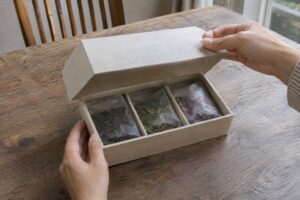
Boxed Sets and Multi Packs: the Count That Decides Everything
-
Private Label Matcha: Who Sells You the Tea, and Who Bags It
-
Hojicha Is the Easy One to Bag, and the Roast Is Why
-
Pack It in Japan, or Ship It Home in Bulk and Pack It There
-
Dried Shiitake: the One Where the Customer Wants to See It
-
Sakura: the Form It Arrives In Decides Whether We Can Run It at All