Single Serve Without a Stick Pack: What We Can Run Instead

Single serve is the most requested format we turn down. A long thin stick of matcha or kinako to drop into a cup is a genuinely good product idea, and it is the one thing our equipment cannot do.
What we can do is several formats that serve the same purpose with a different silhouette. This is the honest version of that conversation, including the economics, which are the part people usually have not thought through.
目次
Why not a stick
A stick pack is made on a dedicated machine that forms a narrow tube from film, fills it and seals both ends. It is not an attachment to a pouch filler, it is a different machine, and we do not have one.
That is the whole answer. It is not a quantity question and no order size changes it. If a stick is central to your concept, you need a line built for sticks, and we would rather say so in the first email. What a packer will not do has the rest of the boundary.
What we can run instead
| Code | Format | Size | Per piece | Reads as |
|---|---|---|---|---|
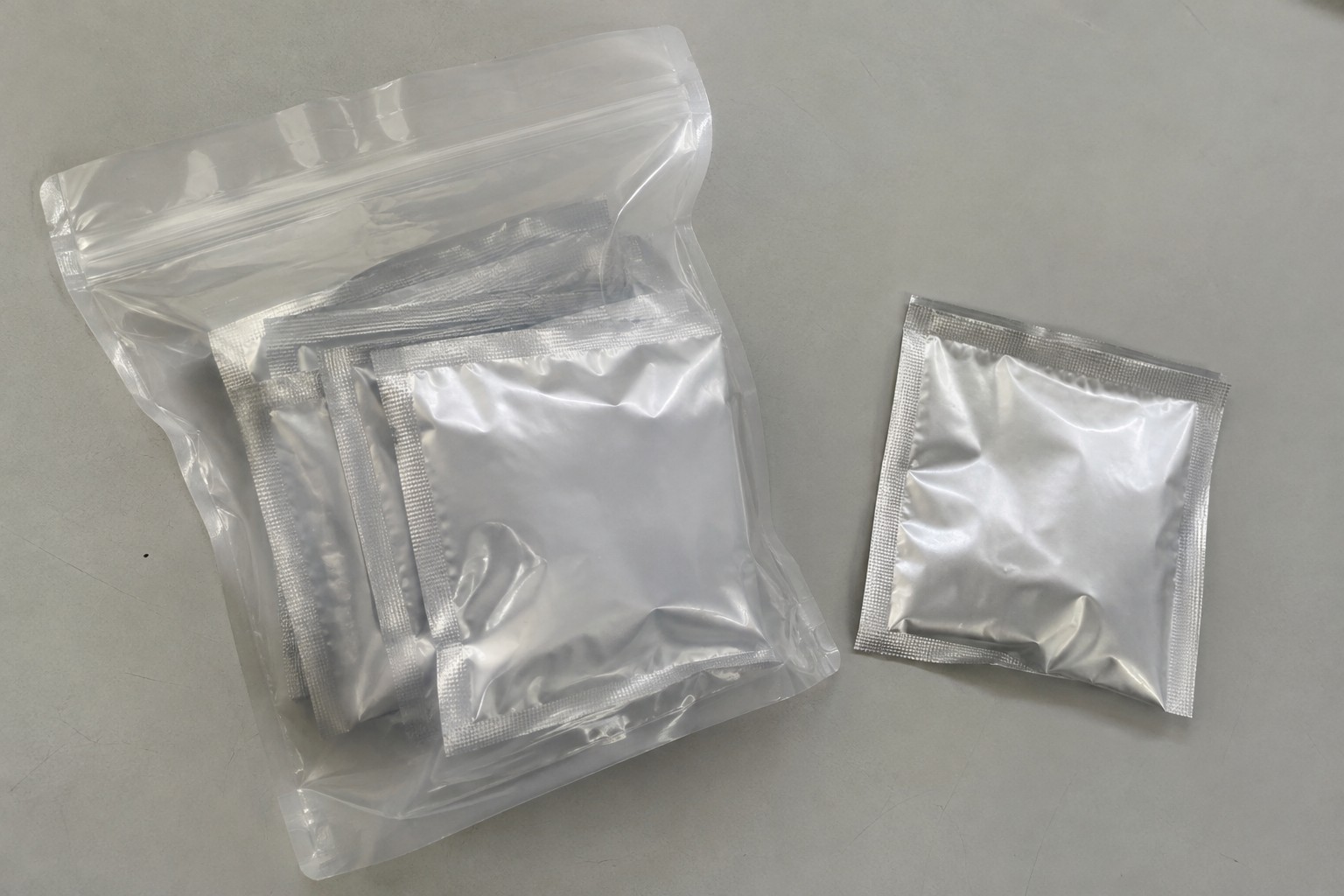
| PKG-029 | Biomass metallised kraft, three side seal | 110 by 125 mm | USD 0.20 | A premium sachet. Barrier, paper face |
| PKG-018 | Plain sweets pack, semi clear matte | 100 by 120 mm | USD 0.10 | The cheapest single serve we hold |
| PKG-016 | Plain sweets pack, clear | 100 by 135 mm | USD 0.10 | Shows the product |
| PKG-015 | Clear flat pouch | 100 by 120 mm | USD 0.15 | A small flat retail pouch |
| PKG-014 | Tagged mesh tea filter | 65 by 80 mm | USD 0.25 | A brewing bag, for leaf |
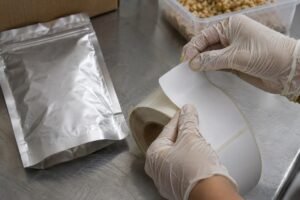
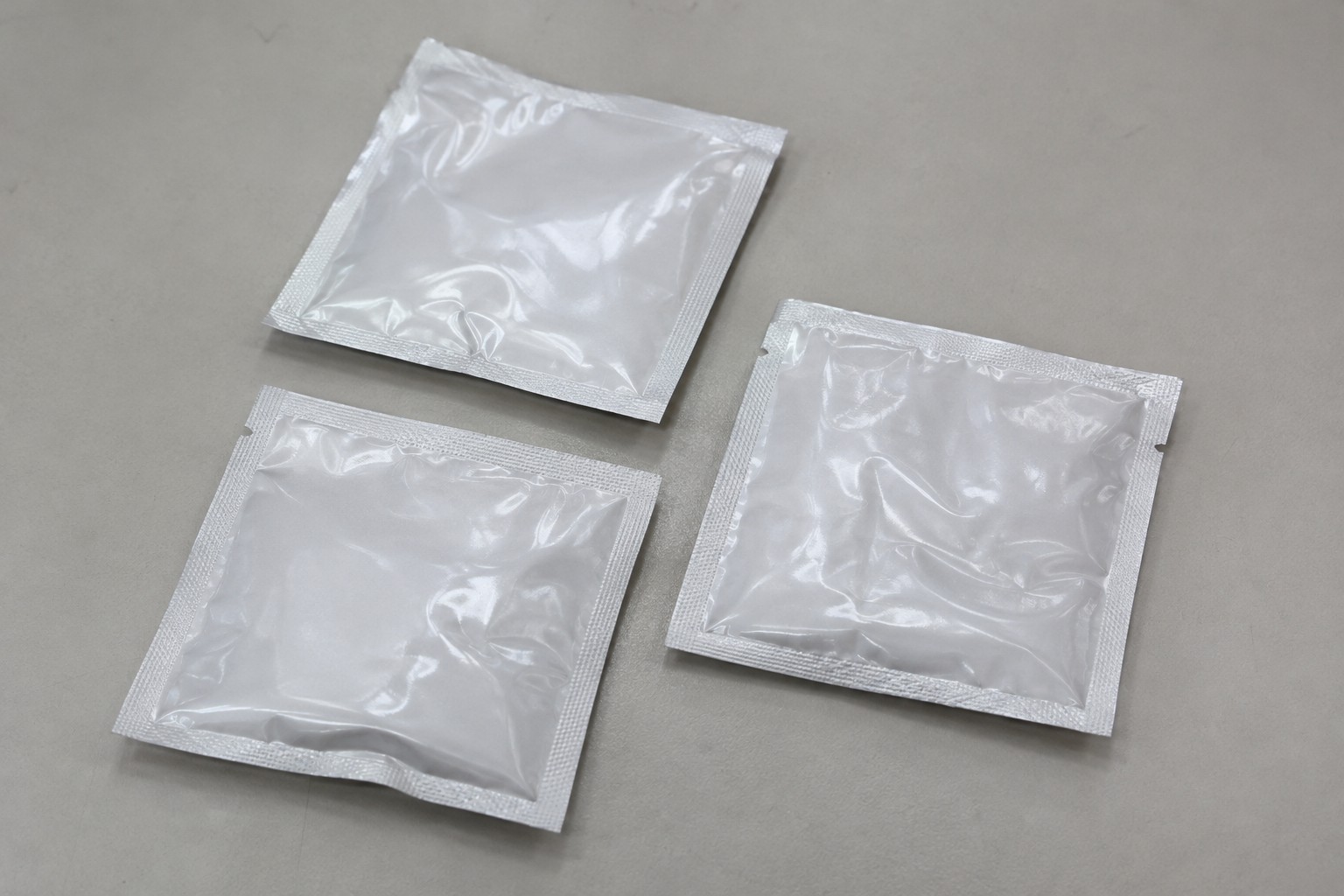
The three side seal at USD 0.20 is the closest substitute for a stick in feel: a flat rectangular sachet with a barrier face, torn across the top. The sweets packs at USD 0.10 are the cheapest single serve on our list and the right answer when the sachet is a sample rather than a product.
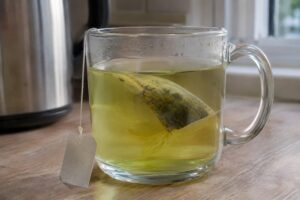
The tea filter is a different thing entirely, for leaf that gets brewed rather than powder that gets stirred in. It has an article of its own, because the counting works differently.
The economics are the real decision
Our fill rate is USD 0.65 a bag and it does not change with the gram weight. That is excellent news for a 500 g pouch and it is the thing to understand before you build a business on 3 g sachets.
| Format | Fill | Bag | Packing per unit | Packing per 100 g of product |
|---|---|---|---|---|
| 3 g sachet, PKG-018 | USD 0.65 | USD 0.10 | USD 0.75 | USD 25.00 |
| 10 g sachet, PKG-029 | USD 0.65 | USD 0.20 | USD 0.85 | USD 8.50 |
| 30 g pouch, PKG-012 | USD 0.65 | USD 0.30 | USD 0.95 | USD 3.17 |
| 100 g pouch, PKG-017 | USD 0.65 | USD 0.15 | USD 0.80 | USD 0.80 |
Read the right hand column. Packing a product into 3 g sachets costs about thirty times more per gram than packing it into 100 g pouches. Nothing about that is specific to us; it is what happens when the cost is an operation rather than a volume.
So single serve works as a sample, as a trial size, as one component of a multi pack, or as a premium convenience product priced accordingly. It works badly as the main retail unit of a value product.
Three products people actually launch
Abstract format advice is less useful than the three shapes we see most.
| Product | Format | Packing per unit | Works because |
|---|---|---|---|
| A trial size sold on a website | 10 g, PKG-029, one label | USD 1.00 | Low commitment for a new customer |
| A sampler of three flavours | 3 x 5 g sachets in an outer | USD 2.25 plus the outer | Three chances to find the one they like |
| A convenience line beside a retail bag | 10 g, PKG-029 | USD 1.00 | Rides on an order that was happening anyway |
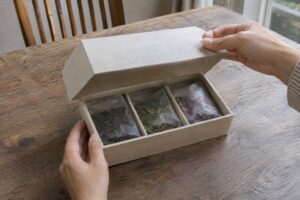
The middle one is the format that most often gets described to us as a stick pack project. Three sachets in a box is a better object than three sticks for most products, it travels well, and it gives a new customer a reason to come back for the format they preferred.
The packing figures above are the fill plus the bag plus one label. The outer box is quoted separately, because set assembly is not on the published rate card.
The multi pack is usually the answer
Most brands who want a stick actually want a box of ten single serves. Our side of that is the ten sachets; the outer box is not on our stock list, which covers bags.
Worth knowing: we can do boxing and set assembly, quoted per order rather than off a rate card, so raise it in your first message and we will tell you what is possible on your job. What we cannot do is tell you the price from a published list, because there is not one for that work.
The arithmetic to do first is the unit count. Five hundred filled sachets is fifty boxes of ten, which is a sampling exercise rather than a launch. Five hundred boxes of ten is five thousand sachets. The 500 bag minimum counts filled units, so work out the box count before anything else.
Supplying your own printed sachets
Our stock is unprinted, so if you want your artwork on the sachet itself rather than on a label, you buy the sachets and send them to us. There is a flat USD 45 handling charge per order when you do, covering receiving, checking and staging them.
Two things to get right before you commit to a print run. Send us the material code, the dimensions and the seal specification first, so we can confirm the sachet feeds through the sealer. A printed sachet that will not run is discovered on the day otherwise, with your material in Kyoto and a print run already paid for.
And do the arithmetic against labels before you decide. At USD 0.15 a position, a labelled stock sachet is almost always cheaper at first order volumes, and the label can be changed for the next run. Printed film cannot. Most brands move to printed sachets in year two, once the wording has stopped changing.
Pairing single serve with a retail size
The 500 is a total across the order, which makes this the cheap way to have a sachet at all. Three hundred retail pouches plus two hundred sachets of the same material is one order, one set up fee, one shipment.
Your sales team gets something to hand out, your shelf gets its product, and the sachets ride on an order that was happening anyway. For events specifically, there is more on sampling formats here.
What to tell us when you ask
- The fill weight per sachet and the total unit count.
- Whether it is a product, a sample or part of a multi pack.
- Whether an outer box or a set is part of the job.
- Whether you want a stock bag or are supplying printed sachets yourself.
- The date you need finished stock in your own warehouse.
Rates, the full stock list, minimums and conditions are on the contract packing page.
Questions we get asked
Could you run sticks at a higher quantity?
No. It needs a different machine, so there is no order size that changes the answer.
What is the smallest fill weight you will do?
There is no minimum on grams. A 3 g sachet is fine. The minimum is 500 filled units across the order.
Why is a 3 g sachet nearly as expensive to fill as a 100 g pouch?
Because you are paying for a filling operation, not for volume. The rate is USD 0.65 a bag whatever is in it.
Can you put the sachets into a box?
Yes. Boxing and set assembly are quoted per order rather than from the published rate card, so tell us what the finished product looks like and we will price it.
Can you print our design on the sachet?
Our stock is unprinted. You can supply printed sachets, which carries a flat USD 45 handling charge per order, or we apply labels at USD 0.15 per position.
Related reading
- Tea filter bags in small quantities
- Sampling formats for events
- Stock bags and what each one costs per piece
- What a 500 bag minimum really means
Tell us the fill weight and the unit count. If a box is part of it, say so in the same message. WhatsApp reaches us fastest, and we answer in English. If you would rather not use it, the enquiry form does the same job.
Message us on WhatsApp Use the enquiry form Agriture Inc., Kyoto, Japan- A First Packing Order in Japan, Step by Step With the Dates
- Sampling at a Trade Show: How Many, What Size, How Early
この記事を書いた人
関連記事
-
 Organic, Halal, Vegan: the Claims We Cannot Certify
-
What Goes on the Label, and Who Supplies It
-
Boxed Sets and Multi Packs: the Count That Decides Everything
-
Private Label Matcha: Who Sells You the Tea, and Who Bags It
-
Hojicha Is the Easy One to Bag, and the Roast Is Why
-
Tea Filter Bags in Small Quantities, and the Arithmetic Nobody Expects
-
Pack It in Japan, or Ship It Home in Bulk and Pack It There
-
Dried Shiitake: the One Where the Customer Wants to See It