The ingredient, not a formula
One ingredient at a time, not a blend. You own the recipe & the brand. We sit upstream of both.

Japanese ingredients, from Kyoto
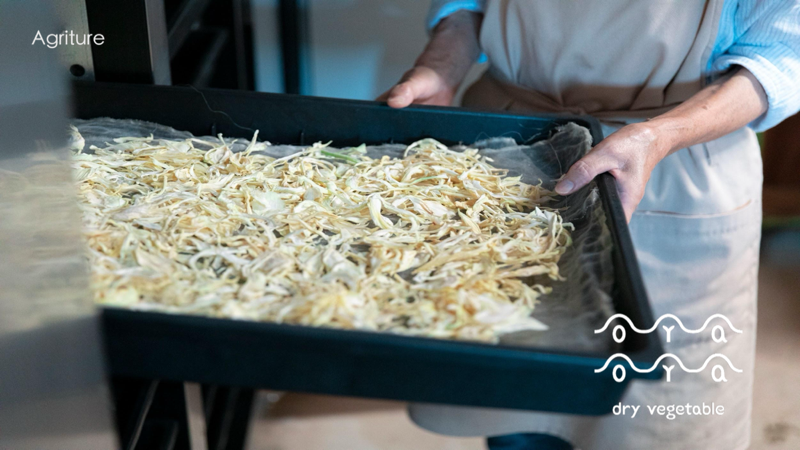
We dry yuzu, sansho, shiso, shiitake & Kyoto vegetables ourselves, sold as dried pieces, also as powder. Japanese tea, along with wagashi ingredients, we source to your specification. For brands & manufacturers outside Japan.
Already have the material, only need it bagged? That is a separate service, with its rate card published.
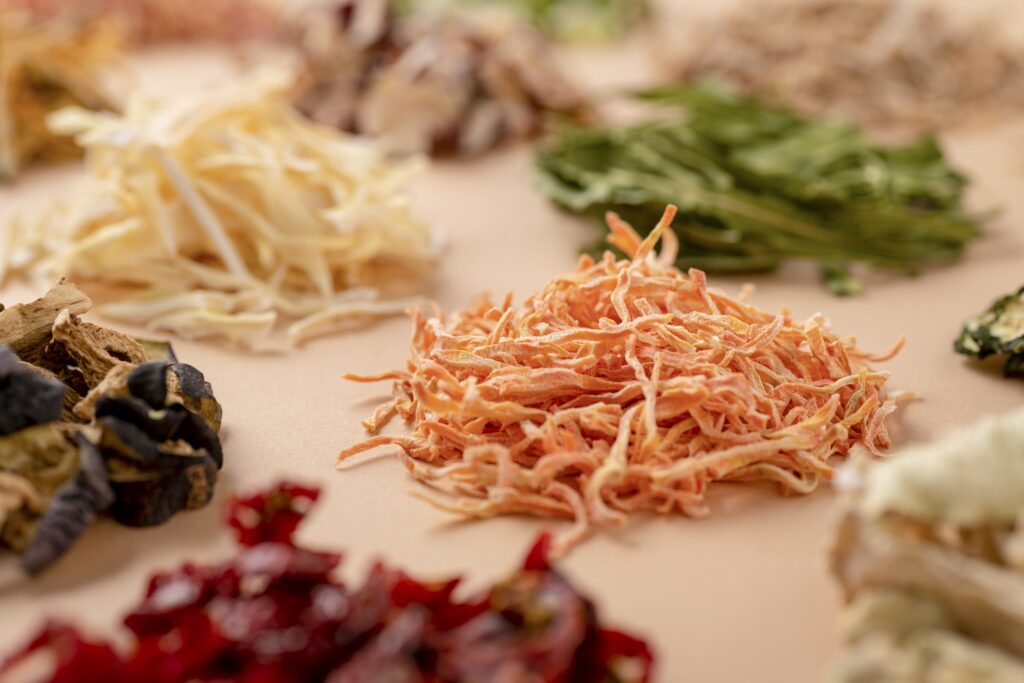
What we sell
The citrus, the aromatic greens, sansho, shiitake: these are crops we dry ourselves. Tea, like the wagashi ingredients, is not ours to dry, so we source those to the grade your product needs. Every row in the list below says which is which.
Need a Japanese ingredient that is missing here? Ask anyway. The list is what overseas buyers request most, not the limit of what we can get.
One ingredient at a time, not a blend. You own the recipe & the brand. We sit upstream of both.
One kilogram is our minimum for any one item. Put several ingredients on the same order, a kilogram each.
Most buyers ship it home to use in their own production. Want it weighed & sealed into retail bags first? We do that too.
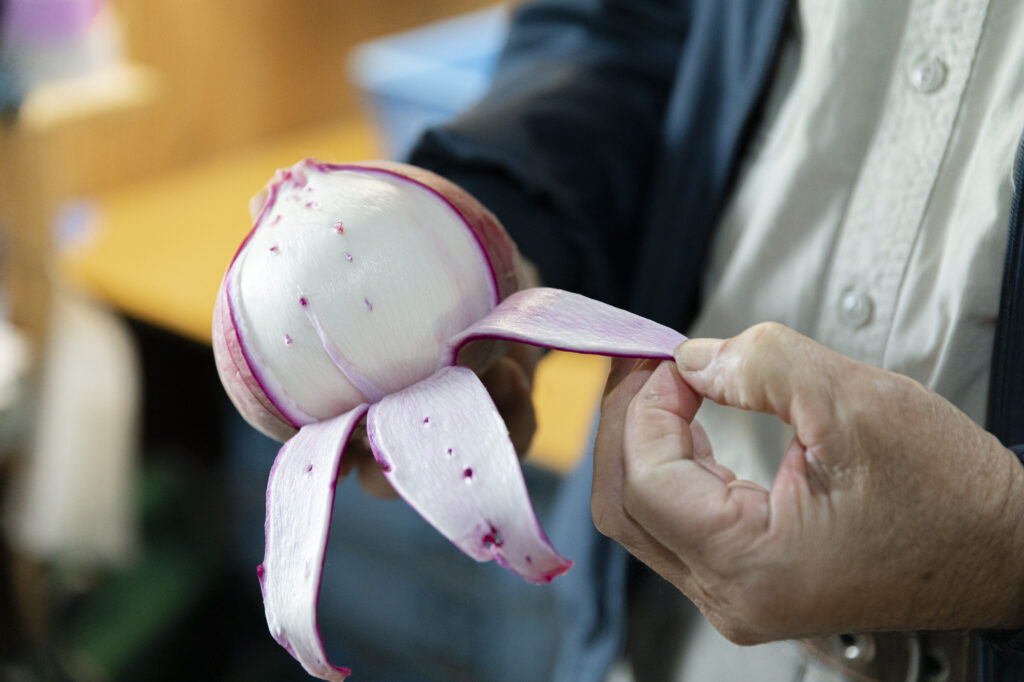

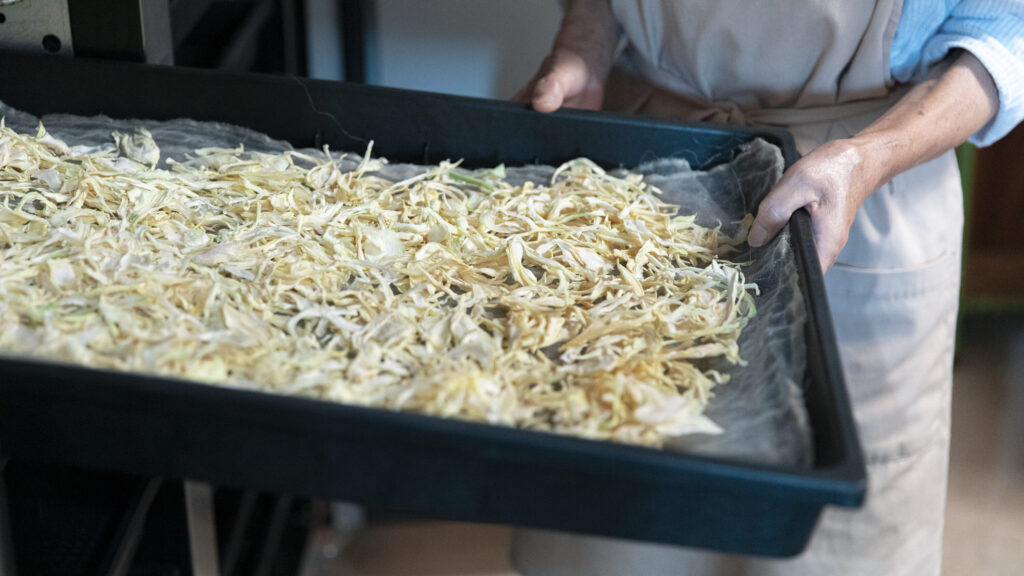
Choose the form
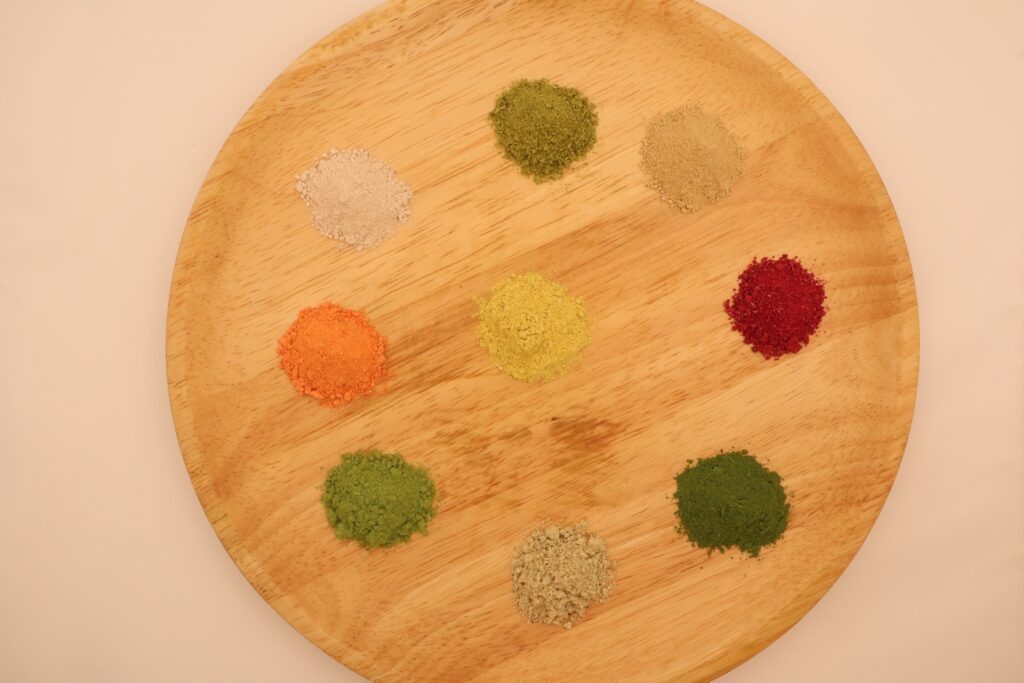
Most of what we dry comes both ways. The choice decides more about your product than the ingredient does. The list below shows which forms each item comes in. Not sure which one you need? Tell us what you are making; we will say which form we would send, with the reason.
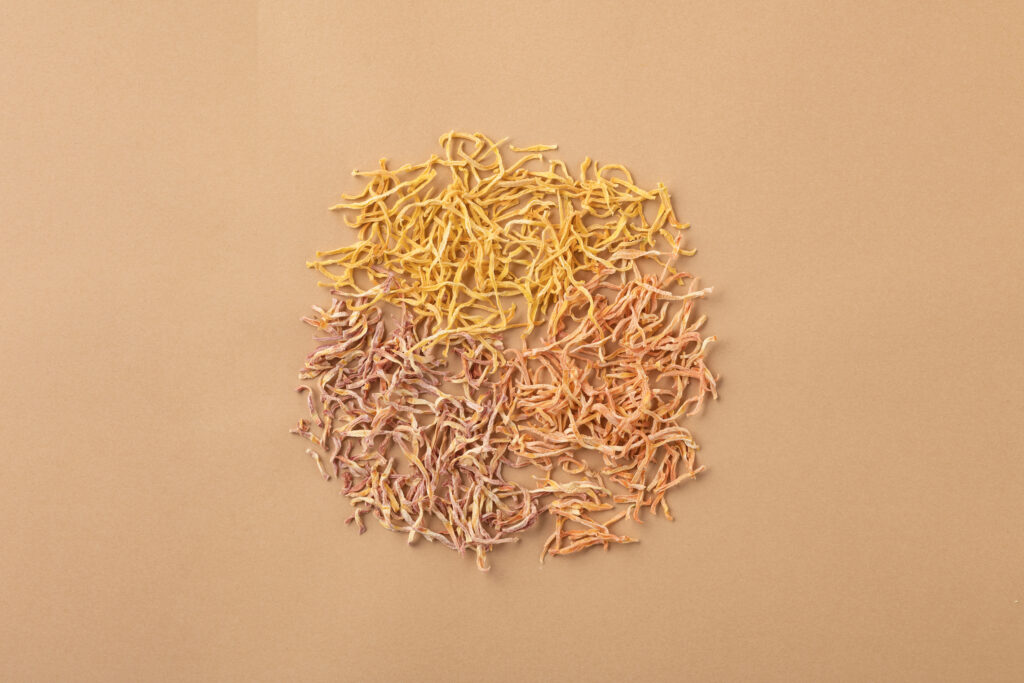
The ingredient list
A short list on purpose: the ones that actually come up from outside Japan, not everything we dry. The tags show the forms each one comes in. A grey “Sourced” tag marks an item we source rather than dry.
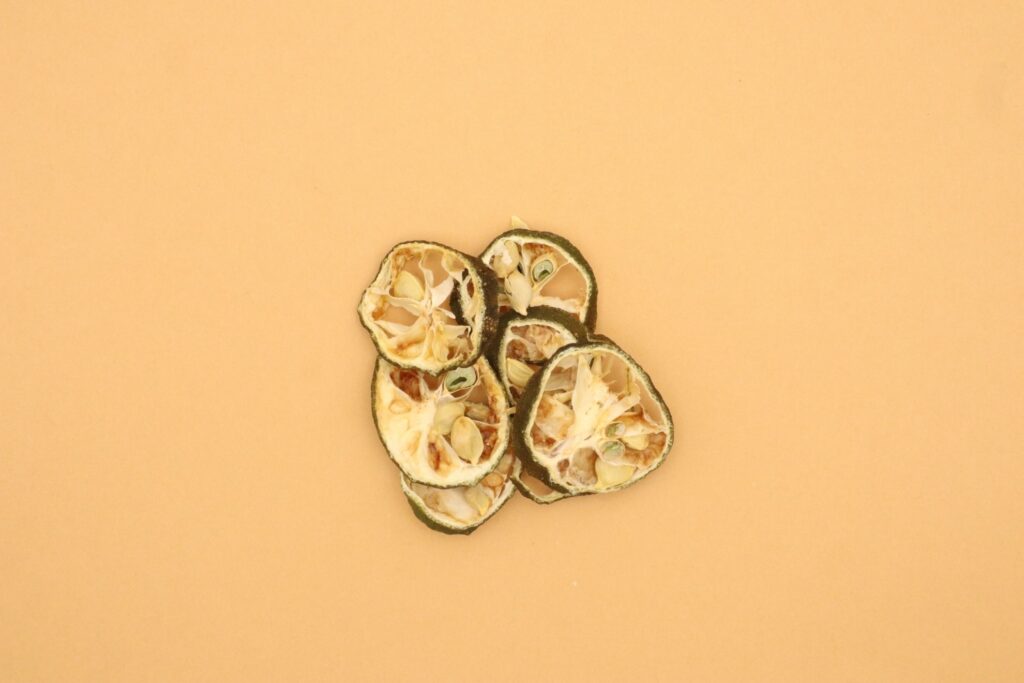
The peel is the product. These are grown for aroma rather than juice. The dried peel carries that aroma into a seasoning, a tea, a sugar blend.
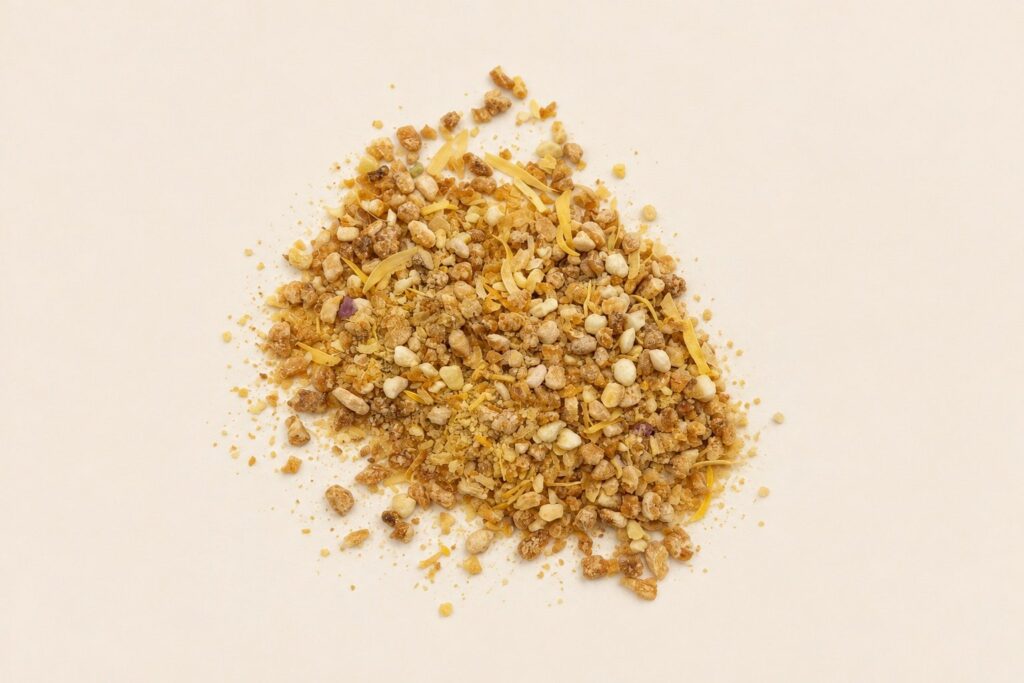
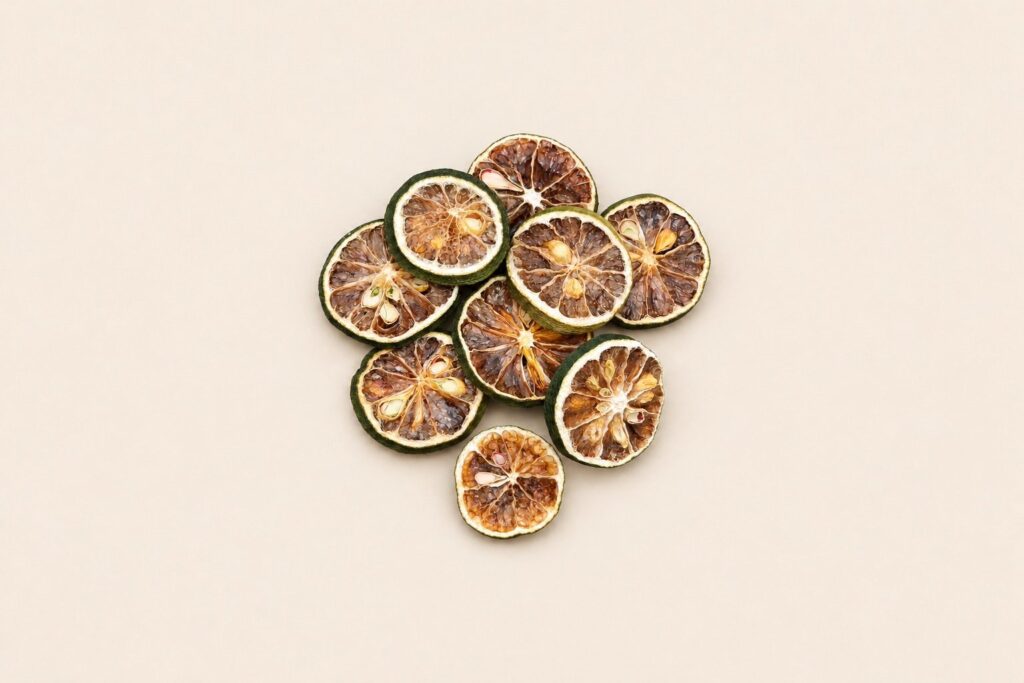

The one everyone asks for first. Floral, sharp, unmistakable.
Greener, more bracing than yuzu. Squeezed over grilled fish, used in ponzu.
Okinawan citrus. Tart, with a bitter edge that survives drying.
Satsuma mandarin. The sweet one, dried in slices.
The greens that make a dish read as Japanese rather than simply Asian. Dried, they weigh very little, so a kilogram goes a long way.

Perilla. Anise & mint at once. Dried for furikake, dressings, salt blends.
The colour behind umeboshi, also the base of yukari rice seasoning.
Kyoto’s green onion, sweeter & softer than a western scallion.
Two ingredients that need no introduction in a Japanese kitchen, yet almost always need one everywhere else. Both are bought dried even in Japan.

Japanese pepper. Citrus, pine, the tingle. Not the same plant as Sichuan pepper.
The backbone of vegetarian dashi. Drying builds the flavour, not just the shelf life.
Asked for constantly. The grade matters more than the name does. We do not grow tea, so we source it to your specification. Tell us what it is for; we will tell you which grade is worth paying for.
Stone-milled green tea, in grades from confectionery to ceremonial.
The everyday Japanese green tea. Steamed, not pan-fired.
Roasted until it turns brown. Toasty, forgiving in a blend, at home in a latte.
Sencha with roasted rice. The nutty one.
The starches, flours & beans a Japanese confectioner works with. We source these rather than dry them, so the grade & the milling are set by what you are making. Matcha sits above with the tea.
Bracken starch, for warabi mochi. True warabiko is scarce, usually sold blended, so say which you mean.
Kudzu starch. Sets clear, melts on the tongue.
Agar from seaweed. Sets firm at room temperature, unlike gelatine. Also sold as threads & sticks.
Roasted soybean flour. The dusting on warabi mochi, a flavour in its own right.
Glutinous rice flour for dango & daifuku.
Non-glutinous rice flour, for kashiwa mochi & firmer dango.
The red bean behind every form of anko.
Salt-pickled cherry leaf, wrapped around sakura mochi.
Where it has gone
Two published projects in Japan. In each, we supplied one dried ingredient; the maker built the product around it.
Ma (◯間), Kyoto · tea
We supplied the dried kujo negi for 草片 九条葱, a flavoured tea from the Kyoto tea house ◯間. The tea won a Judges’ Encouragement Award in the flavoured tea category of the 2024 Nihoncha AWARD.
Project page (Japanese)
ORYZAE Inc. · granola
We supplied dried apple from Nagano, cut into sticks. ORYZAE, a maker of rice koji granola, used it in a limited maple & apple granola.
Project page (Japanese)How buying works
Which item, whether you want pieces versus powder, roughly how many kilograms a year. That is enough for a price.
A price per kilogram, shown in your currency if that helps you budget, plus what is in stock now, what has to wait for a harvest.
Most buyers take a sample before committing. Ask at the quotation stage; we include what it costs to send one.
The quotation gives the date: sooner for an item in stock, later for one that waits on a harvest. We hand the goods to your forwarder in Japan.
Said up front
They move with the harvest. Several items also carry more than one price, depending on the growing region. A number on a web page would be wrong within a season, so we quote per enquiry.
Everything here is an agricultural crop. Some items run all year from stock, others exist only in the months after they are picked. We say which when we quote.
Per item, not per order. Below that the handling costs more than the goods.
Here we sell ingredients one by one. Tea blends go through our private label tea service, weighed mixes through contract packing.
We hand over inside Japan. Customs clearance in your country, with whatever paperwork it needs, sits with you, through your broker.
If your project depends on a certified organic ingredient, say so in the first message rather than after a sample.
The other half
Buying the ingredient is one service; getting it packed is another. Plenty of brands use both. Our line weighs, fills, seals, then labels retail bags from 500 bags, with the rate card published in full.
FAQ
Yes. Most buyers do. The one kilogram minimum is per item, so a first order of ten ingredients at a kilogram each is a perfectly normal order.
The crops we dry for this list are grown in Japan. For a sourced item, we name the origin of the specific lot when we quote. We also dry some crops that are not Japanese at all. We always say which is which rather than let you assume.
Yes. Ask at the quotation stage, because the sample travels with the quotation. We will tell you what the sample costs to send, with how long it takes to reach you.
Because it would be wrong. These are crops. Prices move with the harvest; several items carry more than one price depending on where they were grown. Send us the item & the quantity for a real number.
It depends on the item. Some we hold in stock all year. Others wait on a harvest, with a fresh drying run after it. The quotation gives the date for your order; export freight comes on top.
No. The list says which is which. The citrus, the greens, sansho, shiitake: those are crops we dry. Tea, like the wagashi ingredients, we source instead. On the sourced items the grade & the milling are set by what you are making, so tell us the application along with the quantity.
No. Our powders are milled to one fineness, about 100 mesh. We do not mill to a stated particle size. If your process needs a finer grind, tell us before you order rather than after a sample.
For the items we dry, the best-before is about six months from the day we ship. Storage matters: keep it sealed, dry, away from light. For a sourced item we give you the figure for that specific lot.
Yes. Send us yours, unless you would rather sign ours.
For brands outside Japan
 Contract packingFill, seal & label retail bags from 500 bags, with the rate card published.Open
 Private label teaTea under your brand: crops we dry, blended on a Japanese tea base.Open
 Finding a makerWe shortlist the Japanese plant that fits, then run the conversation in Japanese.Open
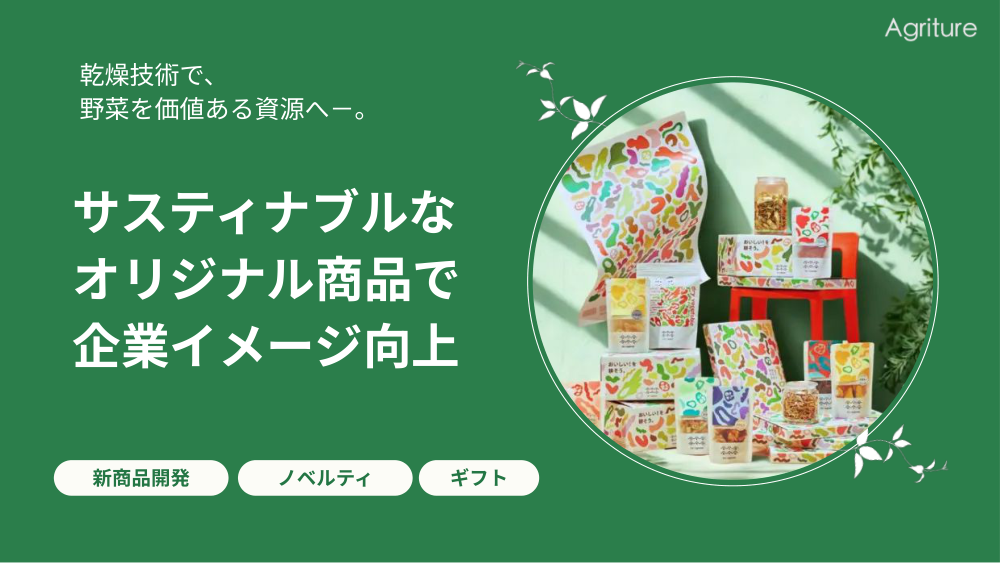
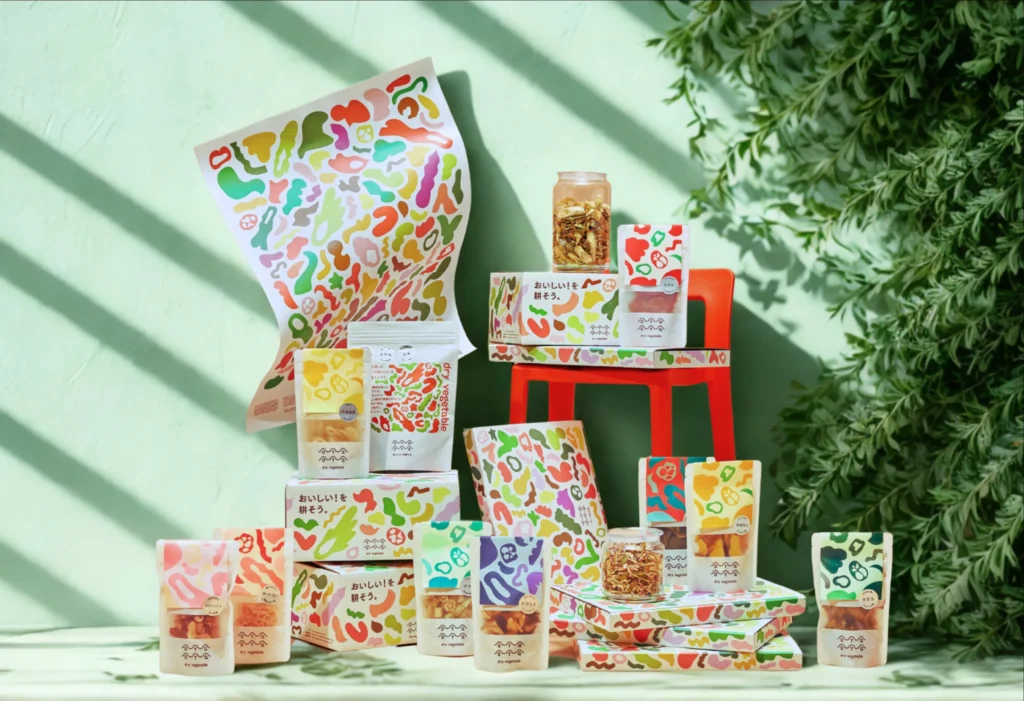 Corporate giftsKyoto vegetables & Japanese fruit, packed under your name from 500 units.Open
Who you are dealing with
Guides
Written for the questions that reach us by email every week. Several follow one ingredient from harvest to bag.
That is enough for a real price. WhatsApp reaches us fastest. We answer in English.
Enquiry
WhatsApp is faster. This form reaches the same desk. We reply in English within Japanese business hours (UTC+9).
Message us on WhatsAppAgriture Inc., 294 Tamatsushima-cho, Shimogyo-ku, Kyoto, Japan
The form is our standard one, so its labels are in Japanese. Write the message in English. Tell us which ingredients, whether you want dried pieces versus powder, then roughly how many kilograms.