Japanese tea, rooibos, herbs
Japanese black tea (wakocha), hojicha, Japanese green tea: these are the bases we blend on most.
For a tea to drink at night, we build on rooibos instead, sometimes on herbs alone.

Private label tea from Kyoto
Blends of vegetables, fruit, herbs & flowers, designed with you from crops we dry ourselves, on a Japanese tea base. Weighed into tea bags, sealed & labelled in Kyoto.
Only need the ingredients, not a finished product? We sell dried ingredients by the kilogram as well.

Development work
Two ranges from Japan. Neither started with a finished recipe.
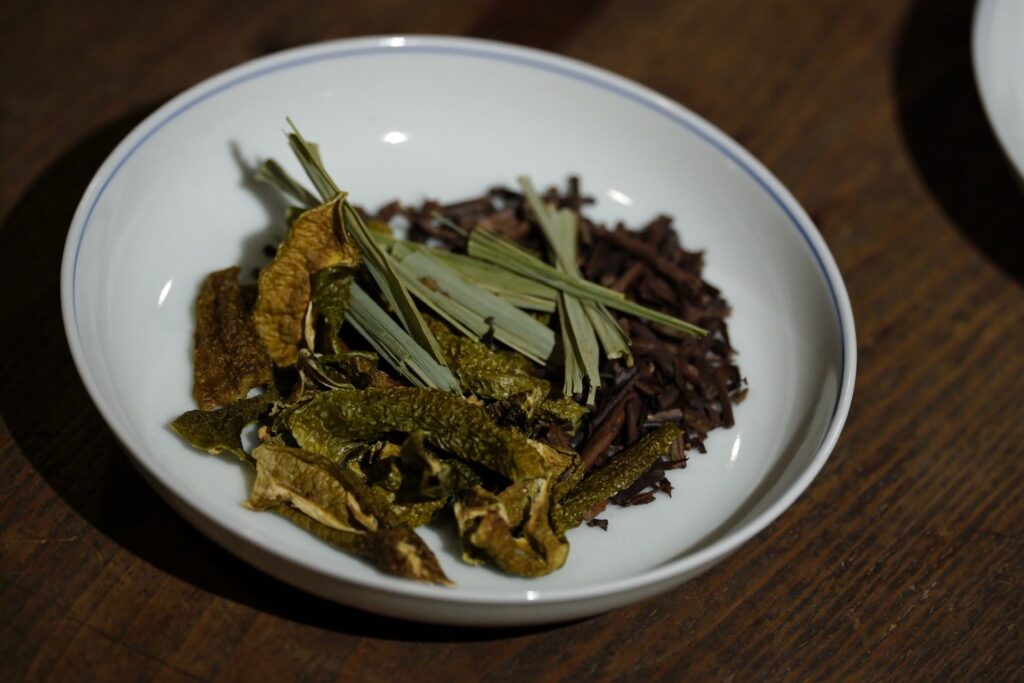
We blended Kyoto vegetables from our stock with spices, then proposed the five teas to a hotel that serves overseas visitors. Manganji pepper with lemongrass gives one of them a sharp, fresh finish.
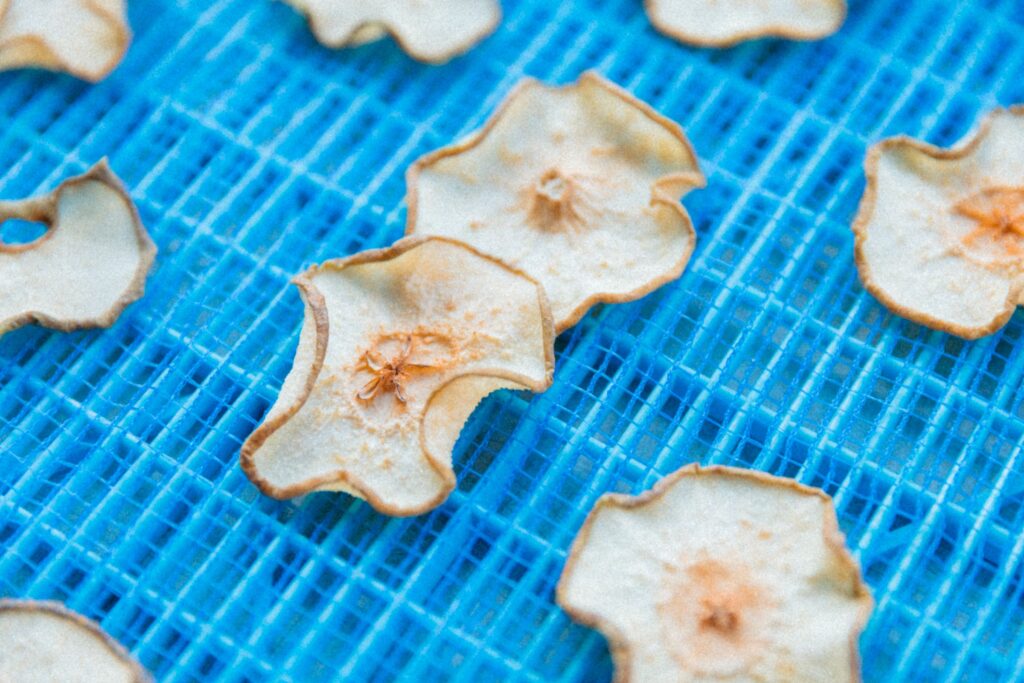
Developed on request as a fruit tea range for working women. Large-cut fruit such as pineapple is cut finer to fit the filter, with shikuwasa added so the tea is not too sweet.
Fruit: pear, apple, pineapple, yuzu. Flowers: rose.
How a tea is built
Those three choices decide the taste, the look, the cost. You do not need to arrive with a recipe; a brief is enough for us to propose one.
Japanese black tea (wakocha), hojicha, Japanese green tea: these are the bases we blend on most.
For a tea to drink at night, we build on rooibos instead, sometimes on herbs alone.
Kyoto vegetables such as kujo negi, shogoin turnip, manganji pepper. Burdock, mulberry leaf, yomogi. Yuzu, pear, apple. Shiso, sansho, edible flowers, lemongrass.
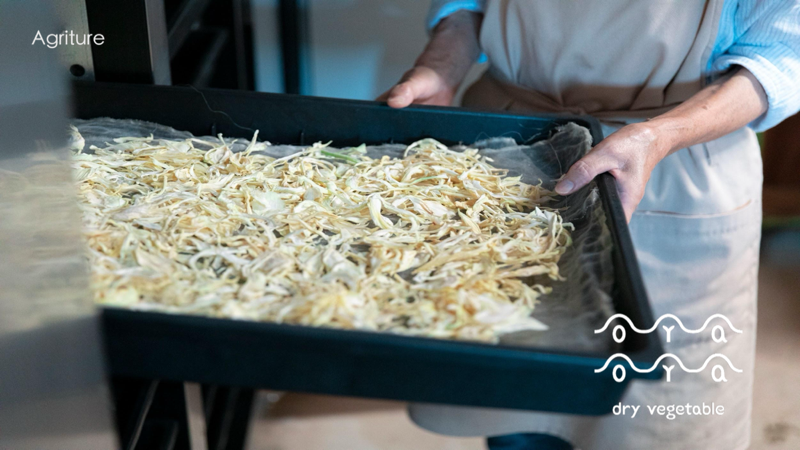
Each one dried on our own line, item by item, before it goes into the blend.
Tagged mesh tea bags, flat as well as pyramid. Loose leaf in a pouch. For coffee, drip bags on the same line.
Weighing, filling, sealing, labelling all happen here, so the project has one owner from blend to carton.

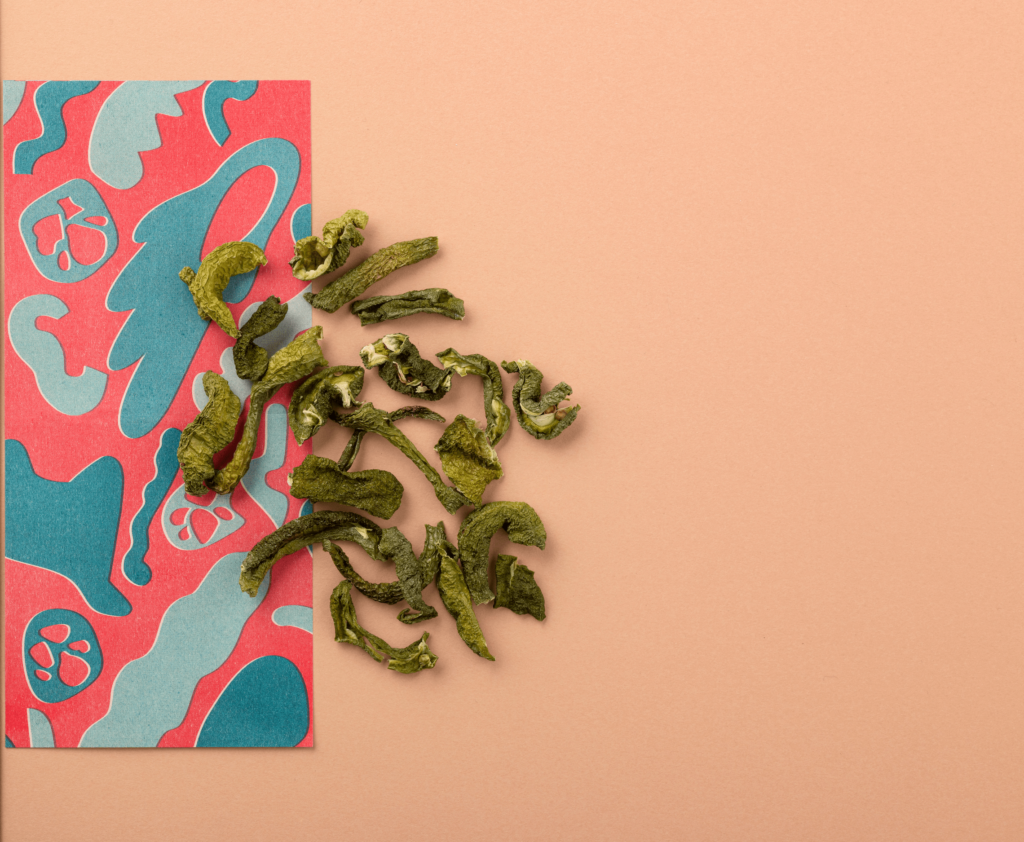

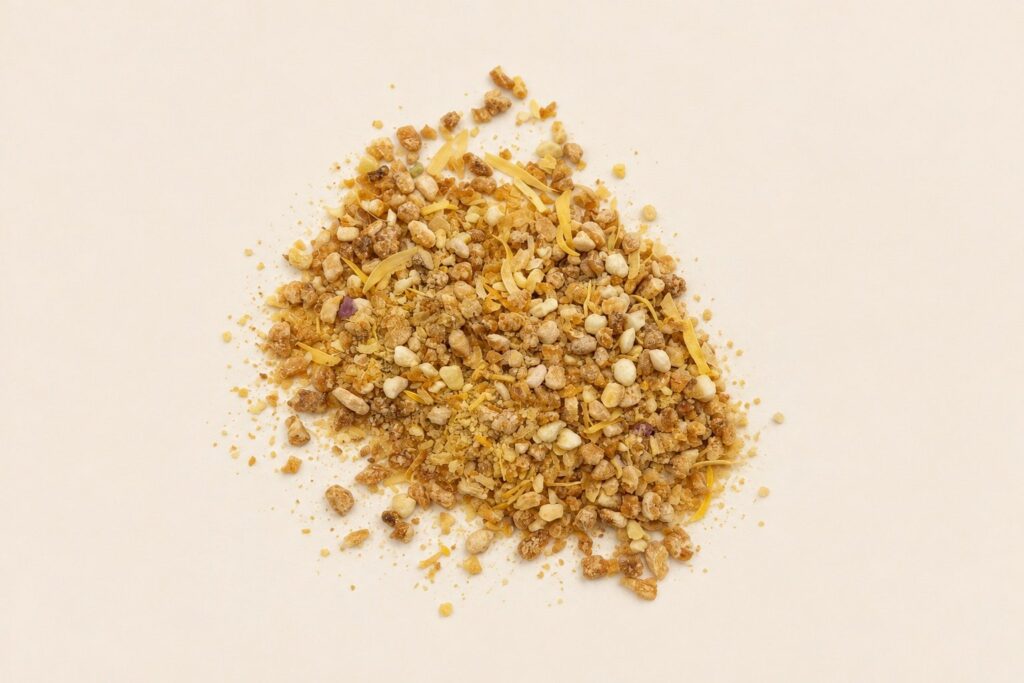
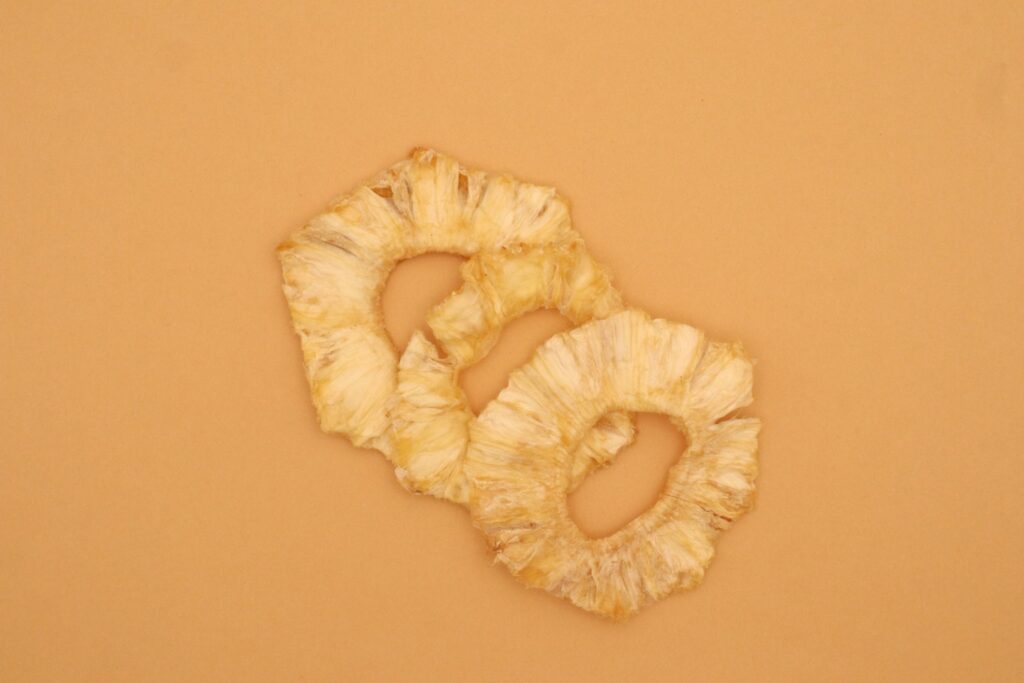
Some of what we dry is produce that missed the market only on size, on shape. If a sustainability claim has to stand up to a buyer’s questions, that one does.
Minimums, timing, cost
Which route you take decides the minimum, the lead time, what you pay up front. Timing moves with the number of samples, with harvests too, so tell us early if you have a launch date.
| Recipe development with usRecipe designed for you | From 100 bags. About two months to delivery. Recipe development is JPY 150,000 per recipe, charged even if the project stops before production; production is quoted separately. |
|---|---|
| Your blend is already fixed | From 500 bags. From two weeks once the material & the packaging are here. No blending set-up fee. Production is quoted per project. |
| Your own crops, dried by usCrops grown in Japan | From about 10 kg, sent to us fresh. About two weeks for a drying trial, three to four weeks for the production run. Quoted per project. |
Already have finished tea you only want weighed into bags? That is contract packing: from 500 bags, JPY 75 a bag, rate card published.
How a tea project runs
What the tea is for, who buys it, the price you need to hit, the format you have in mind. A rough brief is enough.
We propose the materials with their ratio, then say what each one does to the taste, to the cost.
We make it, you taste it, we change it. Small trial batches are fine. This is the step worth spending time on.
Once the blend is fixed we price the run properly: the quantity, the packaging, the date.
We weigh, fill, seal, then label here. After a check of the finished bags, they go to your forwarder inside Japan.
Japanese tea, explained
A quick guide to the names you will see on a Japanese tea menu, so the brief you send us uses the same words we do. If the one you want is missing, ask.
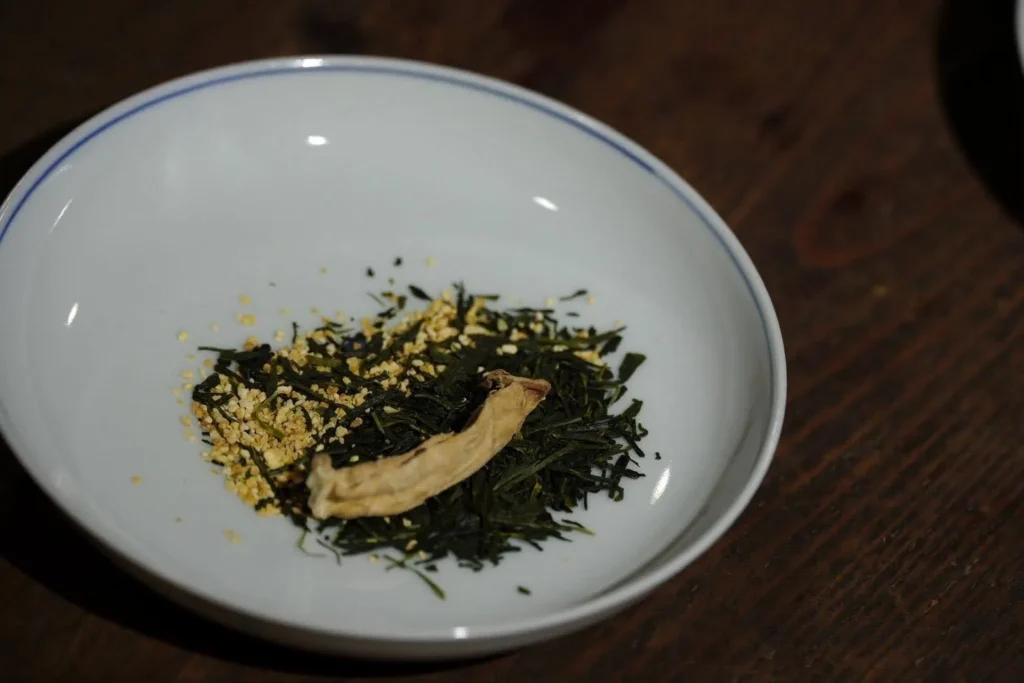
| Matcha抹茶 | Stone-milled green tea. Grades run from confectionery through culinary to ceremonial. The price gap between them is larger than most first-time buyers expect. |
|---|---|
| Sencha煎茶 | The everyday Japanese green tea. Steamed rather than pan-fired, the step behind its grassy, green taste. |
| Gyokuro玉露 | Shaded before picking, like matcha. Sweet, deep, the most expensive leaf on this list. |
| Hojichaほうじ茶 | Green tea roasted until it turns brown. Toasty, forgiving in a blend, which is why it works in lattes & desserts. |
| Genmaicha玄米茶 | Sencha with roasted rice. The nutty one; also the easiest sell to a market new to Japanese tea. |
| Bancha番茶 | Later-harvest leaf. Plainer than sencha, cheaper too: the right call when the tea is a base rather than the star. |
| Kukicha茎茶 | Stems rather than leaf. Light, sweet, clean. |
| Wakocha和紅茶 | Black tea grown in Japan. One of the bases we put fruit teas on most often. |
| Mugicha麦茶 | Roasted barley, not tea leaf. Drunk cold all summer in Japan, almost unknown outside it. |
Said up front
The tea base is bought in. The blending is ours, as is the drying of everything that is not tea, as is the filling.
A tea is a recipe, a format, a quantity. Any of the three moves the number, so each run is quoted.
With recipe development. 500 bags once the blend is fixed. Below that the set-up costs more than the goods.
We weigh, then heat seal in ambient air. For a tea whose colour is the selling point, that matters. We would rather say so now.
We hand finished goods to your forwarder inside Japan. Export freight & customs clearance at your end sit with you.
If your product depends on a certified claim, raise it in the first message rather than after a sample.
FAQ
That is the normal case. Tell us what the tea is for, who is buying it, the price you need; we design the blend, then propose the materials. You taste it, we adjust. With recipe development the minimum is 100 bags. Allow about two months to delivery.
Two cases. Crops grown in Japan, sent to us fresh, we dry from about 10 kg: a drying trial takes about two weeks, the production run three to four. Finished tea that only needs weighing into bags goes through contract packing from 500 bags. Either way, send a dispatch notice before it ships.
A typical vegetable tea filter from us holds 5 g: about 2 g of dried vegetable, about 3 g of tea leaf. Our tagged mesh filter measures 65 × 80 mm; it holds up to 5 g. The fill rate is the same whatever the weight, which makes small sample sizes workable.
Yes, as drip bags on the same line, from 500 bags. We do not roast. A partner roaster roasts the beans to the profile you want. Dried ingredients from our line, Kyoto vegetables among them, can go into the blend.
Japanese yen. We can quote in your currency so you can budget. The quotation confirms the amount before anything is committed.
Yes. Send us yours, unless you would rather sign ours.
For brands outside Japan
 Contract packingFill, seal & label retail bags from 500 bags, with the rate card published.Open
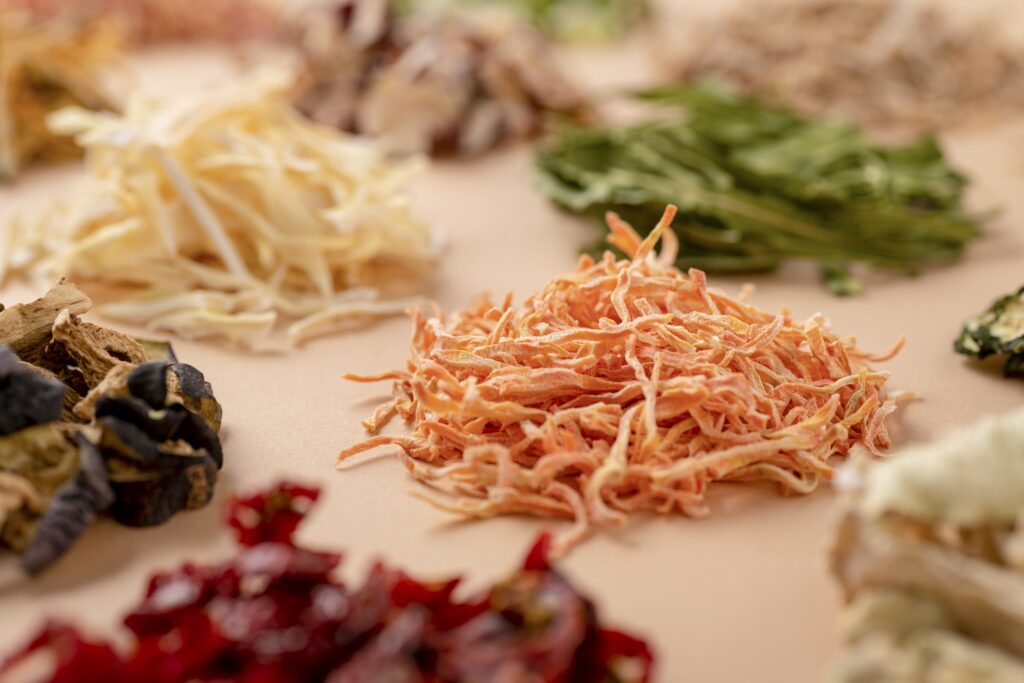 Japanese ingredientsYuzu, shiso, sansho, shiitake, dried by us. Tea & wagashi ingredients, sourced. From 1 kg per item.Open
 Finding a makerWe shortlist the Japanese plant that fits, then run the conversation in Japanese.Open
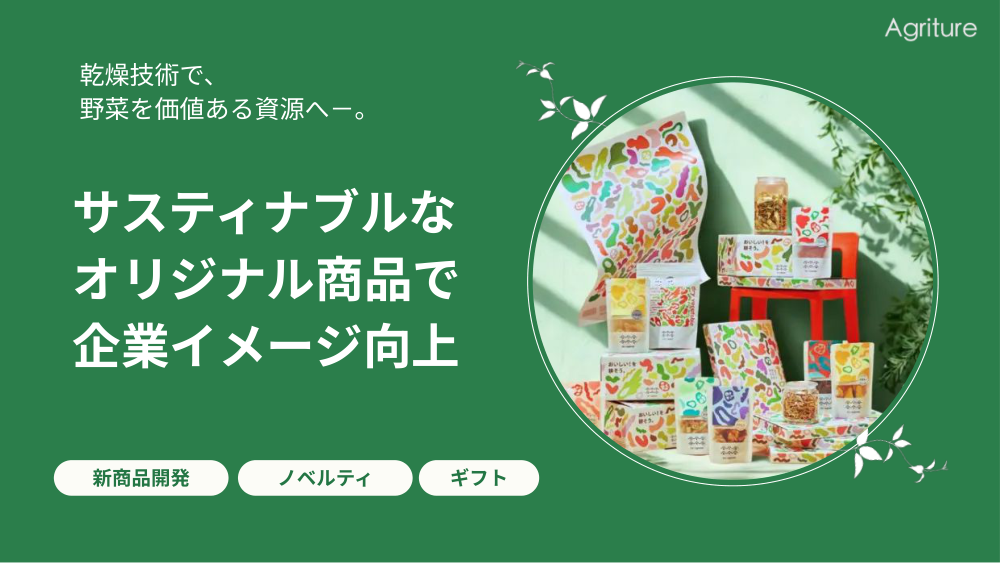
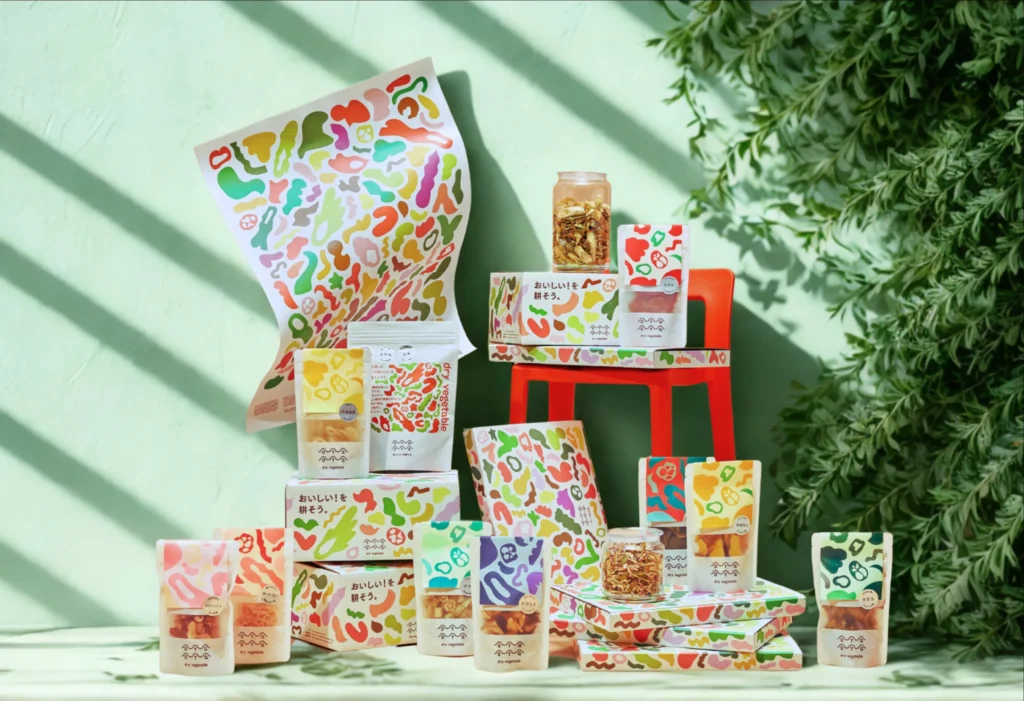 Corporate giftsKyoto vegetables & Japanese fruit, packed under your name from 500 units.Open
Who you are dealing with
Guides
Written for the questions that reach us by email every week. Several are about tea specifically.
That is enough to start. WhatsApp reaches us fastest. We answer in English.
Enquiry
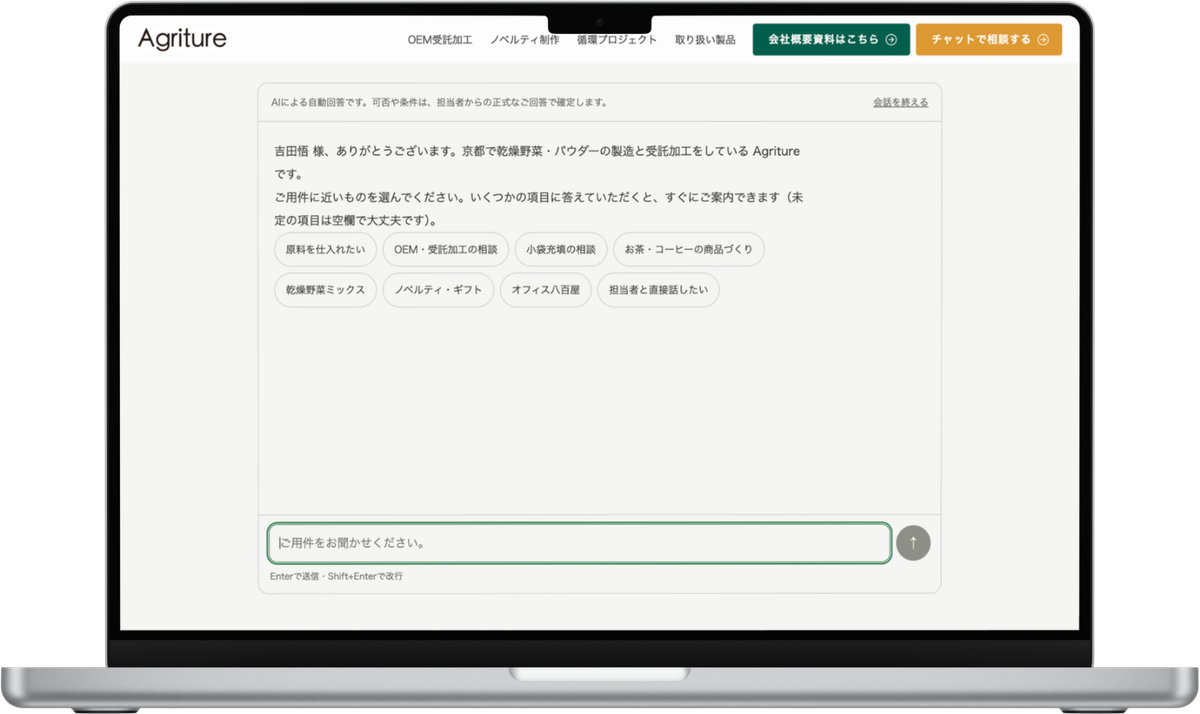
WhatsApp is faster. This form reaches the same desk. We reply in English within Japanese business hours (UTC+9).
Message us on WhatsAppAgriture Inc., 294 Tamatsushima-cho, Shimogyo-ku, Kyoto, Japan
The form is our standard one, so its labels are in Japanese. Write the message in English. Tell us what the tea is for, the format you want, then roughly how many units.